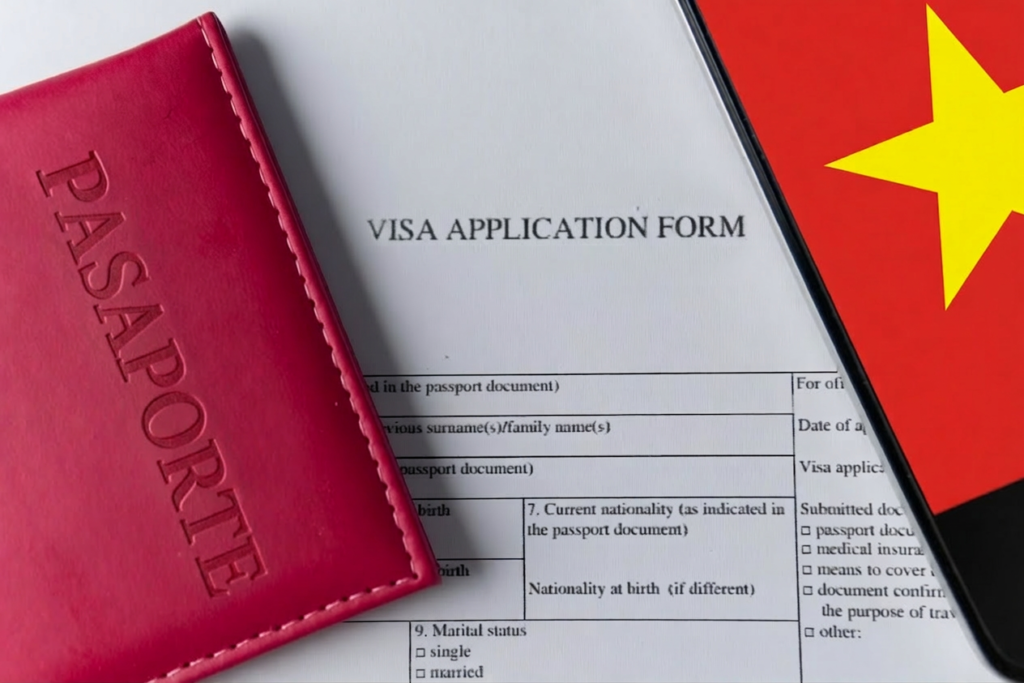


Vietnam’s currency is the dong (VND). You can pay by card in more and more places, but it’s still less common than in many countries. Most locals pay for almost everything in cash or by scanning QR codes, very handy if you have a Vietnamese bank account.
For travellers it’s different: many ATMs charge a withdrawal fee, some places add a 3% surcharge for paying by card, and it’s easy to end up changing most of your money at the airport, your hotel or a travel agency, where the rate is usually worse.
With a little planning you can get a much better rate and keep fees to a minimum. Here’s how.
The best way to handle money in Vietnam (quick summary)
After years living in Vietnam and helping travellers, this is how I’d sum it up:
- Get just a small amount at the airport.
Withdraw or change only what you need for your first few hours. You’ll get a better rate in town later. - Change most of your money at a jewellery shop in the centre.
They usually give a better rate than airports, hotels or agencies. I explain how to find them below. - Bring an international card as a backup.
For emergencies, online payments or if you run out of cash. Look for cards with a much better exchange rate than traditional banks; I tell you which ones I use below. - Only use your card when it makes sense.
In mid range and upmarket hotels, supermarket chains or apps like Grab, paying by card can be easier. Small businesses often add a 3% surcharge.
Should you change money at the airport?
When you arrive, you’ll need some cash to cover your first expenses. (If you haven’t done it yet, here’s what you need to know about Vietnam’s pre arrival declaration.)
At the airport you have two options: change cash at one of the counters or withdraw money from an ATM. The rate isn’t terrible, but it’s rarely the best of your trip.
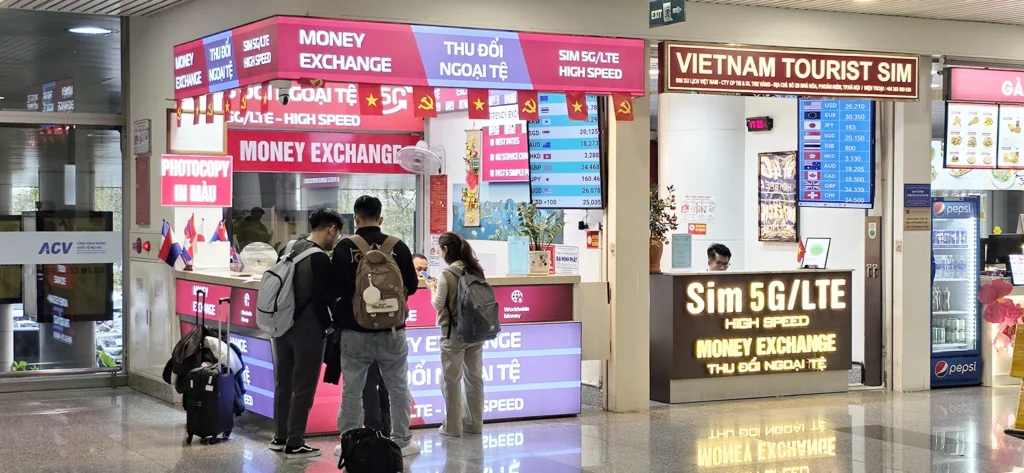
Airports usually have ATMs from Vietnamese banks like Vietcombank, Agribank, Vietinbank, Techcombank or VIB. You can withdraw without problems, although most charge a small fee per withdrawal (usually 20,000 to 50,000 VND, about $0.75 to $1.90).
With a card that has good terms abroad, withdrawing a small amount usually beats changing large sums at the counters.
Either way, don’t stress: if you only take out enough to get started, the difference is small.
Changing money at jewellery shops: how it works and is it safe?
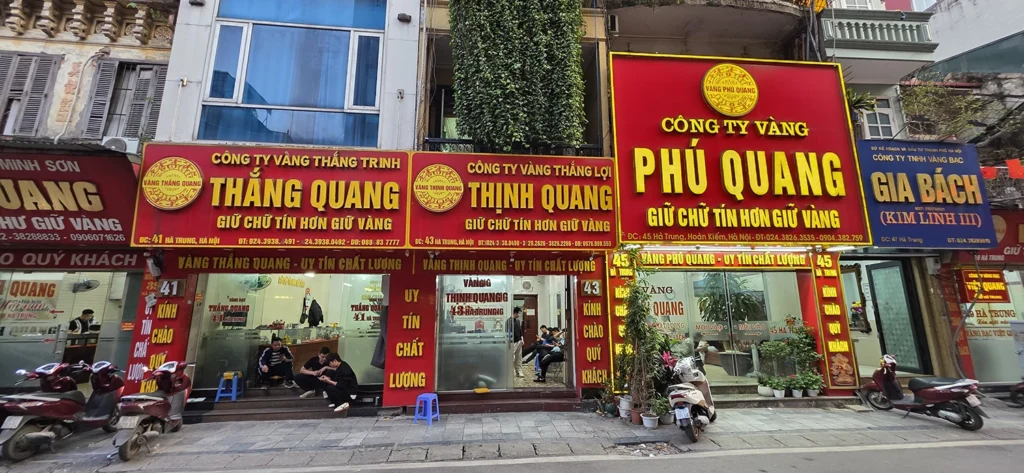
Once in town, people usually change money at jewellery shops. It sounds strange, but it’s very common in Vietnam, for travellers and locals alike.
The reason is simple: they usually offer a better rate than banks, airports, hotels or travel agencies.
It’s not complicated: walk in, ask the rate, compare a couple of shops if you like, and change where the price is best. I’ve done it many times (euros to dong, dong to euros, Thai baht or Japanese yen) without a single problem.
Practical tips
- Bring large notes that are new and in good condition. US dollars, euros and pounds are all easy to change, and $100 notes usually get the best rate. If a note has the slightest pen mark, a hard fold or a tear, they won’t take it or they’ll give you a worse rate.
- Compare before you hand over your money. Ask the rate at 2 or 3 jewellery shops nearby before deciding.
- Count the cash right there before you walk out the door.
Alberto’s tip: jewellery shops are also good for changing leftover dong back into your own currency before you leave the country. I usually change 500,000 dong notes; again, make sure they’re in good condition.
Most big cities have jewellery shops that change money, usually grouped in very specific areas.
Where to change money in Vietnam: city by city
Changing money in Hanoi
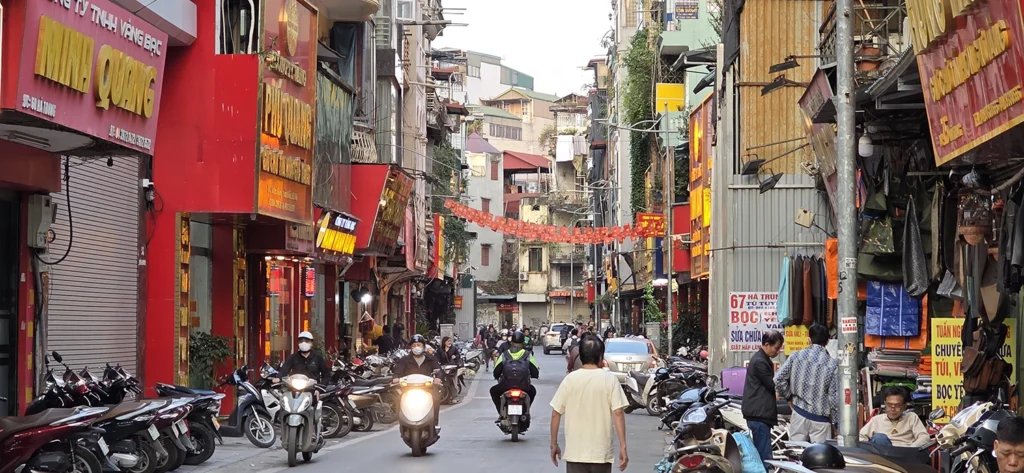
The best known spot is Ha Trung Street, near the Old Quarter. It’s full of jewellery shops, and many Vietnamese people change money there too. The jewellery shop at number 27 has some of the best rates. It’s where I go when I need to change my savings before a trip.
Some people also change money on Hang Bac Street, although it’s more aimed at tourists.
Changing money in Ho Chi Minh City
Around Ben Thanh Market there are several jewellery shops that change money. In my experience, the rates are very similar between them. Ha Tam Jewelry is one of the best known. Sometimes it even beats the official rate, so I’d go early (there’s often a queue).
Other cities to change money
Other cities also have jewellery shops or businesses that change money. Options are more limited and rates less competitive, but these are the places travellers mention most:
- Ninh Binh: Tam Coc Queen’s Travel. Rates aren’t as good as in Hanoi or Ho Chi Minh City, but several travellers say it’s one of the best options.
- Ha Giang: Cuu’s House. It’s the recommendation of a local in Ha Giang and my first choice there. If it’s out of your way, you can also try Tiem Vang Tuan Dung jewellery shop or this street, which has quite a few jewellery shops that change money.
- Hue: Phu Cuong Gold Shop and Mango travel
- Da Nang: Buck service or Kim Yen Huong
- Hoi An: Phụ kiện Sasa (Sasa Accessories)
Withdrawing money and paying by card in Vietnam
I recommend changing most of your money into cash, but relying only on cash is risky: you can run out, leave it at the hotel or something unexpected can come up.
For those moments you need international cards, but they’re not all the same. With a traditional bank card, paying or withdrawing in Vietnam usually costs you 3% to 5% in fees and exchange rate. That’s a lot.
Plenty of banks and digital banks now have good terms for spending abroad: a much better exchange rate and much lower fees. Some, like Wise, use the real market rate.
I mainly use Wise and N26 (N26 is only for EU residents) because they beat most traditional banks. Many travellers also use Revolut, and in the UK Monzo or Starling work well too.
My advice is to carry at least two different cards (or three) in case one fails. It doesn’t happen often, but sometimes an ATM won’t accept a card, or keeps or blocks it for security. Then you’ll be glad of a plan B (or C).
Watch out for dynamic currency conversion (DCC)
When you withdraw or pay by card, the ATM or card machine may ask whether to charge you in your home currency or in dong (VND). Always choose to pay in dong and decline the conversion.
If you’re charged in your own currency, the local operator sets the rate on the spot, usually with a big margin. If you choose VND, your bank or travel card does the conversion at a better rate.
It’s one of the most common mistakes and can cost more than any fixed fee. So: always pay in local currency.
Which ATMs in Vietnam have no fees?
In Vietnam, most ATMs charge a withdrawal fee of 20,000 to 55,000 VND ($0.75 to $2.10) per transaction.
Fees and limits can change over time, so check on the ATM screen before you confirm.
Right now, some banks don’t charge a local fee or have better terms:
| Bank | Fee? | Limit per withdrawal |
|---|---|---|
| VPBank | ✅ No fee | 10,000,000 VND (about $380) |
| TPBank | 55,000 VND ($2.10) | 10,000,000 VND (about $380) |
| Other banks (Vietcombank, VietinBank, Agribank, etc.) | 20,000 to 55,000 VND ($0.75 to $2.10) | Varies |
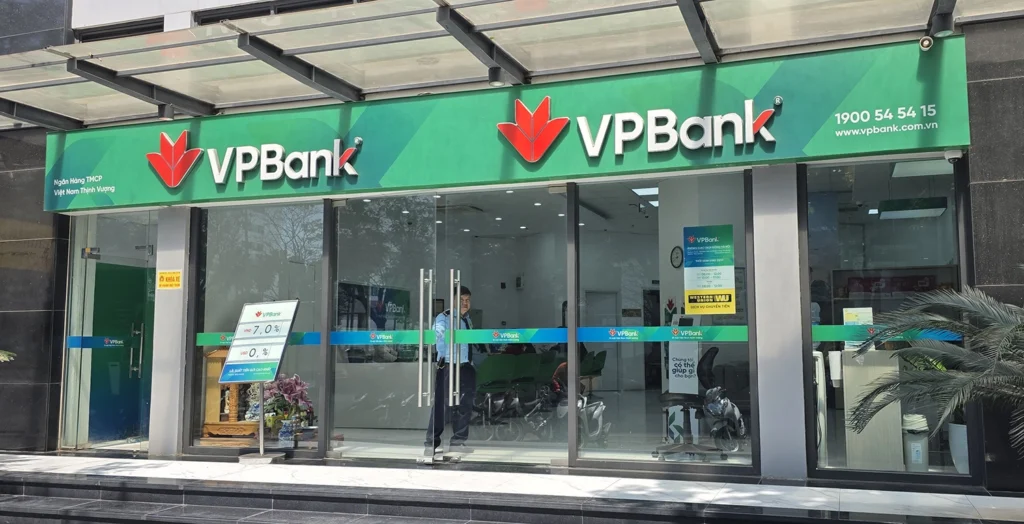
Some travellers also say banks like LPBank, ACB, Eximbank, OCB or Saigon Bank may not charge a fee on some cards.
TPBank used to let you withdraw for free, but since June 2025 it also charges 55,000 VND per withdrawal, with a maximum of 10 million per transaction.
Finally, the limit is usually per withdrawal, not per day, so you can repeat it if you need to (paying the fee each time).
Paying day to day in Vietnam: cash, card or QR?
There are three ways to pay in Vietnam: cash, card or QR code. Each has its moment.
Do you need cash in Vietnam?
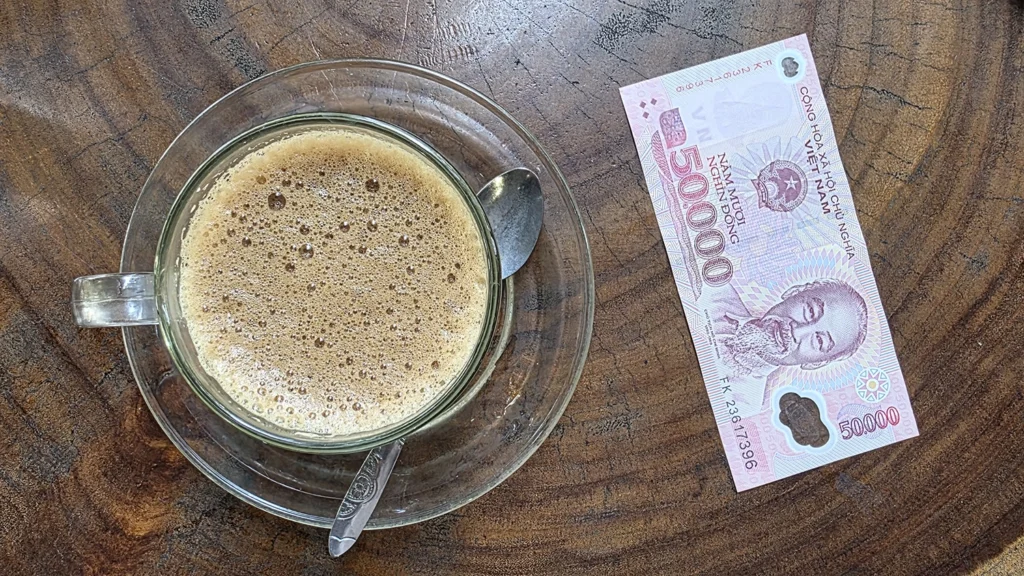
As a tourist, cash is still essential. Most budget and mid range accommodation doesn’t take cards or adds a surcharge, and small restaurants and cafés usually want cash too.
You’ll see Vietnamese people scanning QR codes all the time, but for travellers cash is the easiest option, and the same goes for markets (if you plan to shop, here’s my guide to buying clothes in Vietnam), spas, museums and cultural visits.
👉 Cash also comes in handy for tipping. If you want to know when tips are expected in Vietnam and how much to leave, I explain it in my guide to tipping in Vietnam.
Can you pay by card in Vietnam in restaurants, hotels and so on?
Yes, lots of places take cards, but they often add a 3% surcharge, which often makes cash the better option.
Budget or mid range hotels probably won’t take cards or will add that surcharge, and the same goes for local restaurants, souvenir shops and other small businesses.
On the other hand, upmarket hotels, chains like WinMart or Circle K, modern cafés like Highlands Coffee and more touristy restaurants usually take cards with no fee.
In short: use cash as your main way to pay, and your card only where you know for sure there’s no surcharge.
Can tourists pay by QR code in Vietnam?
You’ll see QR codes in almost every shop and café. It’s how locals pay most, but it mainly works through apps linked to Vietnamese bank accounts.
I’ve tried VNPay, MoMo and ZaloPay as a tourist would, and the conclusion is clear: they’re not designed for tourists without a local bank account. They usually need a Vietnamese phone number, ID checks or processes that aren’t at all intuitive if you’re passing through.
There are options for foreigners like Moreta Pay, which works without a Vietnamese bank account, but it usually charges fees both to top up and to pay. For a tourist, the simplest option is still a mix of cash and card.
Conclusion: how to pay in Vietnam without making life hard for yourself
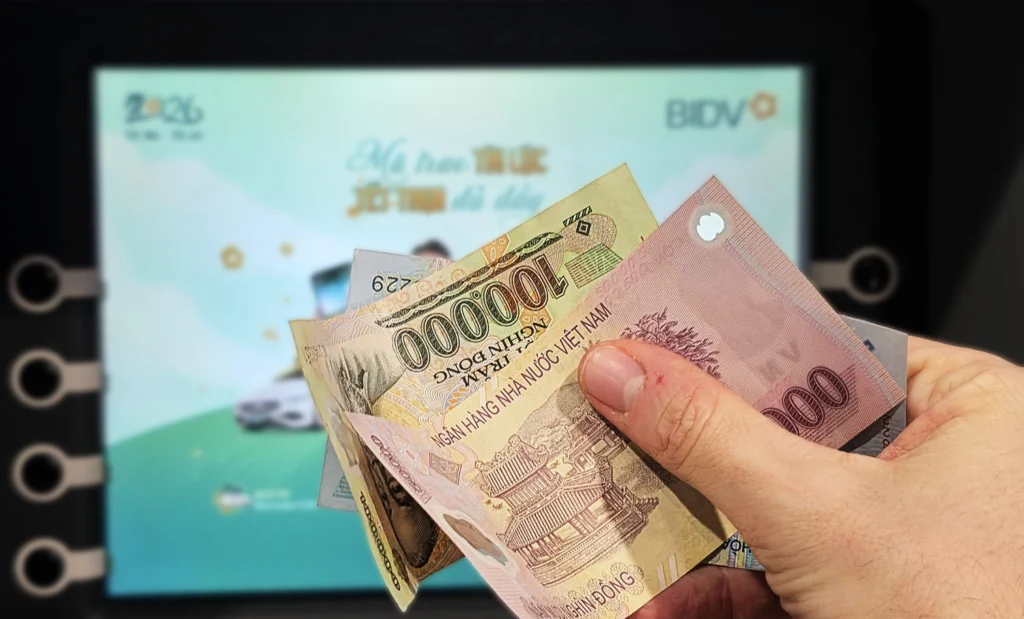
If I had to sum it up in one sentence: change a little at the airport, use jewellery shops in the centre for most of your money, carry at least two good, different international cards as backup and pay cash day to day, except where you know the card has no surcharge.
No need to overcomplicate it: this way you’ll lose very little to fees and avoid the usual mistakes.
Before you finish planning: check safety too
Besides money, it’s worth reading up on safety before your trip. There are a few common tourist scams (rigged taxis, street «gifts», fake Tinder dates), plus physical things like traffic or mosquitoes.
I explain it all calmly, without scaremongering and with real examples from my years living here, in my Vietnam safety guide.
If this guide helped and you’d like to see what travelling around the country is really like, come and say hi on my YouTube (in Spanish)channel and Instagram (in Spanish): Vietnam con Alberto. I share practical routes, daily life in Hanoi and tips from real experience.
Any questions about cards or ATMs? Leave them in the comments below and I’ll give you a hand.
I’ve also just started a Vietnam WhatsApp group in English. It’s small for now, but you’re very welcome to join and ask anything about your trip.