

Lots of people have heard it’s easy to find work as an English teacher in Vietnam, and to a large extent it’s true: demand is high and it’s one of the most accessible ways to live in the country for a while, earn a living and have a different experience. What’s harder to find is clear information on what you really need to work here legally, what types of jobs exist and how much each pays.
I’ve been teaching in Vietnam since 2017. I got off to a bad start, trusting a company’s promises that turned out to be false, and since then I’ve worked at two bilingual schools in Hanoi, first a primary school and now a secondary school. In this article I tell you what I wish someone had explained to me before I packed my bags, so you can decide if this suits you and, if you go for it, do it well informed.
Types of teaching in Vietnam: language centres and schools
When people talk about «teaching in Vietnam» they lump everything together, but in practice there are quite different realities, and it’s worth understanding them before looking for work because they determine your timetable, salary, stability and workload.
Language centres and agency work
I’ve grouped language centres and public schools together because the conditions and pay are quite similar. These jobs are paid by the hour, at around 450,000 to 500,000 VND ($17 to $19). As for hours: language centre teachers work mostly evenings and weekends, when students are free, while those teaching in public schools work mornings and midday. Many teachers combine both, and even add private lessons to get more hours. It’s the most flexible route and the easiest to get into, but also the least stable, with one big drawback: holidays are generally unpaid.
There’s something else to bear in mind about language centres: they often choose and pay teachers by nationality. As a non native speaker, I was below native speakers, but as a European I was above non native Asian teachers. It really bothered me, and it’s what made me focus my search on bilingual and international schools, which value qualifications, experience and ability over your passport.
Bilingual and international schools
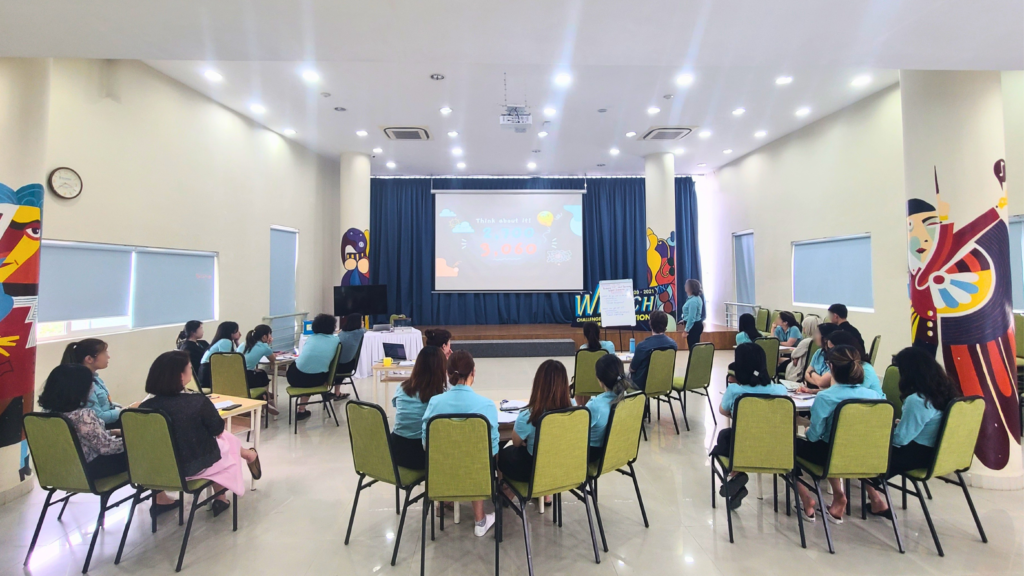
This is the world I know best, because it’s where I’ve worked since I started in Vietnam. It’s full time, usually from 7:00 or 7:30 am to 4:00 or 4:30 pm, with an hour for lunch. The contract usually includes health insurance, visa, work permit and sometimes flights to your country once a year or at the start and end of your contract. In many cases it includes paid holidays too. These schools have their own staff rather than agency teachers, so the job is stable and full time.
In return they ask more: marking exams, planning lessons, creating materials and designing activities. The teaching load is usually 20 to 23 hours a week (in my case, in recent years, about 24 periods of 45 minutes), and the rest of the day goes on everything around teaching. Classes are capped at about 25 students, a bit more in higher years, and expectations are high for both students and teachers. In my experience, students behave better than in Spain or the UK, which you appreciate when you’re in front of a class every day.
Salaries cover a wide range, roughly 36 to 120 million VND a month ($1,400 to $4,600) depending on the school, experience and qualifications. Here there’s an important difference with language centres: bilingual and international schools don’t usually pay native and non native teachers differently.
A note on lesson planning
Planning works similarly in both worlds: it can be given to you or depend entirely on you. At the two bilingual schools where I’ve worked, teachers started from a base with a pacing guide, a curriculum and materials from previous years, which each of us adapted and improved rather than improvising from scratch.
How much teachers earn in Vietnam (and the cost of living)
Now one of the most important questions: is it really worth it financially? Spoiler: yes. Vietnam is often cited as one of the best countries in the world to teach in, largely because salaries are relatively high compared with the cost of living, and most teachers manage to save a good part of their income.
How much you earn as a teacher in Vietnam
Pay depends on many factors, for example whether you work at a language centre or a school and, within schools, the school, your experience and qualifications. This table sums up approximate salaries for each:
| Language centres and agencies | Bilingual and international schools | |
|---|---|---|
| Payment type | Hourly | Monthly salary |
| How much | 450k to 500k/hour ($17 to $19) | 36M to 120M VND/month ($1,400 to $4,600) |
| Hours | Evenings and weekends, or mornings in public schools | Full time, about 7:00 am to 4:30 pm |
The table gives the general idea, but there are some nuances worth knowing:
- Language centres: if you commit to a reputable centre you’re usually guaranteed about 20 hours a week, around 40 million VND a month (about $1,500). Many end up earning quite a bit more by combining income: private lessons, hours in public schools through agencies and even online classes. The downside is that holidays are rarely paid.
- Schools: the range is wide because it usually reflects different stages of a teacher’s career. You can start at a less prestigious school on a low salary and move up as you add training and experience, going for better positions and pay. The most prestigious international schools can reach about $5,800 a month, though they’re not easy to get into. As for qualifications, postgraduate studies (like a master’s or PhD) are what count most for promotion.
The advantage of this system is that you can progress from within. I did a master’s while working, and at my school I’ve mentored teachers who started with a TOEFL and went on to do a PGCE remotely. Today this is harder than when I started, because requirements have tightened in recent years.
Cost of living in Vietnam
The cost of living varies a lot with your lifestyle but, as I said at the start of this section, it’s usually low enough to live well and save. To give you an idea, the biggest expense is usually housing. A room in a shared house can cost around 6 million VND a month (about $230), a studio around 10 million ($380) and an apartment from about 12 million upwards (about $460).
Take these as references for areas that aren’t central, but not too far from central Hanoi either. In practice, prices vary with the level of luxury, the area and how much time you spend looking. On top of that come food, transport, phone and internet, which depend a lot on each person.
Broadly speaking, these are typical monthly budgets for one person:
- Budget (local or backpacker style): $580 to $810.
- Comfortable (average expat): $920 to $1,400.
- Premium (luxuries and exclusive areas): $1,700 to $2,900 or more.
On a teacher’s salary, even at the lower end of the range, most people have a considerable margin to save, which is one reason Vietnam is often recommended as one of the best countries in the world to teach in.
👉 If you want to understand better where the country is in its development and why salaries and prices are what they are, I explain it in Is Vietnam a poor or rich country? (in Spanish)
What subjects can you teach in Vietnam?
English is the subject in most demand, but also the most competitive. There are lots of English teaching jobs and, at the same time, lots of teachers competing for the best positions. That makes it hard for newcomers or those with less experience and training to get into the best schools. That’s why coming in through another subject often works better.
Maths, sciences and computer science are the subjects with most openings after English, especially at bilingual and international schools. Humanities, arts, social sciences and other languages are in much less demand and much harder to get into. I teach computer science myself, so I’m a good example that you don’t need to be an English teacher to build a career here.
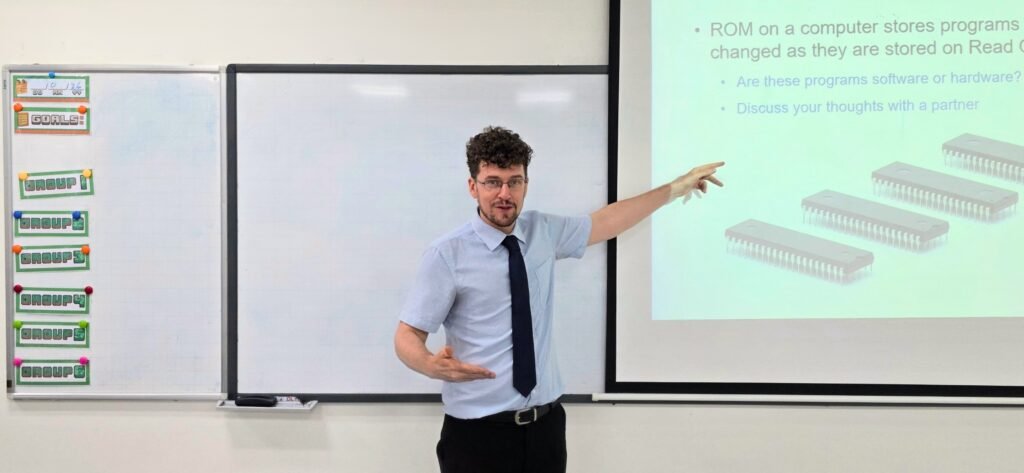
And Spanish? It’s possible too, though opportunities are more limited.
👉 I explain it in detail in my guide to working as a Spanish teacher in Vietnam (in Spanish).
Requirements to work legally as a teacher in Vietnam
To work as a teacher in Vietnam you need a work permit, which schools then use to get you a long term visa or residence card. The requirements depend a lot on whether you go to a language centre or a school. Schools, especially bilingual and international ones, are much more demanding.
Requirements at language centres
This is the most accessible route. They ask for:
- University degree: any four year degree works, whatever the field.
- Teaching certificate: a TEFL, TESOL or CELTA of at least 120 hours. It’s the standard and is usually enough for the visa.
- Experience: not required. With the degree and a 120 hour TEFL you can start with no previous experience, which makes it the most direct way in.
- English level: if you’re not a native speaker, you need to prove C1 level, usually with IELTS 6.5 or TOEFL iBT 100. Citizens of the United States, the United Kingdom, Canada, Ireland, Australia and New Zealand are exempt, as is anyone who studied their whole degree in English or has a degree in English studies.
Requirements at bilingual and international schools
Here the bar rises, both by law and by the schools’ own policies:
- Specific degree: a degree in Education or in the subject you’ll teach; not just any degree.
- Teaching licence: an official teaching qualification from your country, like the British PGCE, a teaching master’s in Spain or a US state licence.
- Experience: the law asks for two years since Decree 219/2025, but prestigious schools usually require two to three years of classroom experience, both for their standards and to justify the hire to the Ministry of Education.
- English level: the same requirement as at centres for non natives (IELTS 6.5 or equivalent), but here the interview carries a lot of weight. If you show fluency, they sometimes give you time to get the official certificate after signing.
Other general requirements
On top of the above, three requirements apply in every case, wherever you work:
- Being an adult.
- Being in good health: checked with a medical exam whose report goes with the work permit application. Usually the school arranges the hospital visit before applying.
- No criminal record: you need to get a criminal record certificate in your country before coming.
Legalising your qualifications
For the Vietnamese government to accept your qualifications in the work permit application, they must be legalised. The safest thing is to do it in your own country before coming, because doing it from Vietnam is more complicated and, depending on your embassy, there may be more uncertainty. The best strategy is to email or call your country’s embassy in Vietnam so they confirm the exact procedure for your case.
This changed recently. Vietnam joined the Hague Apostille Convention in late 2025, and it has applied since 11 September 2026. In practice:
- Documents legalised before 11 September 2026 went through the old consular legalisation system: a chain of signatures from the university to the Ministry of Education, then Foreign Affairs and finally the Vietnamese embassy in your country.
- Since 11 September 2026 a single apostille from your country is enough, with no need to go through the Vietnamese embassy. For countries that already use the apostille, this makes things much simpler.
Bear in mind: don’t be overconfident with legalisation, because the procedure depends on the country that issued the document and on each embassy. For example, if you’re Spanish but your TEFL certificate was issued by a British company, the process goes through the British side, not the Spanish one, and the UK embassy doesn’t do certified copies or affidavits for this kind of certificate. In some cases the Vietnamese government accepts alternatives to the full procedure, like a sworn statement or a certified copy, but it’s not always possible to get them. By far the safest thing is to arrive with everything legalised the standard way before coming.
How to find a teaching job in Vietnam
Should I look for work before going or once there?
The first instinct is usually to look for work before leaving home, and for some profiles it works. It makes most sense if you’re aiming for a well regarded school and already have international teaching experience, or if you’re very confident in your ability to teach English, or another subject in English. These positions usually open between January and February for the next school year, and the last places are normally filled around July. After that, you can only get in if a teacher leaves mid year, which is quite rare. It’s not impossible to find work at bilingual or international schools then, but it’s not easy.
For smaller language centres, on the other hand, it’s best to come, get to know the place and test the waters before committing to anyone. The best centres don’t need to hire someone from abroad to arrive in a month: they prefer teachers with experience in the country, or who are at least already here and can start soon. Usually the centres most eager to hire you from your home country are the ones that suit you least: worse conditions, places nobody wants to live, or simply promises that aren’t kept.
If you decide to come for a few months to explore before signing anything, be sensible and make sure you have good travel insurance with solid medical cover.
Where to look for jobs
Start by researching well regarded schools or centres in the area where you want to live. Both schools and reputable language centre chains take CVs through their website or by email, and schools usually post vacancies on their own site. For schools there are also specialist websites like tes.com, where many schools around the world post vacancies. Facebook groups about teaching in Vietnam also have job posts from time to time, and are a good place to ask questions.
A tip that can save you trouble: before accepting an offer, ask for opinions. The group Vietnam English Teachers’ Bad Experiences is a good place to ask if anyone has worked for the company that made you an offer. If the centre is very small, ask for the contact of a regular teacher who works there and ask them directly what it’s like. If the centre refuses, that’s a bad sign.
Final tip: prepare as much as you can
If you’re thinking of coming, my biggest recommendation is this: don’t settle for the minimum requirements. Try to bring the strongest CV you can. For example, C2 English is better than C1, an in person teaching certificate counts for more than an online one, and real experience, even as a volunteer at home, will always beat never having set foot in a classroom.
Bear in mind that the best conditions, the highest salaries and the most serious schools go to the best qualified teachers.
And one last thing, closely linked to what I said about centres with a doubtful reputation. I speak from experience: I started by trusting some offers that turned out to be smoke, a story I tell in the video below (in Spanish). The big lesson I learnt is that before accepting a job you should research the school, talk to other teachers who’ve worked there and be wary of anything that sounds too idyllic. A good offer on paper is worth absolutely nothing if the people behind it aren’t trustworthy.
👉 And if you want an idea of daily life beyond work, I tell you about it in what it’s like to live in Vietnam.
More questions about teaching in Vietnam?
Leave them in the comments below and I’ll reply. And if you’ve already taught here, your experience may be exactly what someone considering it needs to read, so feel free to share it.