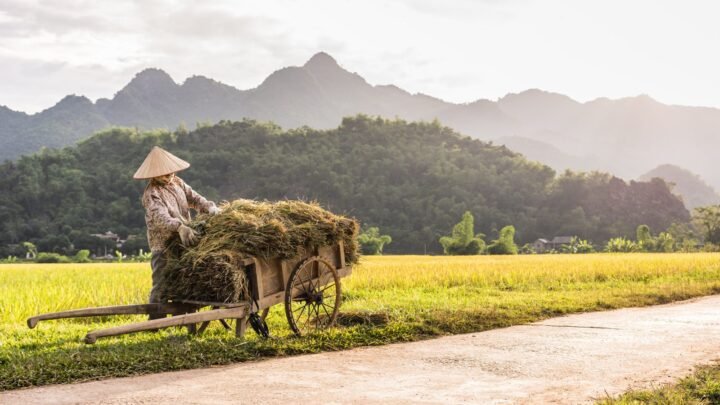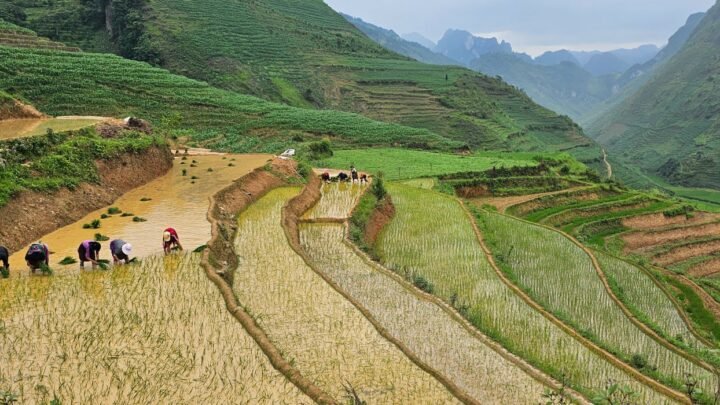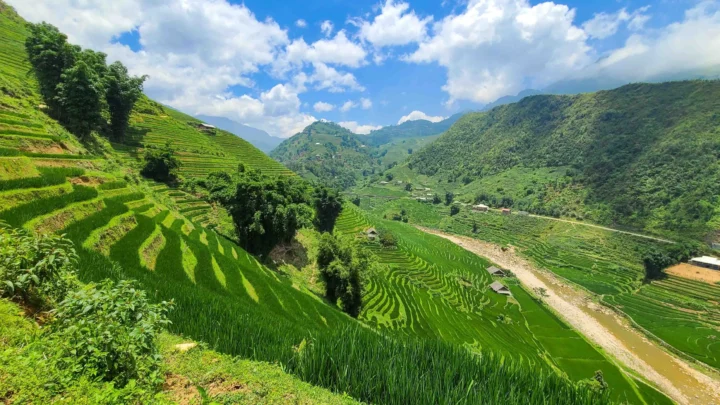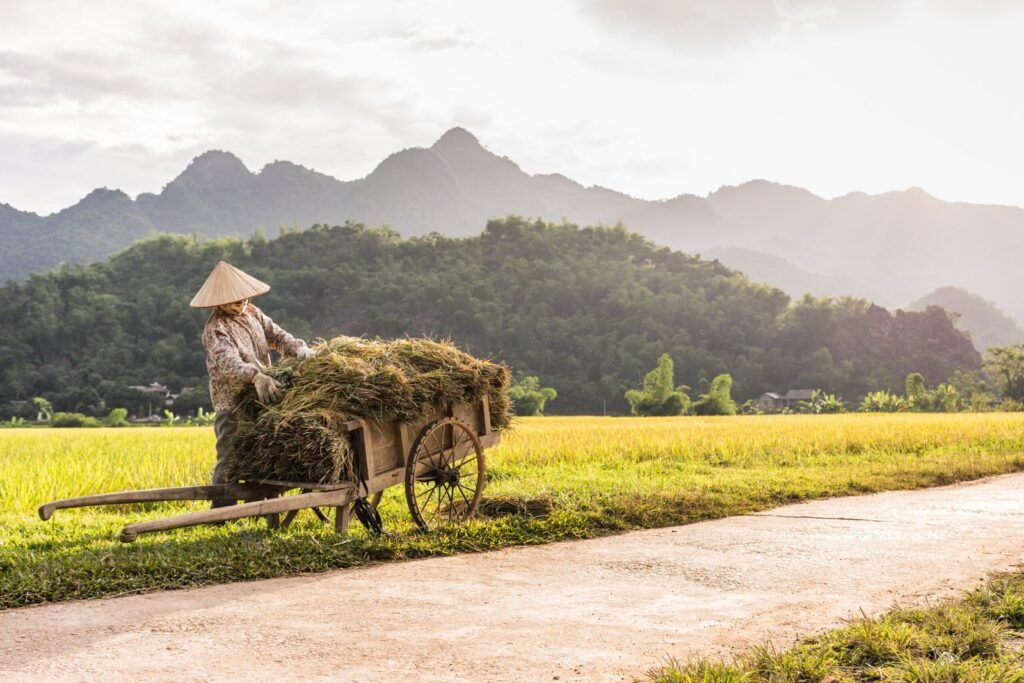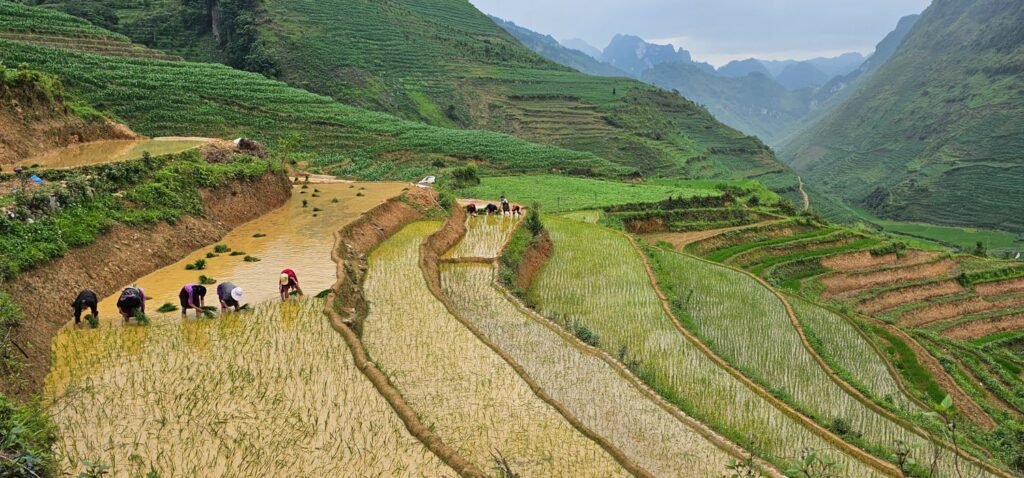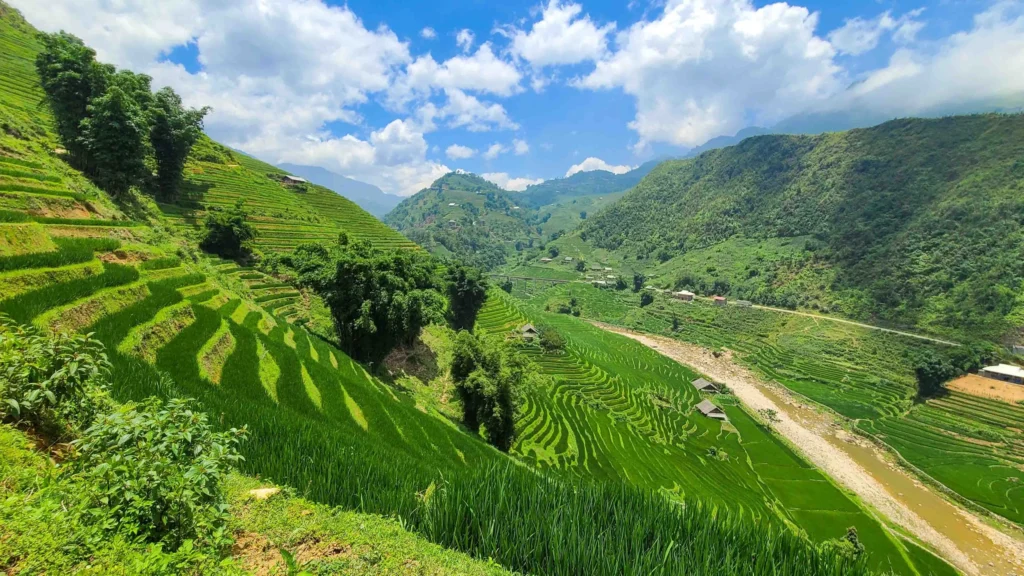

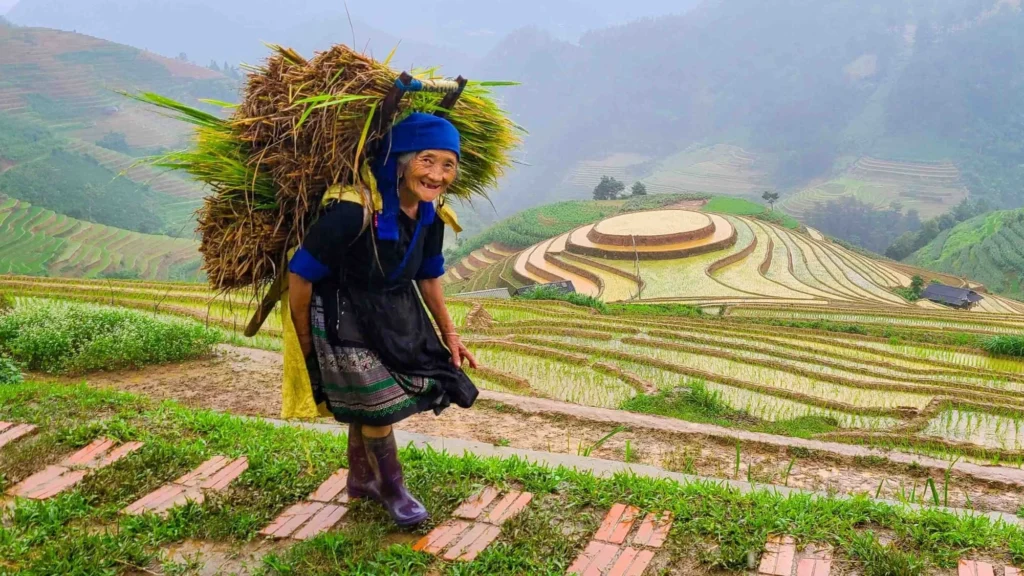
Mu Cang Chai has some of the most impressive rice fields in Vietnam. As well as its grand rice terrace landscapes (for me the most impressive in Vietnam), it stands out because you can discover the way of life of the Hmong, one of Vietnam’s most representative ethnic minorities.
It isn’t especially easy to reach, nor as adapted to international tourism as other places in the north like Sapa or Ha Giang, but that’s exactly why it keeps a more authentic character.
At about 1,000 m above sea level, Mu Cang Chai has a cool climate most of the year, even in summer, a particularly good time to go: rice is planted in May and June and harvested in September and October.
This, together with its natural scenery, waterfalls, traditional houses, rivers and mountains, makes it a unique place, perfect for adventurers who want to discover one of the most authentic and impressive places in Vietnam.
What to do in Mu Cang Chai
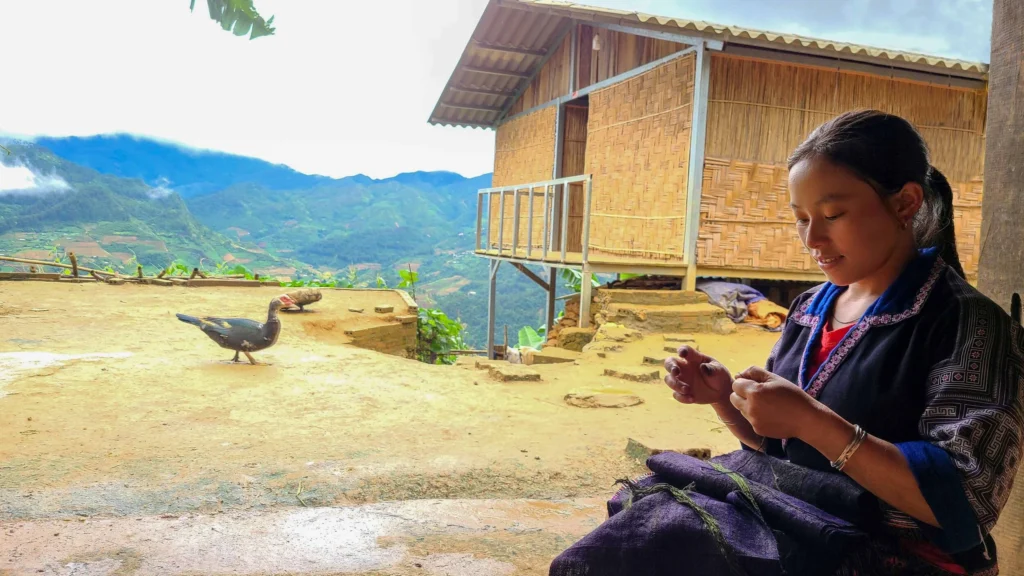
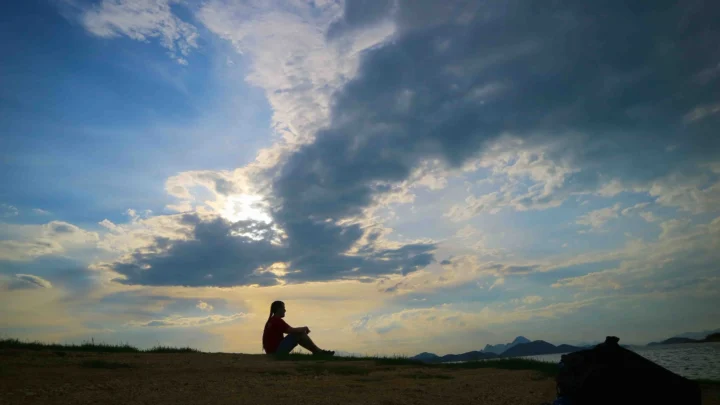
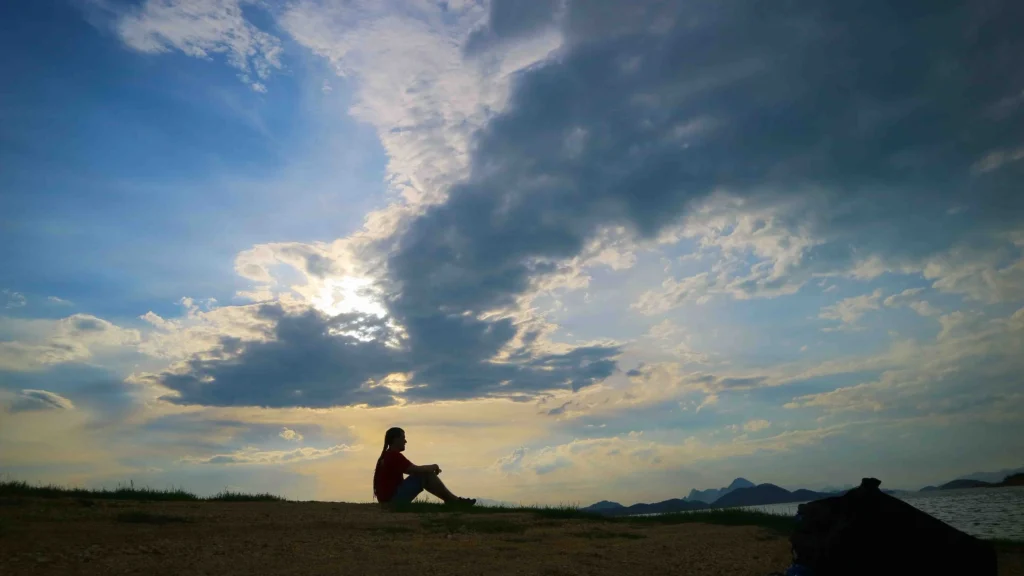
Within the Mu Cang Chai region, La Pán Tẩn, on the valley slope, is a great area to stay (I stayed at Indigenous homestay). From La Pán Tẩn it’s easy to take in the beauty of the rice fields, relax by day watching the clouds flow through the valley and, at night, look at the stars by a campfire. Other areas similar to La Pán Tẩn are Che Cu Nha and Di Xu Phinh.
In this area you’ll also have the chance to discover daily life in local ethnic villages. At the homestay where I stayed on my first visit, I lived with a Hmong family for three days. I ate with them, drank the famous rice liquor and got a glimpse of their daily life and culture.
Thanks to Chù and his family I learnt about their music and religion, and saw how they make their clothes, look after their animals and farm their land.
On your trip to Mu Cang Chai, I recommend booking a trekking and/or motorbike tour at your accommodation to discover the area’s most impressive spots with a local guide. These tours are affordable and really worth it.
How to get to Mu Cang Chai
About 300 km from Hanoi and 140 km from Sapa, you can reach Mu Cang Chai by bus or motorbike from several places in northern Vietnam. You can book bus tickets on Vexere.
If you go by motorbike, coming from Hanoi, the stretch from Nghia Lo to Mu Cang Chai is especially beautiful, with high mountain scenery, rice fields and traditional ethnic minority villages.
Besides the bus or motorbike, another good option is booking a private car with a driver from Hanoi. The journey is long and winding, so a car with a driver can make a big difference in comfort and peace of mind.
If you want to arrange it easily, you can message Phuong Vu directly on WhatsApp, from my trusted local agency, Holiday Travelling, to check availability and price:
👉 Book a car with a driver to Mu Cang Chai on WhatsApp
Where to stay in Mu Cang Chai
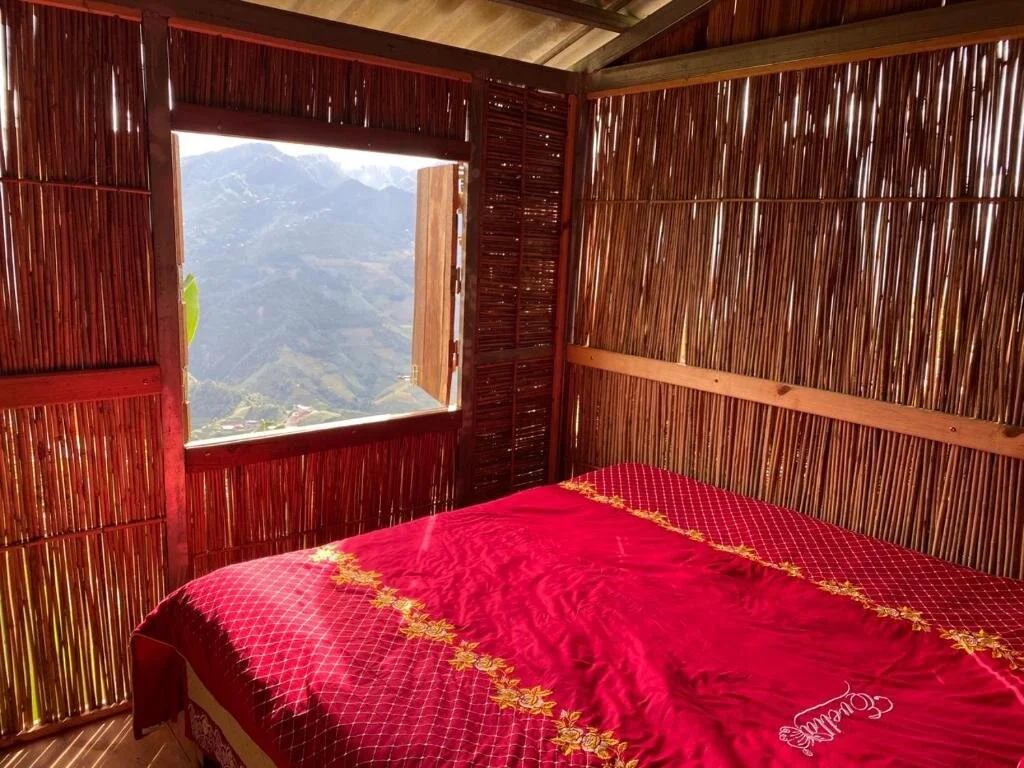
I stayed at Indigenous homestay in Mu Cang Chai, and for me it was perfect. This homestay, run by a Hmong family, is high in the mountains and the views from my room were amazing.
The house is also between two of the most iconic places to visit in Mu Cang Chai, and around it you can enjoy spectacular scenery.
Don’t expect luxury though: this place is for those looking for an authentic experience with a Hmong family. The hosts’ English is very basic, so you may need Google Translate to communicate. The host’s brother speaks English and can give you directions on WhatsApp or even guide a tour for you.
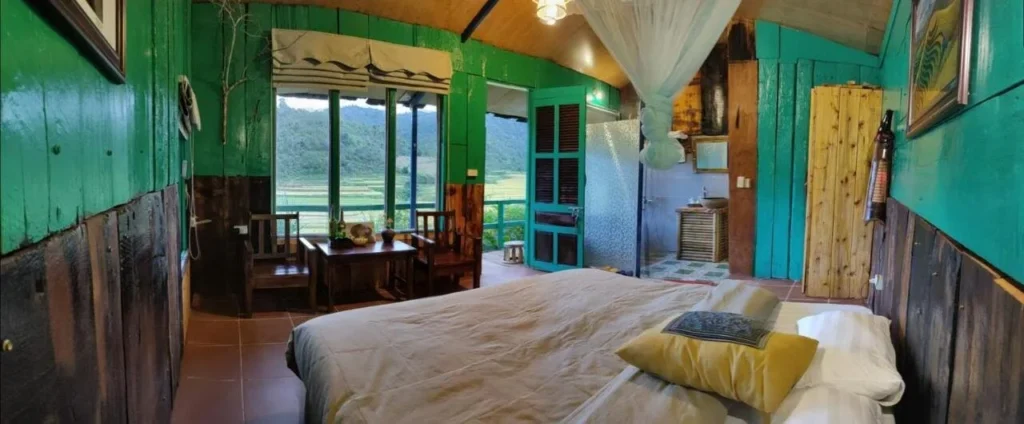
If you want somewhere a bit more upmarket, you can book one of the bungalows at Mu Cang Chai Ecolodge, with better facilities and open views of the rice terraces, though also pricier than traditional homestays.
You can download this file with recommended places to stay in Vietnam (in Spanish), based on the opinions of travellers in my Facebook group (in Spanish) and my WhatsApp group.
Is Mu Cang Chai worth adding to your route?
Mu Cang Chai can be well worth it if you’re looking for spectacular rice fields, authenticity and less international tourism.
However, if it’s your first time in Vietnam or you have few days, destinations like Sapa or Ha Giang may be more accessible and easier to fit into your itinerary.
When is the best time to go to Mu Cang Chai?
The best times to see the rice terraces in Mu Cang Chai are May and June, rainier months when people plant the rice and you can clearly see water running between the terraces, and September and October, harvest time, when the rice fields turn a very characteristic yellow.
One last tip
Bring hiking shoes, a sweatshirt, a rain jacket, an umbrella and sunscreen!
Mu Cang Chai isn’t the most comfortable or easiest place in northern Vietnam, but if you connect with it, it will probably be one of those places you remember for many years.