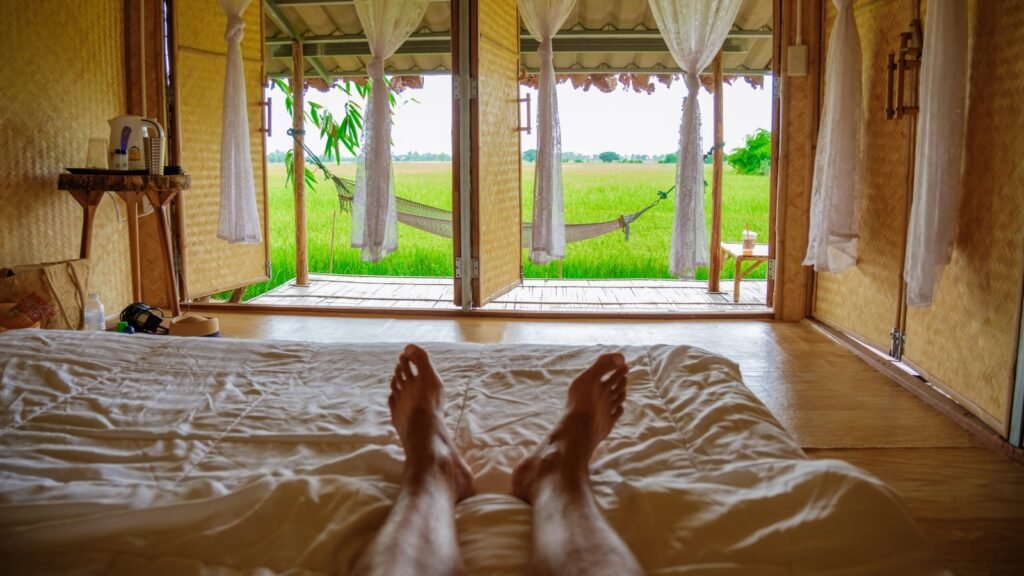



I’ve done the Hai Van Pass three times, each time in a different way.
The first was a short there and back trip from Hoi An by car with my dad and my sister, just for a coffee and the views. The second was by motorbike, riding myself from Hue to Hoi An. And the third, the one that made me write this, was on the back of a motorbike behind a driver from Le Family Riders.
Drawing on those trips and on travellers I’ve been in touch with over the years, I’ll go through the different ways to do this route, with the good and the bad of each, so you can pick the one that suits you and your trip.
Before we start: the Hai Van Pass isn’t just a way to get from Hue to Hoi An. It’s an outing in itself, a little adventure through a more rural side of Vietnam with incredible views. Whether you do it on a motorbike or more calmly by car or train, the travel day becomes one you won’t forget.
What is the Hai Van Pass?
The Hai Van Pass is a mountain pass of about 21 kilometres on Vietnam’s central coast, between Hue and Da Nang. The road hugs the coast, with the sea on one side and the mountain on the other, climbing and dropping through the bends.
Those 21 kilometres are just the pass, but most travellers do the whole route from Hue to Hoi An or the other way round (about 130 km), with stretches of beach, a waterfall where you can swim and stops to discover the local culture of central Vietnam.
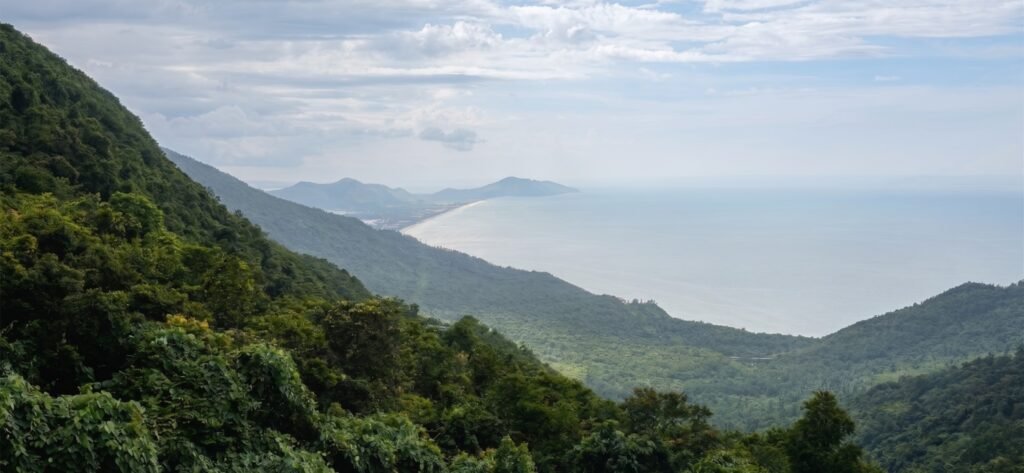
The name (Hai, sea; Van, cloud) roughly means «ocean of clouds pass», and it’s pretty literal. The mountains rise steeply to about 500 metres right by the sea, so coastal moisture often rises as mist and gets trapped at the top, and it really feels like travelling through an ocean of clouds. You see this mostly on mornings between September and January, although for me the blue skies and clouds of spring and summer look nicer.
There are two ways through: the tunnel, under the mountain, and the pass, over the top. The beautiful route with the viewpoints is the pass; the tunnel is more direct but you see nothing. Since the tunnel opened in 2005, almost all heavy traffic uses it, leaving the pass much quieter: perfect for those of us who go for the views.
A fun fact: the route became famous worldwide when Top Gear rode it in 2008 and one presenter called it «one of the best coast roads in the world». Since then it’s on almost every motorbike traveller’s list in Vietnam.
| Option | Rough price | Best for |
|---|---|---|
| Easyrider | $61 | People who want adventure and views without worrying about riding |
| Car | From $15 * | Families, older travellers or anyone after maximum comfort. |
| Minibus | $17 to 23 | Cheap and comfortable, but less epic and in a bigger group. |
| Motorbike on your own | From $19 (per bike + fuel) | People with motorbike experience who want total freedom |
| Train | From $7 | Crossing the pass relaxed, without a bike, with coastal views |
Hue to Hoi An or the other way? Both work
You can do the route in either direction, and both work equally well. My advice: don’t overthink it and pick whichever fits your itinerary.
That said, each direction has a small detail that might help:
- Hue to Hoi An (the most common): Most travellers go this way, I think because the day keeps getting better: you start in a quieter area, the scenery improves, you reach the waterfall just as it gets hot, and the finale is the views from the pass and the Marble Mountains.
- Hoi An/Da Nang to Hue: Vietnam drives on the right, so heading north you ride in the outer lane, next to the sea: uninterrupted views of cliffs and ocean, and easier photo stops without crossing the road.
In the end, with all the viewpoint stops, you’ll enjoy the scenery much the same either way.
The Hai Van Pass by motorbike with an easyrider (my recommendation)
You ride on the back of a motorbike driven by a local driver. I did it with Le Family Riders, the only company I’ve tried this tour with, so what follows is my experience with them.

From the start: what makes Le Family Riders special is the atmosphere and the human connection. Their tour isn’t a race to tick off stops; it’s a balanced mix of fun, scenery and culture, with really friendly drivers who make it feel like a trip with mates.
Why go with an easyrider
You carry a small backpack for the day, and they take your big bag to your final destination (by motorbike or a separate vehicle). The drivers (easyriders) ride big manual motorbikes and drive like professionals, putting your safety first. The tour stops at several points of interest: viewpoints, a waterfall for a swim, the Marble Mountains, a traditional temple and a fishing village. Groups are small, usually 8 people at most, which makes it even more fun.
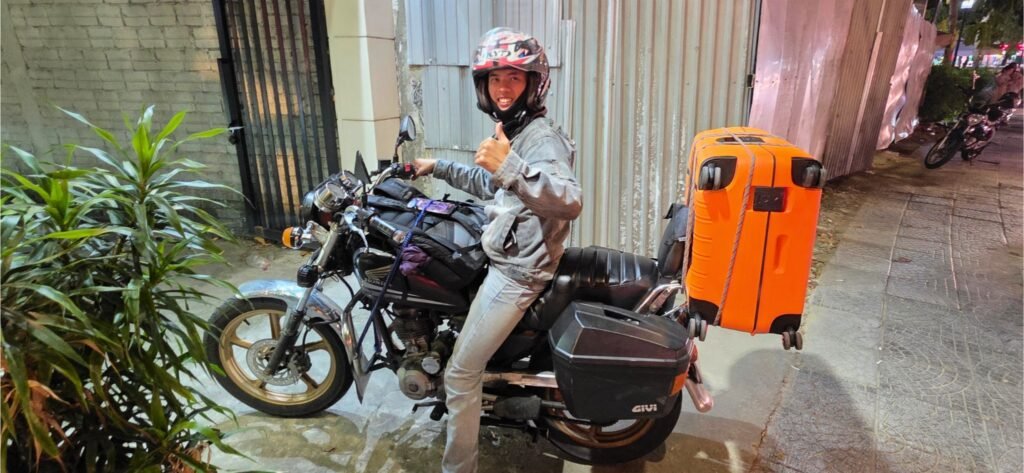
The big advantage is that you enjoy it without any worries: no traffic, bends or route to think about. And you take home more than views: local drivers tell you things and answer your questions, so you discover details you’d have missed without them.
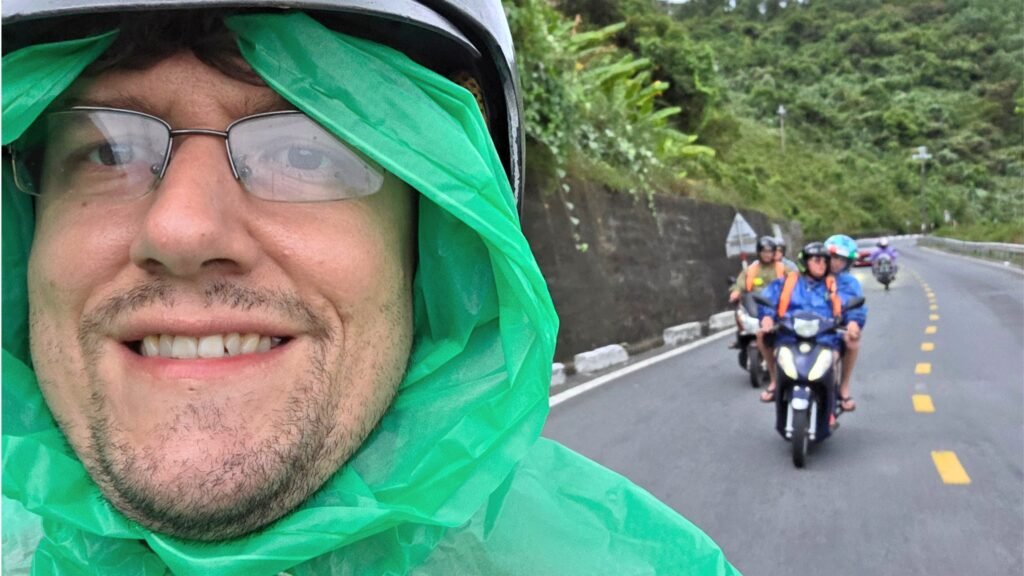
And they look after you really well. I was travelling alone and they offered to take photos of me at several stops; when it started raining, they gave us raincoats and made sure my backpack stayed dry. When the traffic police stopped us, they talked to the officers calmly and we were on our way shortly after with no problem at all. That kind of thing makes the difference compared with going on your own.
What’s included and how much it costs
The tour includes lunch, fuel, the stops and taking your big bag to your destination. Entry to the Marble Mountains with the lift (55,000 VND, about $2) is paid separately (bring some cash: here’s how to get dong without big fees), because it’s optional: you can go up and explore, or relax at the bottom while the group goes in.

The easyrider option costs around 1,600,000 VND (about $61) per person. Le Family Riders give readers of this site a 50,000 VND discount (about $2) per person: message them on WhatsApp, say you come from Vietnam con Alberto and give them the code ALBERTOVN50.
👉 Book with Le Family Riders on WhatsApp
Who I DON’T recommend this for
Keep in mind it’s quite a few hours on the bike: four to five hours of riding plus the stops, so you end the day pretty tired. If you’re travelling with children or want something more comfortable, I’d recommend the next option.
By car with a driver
If you can’t see yourself on a motorbike for hours, a car with a driver may suit you: air conditioning, out of the sun and rain, same scenery with more comfort. Ideal for families with children, older relatives, back problems or anyone who wants an easy day. You lose some of the open air adventure, but you gain comfort.
There are two options: just the transport, which is cheaper, or a full tour with stops, lunch and a guide.
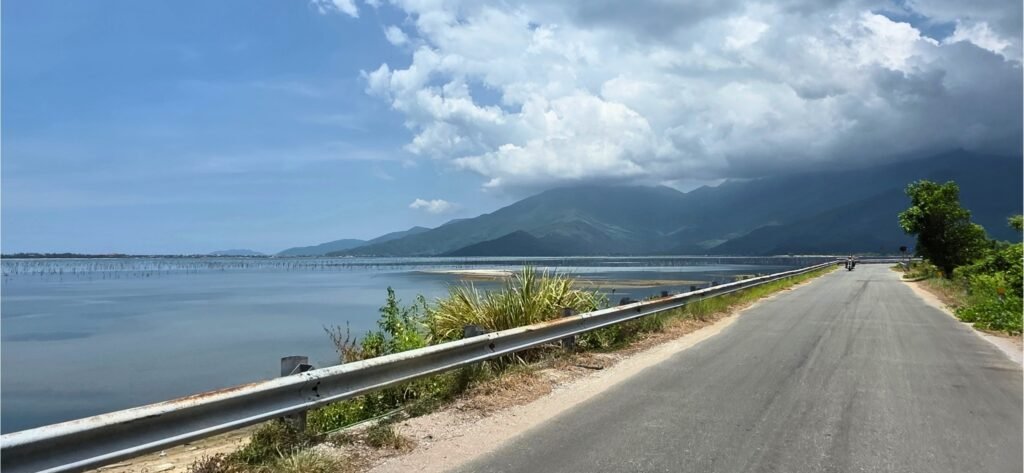
Hiring a car on your own (the cheapest)
The cheapest way is without a tour: you stop wherever you like (agreeing the stops before you set off). No lunch or guide, but much cheaper overall than an organised tour.
That’s what I did on my first visit to the Hai Van Pass, with my dad and my sister. It was a bit less memorable than my other two trips, but it can be a great option for lots of travellers. My article on car with driver prices in Vietnam has the prices for Hue, Da Nang and Hoi An with stops, and how to book.
Le Family Riders’ car tour (all inclusive)
Le Family Riders also do the route by car, with the same good vibes that make the team special. It includes the stops, lunch and taking your luggage, just like their motorbike tour. It costs more than transport only, but you don’t have to think about anything and you still get their human touch.
Book it the same way, on the same WhatsApp, and with the code ALBERTOVN50 you get 50,000 VND off per person.
👉 Book with Le Family Riders on WhatsApp
The Hai Van Pass by minibus
The minibus tour is comfortable and cheap: around 450,000 to 600,000 VND (about $17 to 23) per person, with stops at the main sights, the Hai Van Pass and the Marble Mountains. Buses have 16 or 29 seats, so the group is bigger, it feels less personal and stop times are more fixed.
This option doesn’t stop at the waterfalls for a swim, and lunch isn’t included either. It does include a short stop at Thanh Toan Bridge, a pretty place but not a must, 8 km from Hue.
In short, it’s a more conventional tour and, for me, less fun than the options above: more comfort, less adventure. Still, it gets you between the two cities while seeing the highlights.
👉 See the minibus tour I recommend
On your own by motorbike
The cheapest option and the one with most freedom: rent a motorbike in one city, cross the pass at your own pace and drop it off in the other, stopping wherever you like. I did it this way on my second visit, from Hue to Hoi An, and had a great time, but if I have to recommend one, Le Family Riders was a richer, more memorable experience.
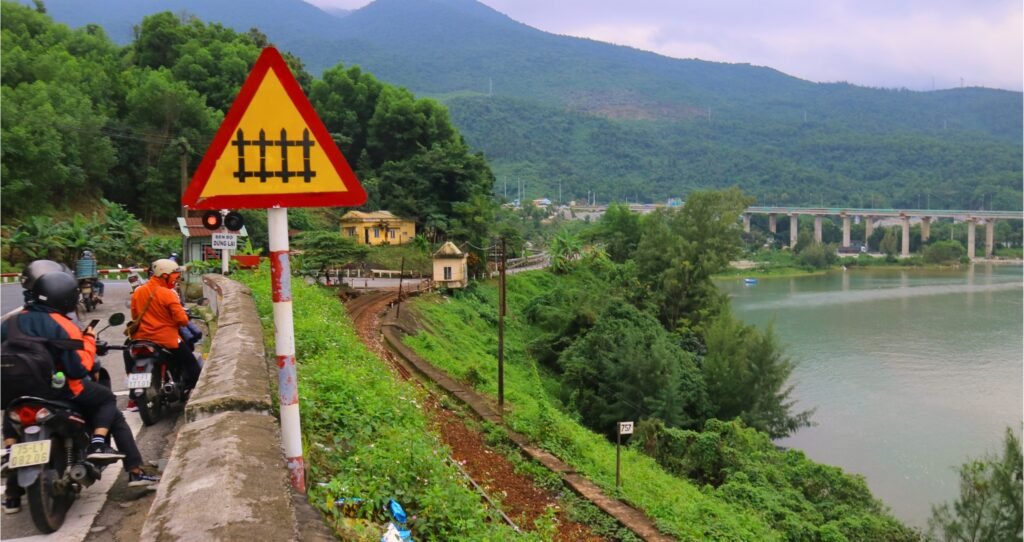
Lots of people wonder about luggage. Most rental companies on this route can take your bag to your destination for a small extra charge, so you don’t carry it on the bike. Same idea as the tours, but you’re riding.
Is it for you? (requirements and licence)
This option isn’t the one I’d recommend for most travellers. For one thing, the pass has bends, some lorries and, if it rains, riding gets harder, so you need to be genuinely confident on a motorbike. For another, to ride a motorbike in Vietnam you need the right international permit: an International Driving Permit under the 1968 convention, with the motorbike category. UK licence holders can get one, but IDPs issued in the US or Australia (1949 convention) aren’t valid here, so check yours before you go. In Da Nang, traffic checks on foreign riders are common, and you can also be stopped elsewhere. On my last trip, for example, we were stopped near Hue. If you ride without the right papers, you risk a fine and a pretty awkward moment.
There’s another big reason not to do this route without the right licence: insurance. If you have an accident, most of the travel insurance policies I recommend (in Spanish) will cover your own medical costs as long as you can show a licence that allows you to ride a motorbike. The biggest problem comes if you have an accident and injure a local while riding without a valid licence: that can get you into serious legal trouble.
How much it costs and where to rent
Rental prices vary by company and bike, but in August 2026 it’s about 500,000 VND ($19) a day for a semi automatic and about 550,000 VND ($21) for an automatic, plus fuel and an extra charge for luggage. There are plenty of providers, like Motorvina, easy to find on Google or by asking your accommodation in Hue, Hoi An or Da Nang.
The Hai Van Pass by train
You can also cross by train, with a different view: the railway runs right along the coast, lower than the road, so the sea views differ from those on a motorbike.
Heritage train or regular train
There are two kinds of train:
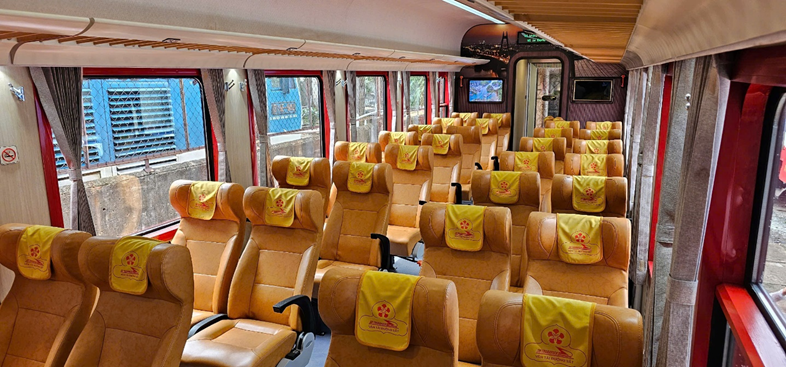
- The heritage train (or historic train). It’s designed for enjoying the journey, not just getting from A to B. It goes slower, has themed carriages, live traditional Vietnamese music in some carriages and a stop of about ten minutes at Lang Co station for photos. The trains are called HD1 and HD3 from Hue to Da Nang, and HD2 and HD4 from Da Nang to Hue. Prices start at about 180,000 VND ($7) for a standard seat, and go up at weekends and in the VIP area.
- The regular train. The normal service, for getting from one place to another. No historic theme or tourist stop, but it uses the same line over the pass, so the views are the same and it’s a bit cheaper: basic seats are about 170,000 VND ($6.50), and the price goes up with comfort, from a simple seat to a bed in an air conditioned cabin.

Pros and cons
On the plus side, it’s comfortable, cheap and lets you enjoy beautiful coastal views without riding or being out in the sun or rain.
On the down side, it’s the least active option: no waterfall swims or villages, and much less personal than a local driver. Also important: the train connects Da Nang and Hue but doesn’t go to Hoi An. If you’re staying there, like most people, add the trip from Hoi An to Da Nang (about 45 to 60 minutes) to reach the station.
Practical info
A few practical details:
- There are two heritage trains a day in each direction, one in the morning and one in the afternoon, plus several regular trains.
- The full journey between Da Nang and Hue takes 2.5 to 3.5 hours.
- Try to sit on the left side of the carriage if you’re going from Hue to Da Nang, and on the right if you’re going from Da Nang to Hue. That’s the sea view side.
- You can buy tickets on the official Vietnam Railways website or at the station. You can also buy them on tour websites: they cost more, but booking is easier, in English and without the payment problems with foreign cards that the official site sometimes has.
In short, how should I do it?
If you’ve read this far and still can’t decide, here’s what I’d tell a friend.
For most people, the best option is riding on the back with an easyrider: you enjoy the scenery without worrying about riding, they look after you all day and you get the human and cultural side that makes this route special. If you’re travelling with children or older people, or just want to be more comfortable, a car with a driver does the same route out of the sun and rain. Riding yourself is only for people with real motorbike experience and the right licence. And if motorbikes don’t appeal at all, the train is a calm, beautiful way to cross the pass, even if you miss the stops.
I did it with Le Family Riders and found it a much richer and more fun experience than when I did it on my own. If you fancy it, you get 50,000 VND off per person with the code ALBERTOVN50 by messaging them on WhatsApp.
👉 Book with Le Family Riders on WhatsApp
Best time to ride the Hai Van Pass
You can do the Hai Van Pass all year round, but temperature, wind, rain and above all mist change with the season, which affects both the experience and what to wear.
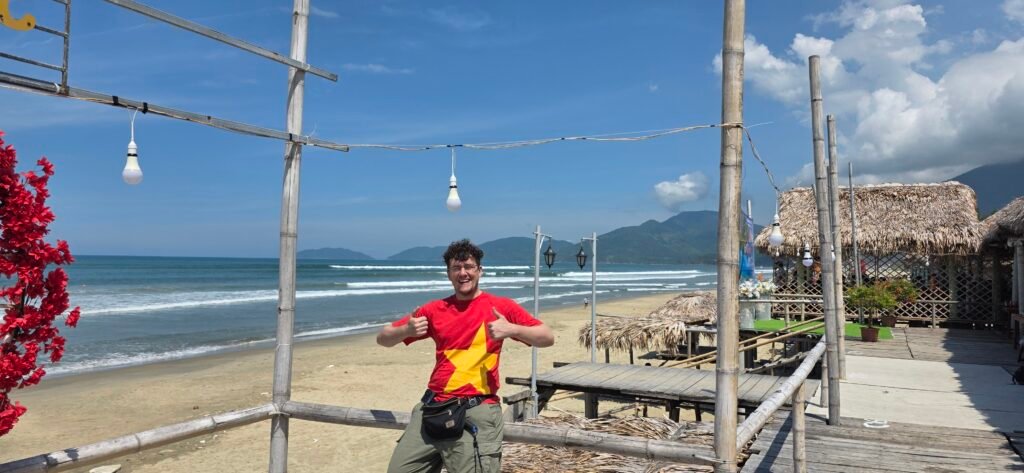
- February to May. The best time, no question. Pleasant temperatures, little rain and clear skies. It’s when you have the best chance of good visibility and enjoying the views to the full.
- June to August. Properly hot, so bring sleeves and sun cream. On the bike the breeze helps, so it bothers you less than walking around town at midday. Expect sunny spells and clouds, and a short but heavy storm is common, so carry a raincoat.
- September to November. These are the rainiest months, with a risk of typhoons. Your chances of getting soaked and finding the pass covered in mist go way up. If you travel at this time, check the forecast a day or two ahead. If a typhoon is forecast, don’t do the route. Their path is known several days in advance, so you can follow it with the Windy app.
- December to January. Cooler and greyer, with wind, clouds and rain that sometimes sets in for days. You might get a beautiful day or a completely wet one. When I rode it alone at the end of December, it rained on and off all day: I saw much of the scenery through clouds and ended up soaked.
| Season | Weather | Good for the pass? |
|---|---|---|
| Feb to May | Dry, clear skies | ⭐ The best time |
| Jun to Aug | Hot, sun and clouds, the odd storm | ✅ Good |
| Sep to Nov | Rain and typhoon risk | ⚠️ With caution |
| Dec to Jan | Cool, grey, windy and rainy | 🌥️ So so |
In short, the best time is spring, February to May, when skies are clearer and the views are easier to enjoy. But if you travel in summer, don’t worry: it’s hotter and cloudier, but you can still enjoy it loads. I’ve even done it in winter in the rain, and it was still worth it.
FAQ
How long does the Hai Van Pass route take?
It depends on how you travel. The pass itself takes about 45 minutes without stopping. But the full route from Hue to Hoi An (about 130 km) usually takes 7 to 8 hours by motorbike, with a driver or on your own, because of the stops at viewpoints, waterfalls and lunch. Some tours with lots of stops, or rainy days, can take longer.
By train, the journey between Da Nang and Hue takes 2.5 to 3.5 hours, but remember the train doesn’t go to Hoi An, so you’d need to add the transfer from Hoi An to Da Nang station.
Is the Hai Van Pass dangerous by motorbike?
The pass is fully paved and in good condition. With almost all heavy traffic (lorries and buses) now using the tunnel, it’s fairly safe. The biggest dangers are sudden weather changes (thick mist or rain) and tight bends. If you don’t have much experience on geared bikes or powerful scooters, the easyrider option is much, much safer.
Either way, make sure you have travel insurance: most cover medical costs from a motorbike accident as long as you follow the law, that is, riding with the right international permit or riding on the back with an easyrider. I explain which ones work well for Vietnam in my Vietnam travel insurance guide (in Spanish).
What happens to my luggage if I do the route by motorbike?
It’s the most common question. If you book an easyrider tour, the company takes your luggage to your destination. If you rent a bike and ride yourself, most rental companies will also take it for a small extra charge. You just carry a small backpack for things like a raincoat, your camera or swimwear.
Is it worth going if the day starts cloudy or rainy?
Yes, but with care. Mist gives the mountain a mystical look (hence the name, “ocean of clouds”). However, if there’s heavy rain, the views disappear completely and riding becomes uncomfortable and slippery. In that case, it’s better to go by car with a driver or by train.
What should I take?
The essentials: sun cream and something to cover your arms, because the coastal sun is strong, especially from mid morning. A raincoat or poncho in your backpack, because mountain weather changes fast. Swimwear and a towel if you want to swim at the waterfall (if you’re on a tour without a towel, they usually rent you one for about $4). And closed, comfortable shoes. If you’re travelling in the cooler months, add a light jacket, because the top is colder and windier than Hue or Da Nang.
Can I stop at the Marble Mountains?
Yes. The Marble Mountains in Da Nang are a usual stop on the route, on motorbike, car and minibus tours. Entry isn’t usually included and is paid separately (about 55,000 VND with the lift). It’s optional: you can go up and explore or stay at the bottom if you’d rather rest.
Can I do it there and back in a day?
Yes. If you’re staying in Hoi An or Da Nang and don’t want to change city, you can go up to the pass, enjoy the views and come back the same day. That’s what I did on my first visit, a short trip from Hoi An just to see the pass and have a coffee at the top, combined with other visits around Da Nang.
Is the Hai Van Pass worth it?
For me, what makes this route special isn’t the pass itself but the whole day between Hue and Hoi An. The pass is short, but the waterfalls, beaches and stops around it turn a simple transfer into one of the best experiences in central Vietnam. If you like the open road and great scenery, don’t think twice.