


Getting around Vietnam is easy, easier than many imagine. There’s every kind of transport (sleeper buses, night trains, cheap domestic flights, motorbikes, Grab), and booking it yourself isn’t complicated.
Years ago, a lot of misinformation pushed travellers into unnecessary tours; now people arrive better prepared. This guide covers what transport there is, what it’s like and where to book it.
In short, how do you get around Vietnam?
- Domestic flights: the quickest for long hops (Hanoi to Ho Chi Minh City, for example). Vietnam Airlines and Vietjet are the main airlines.
- Night train: very comfortable for long journeys where you sleep and wake up at your destination, like Hanoi to Hue.
- Sleeper bus: the cheapest way to cover almost any route, with a standard or VIP option.
- Within cities: Uber style apps (Green SM, Grab and Be), cheap and with no haggling.
- From the airport to the city: bus, app or private car; a taxi is the option I recommend least.
Booking it yourself is easier and cheaper than it looks. Below is each option in detail, with real prices and where to book.
International flights to Vietnam: airlines, stopovers and how to search
From outside Asia you’ll usually have at least one stopover. I’ve flown to Vietnam from Europe with Qatar, Emirates, Turkish Airlines and Vietnam Airlines, all with excellent service and good food on board. I haven’t tried Etihad, but I know travellers who’ve used it with no problems.
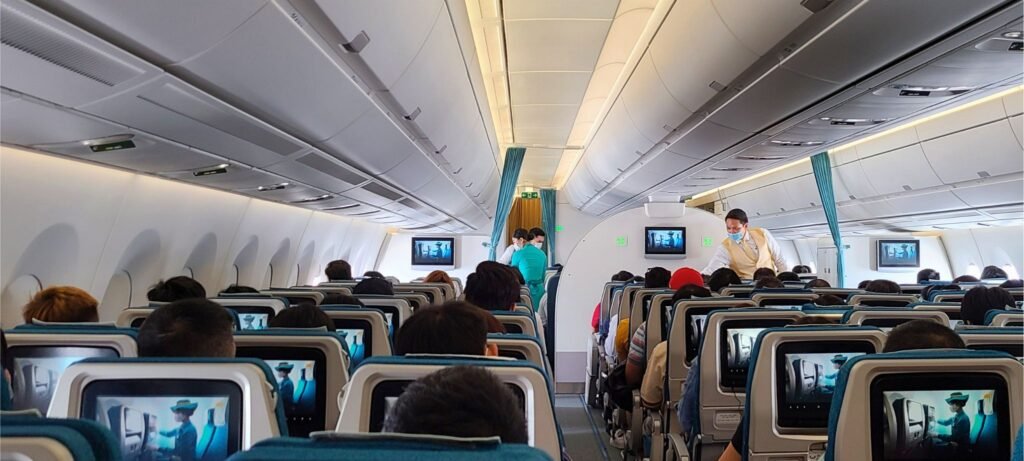
The stopover depends on the airline:
- Asian national airlines: with Vietnam Airlines from Europe, for example, the stopover is usually in a European capital.
- Middle Eastern and Turkish airlines: Qatar, Emirates, Etihad or Turkish stop at their huge hubs (Doha, Dubai, Abu Dhabi or Istanbul). Connections are very well organised and usually last 1.5 to 3 hours.
How do you find the best price? I always search on Skyscanner: in my experience, it’s the platform that compares prices best across airlines and dates.
A trick I found with Vietnam Airlines: going to the airline’s website through Skyscanner’s link sometimes makes the ticket quite a bit cheaper (even several million dong less) than searching the same route directly on the airline’s site. Algorithms.
Domestic flights in Vietnam: Vietnam Airlines vs Vietjet
The most popular domestic routes connect Hanoi with Hue or Da Nang, and these with Ho Chi Minh City. But people also fly to places like Dong Hoi (for Phong Nha Ke Bang), Da Lat, Phu Quoc or Con Dao.
Vietnam Airlines and Vietjet are the main airlines, so you’ll most likely fly with one of them.
| Vietnam Airlines | Vietjet | |
|---|---|---|
| Price | Higher | The cheapest |
| Punctuality | More punctual | Frequent schedule changes and delays |
| Luggage | Cabin and hold luggage included | Cabin luggage included, hold luggage extra |
| Best if… | You want peace of mind and comfort | You want the lowest price |
Vietnam Airlines is for quality service with no surprises: spacious planes, flights usually on time and hold luggage on every ticket. In return, it’s pricier.
Vietjet is for the lowest price, if you accept that flight times may change. Planes and service are good.
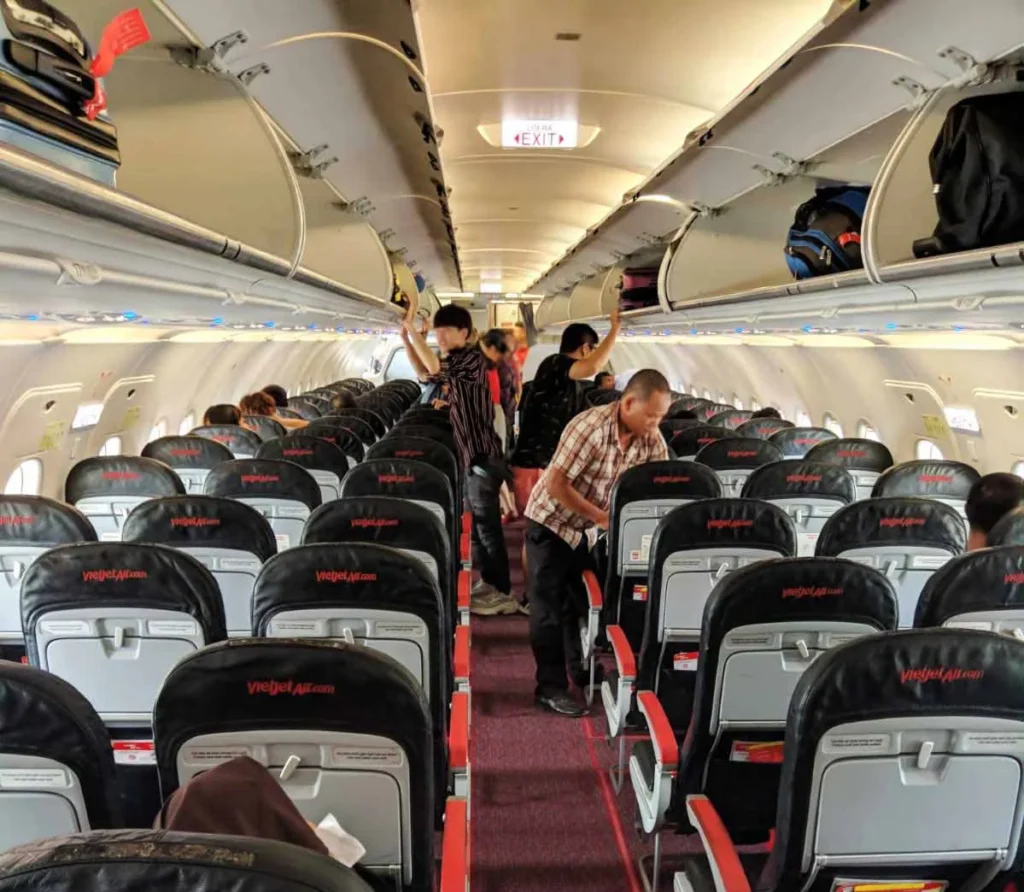
My experience with Vietjet: in about 15 flights, they changed my flight time 3 times (emailing a few days before) and 5 other times the plane left late. Punctuality is its weak point, so avoid connections that depend on a Vietjet flight.
A joke sums it up: Vietnam has two time zones, the country’s and Vietjet’s, which runs 2 to 6 hours behind.
If Vietjet has changed your flight time and it doesn’t suit you, see my article on what to do when Vietjet changes your flight time.
Buses in Vietnam: types of sleeper bus and where to book tickets
Buses have improved a lot, especially on touristy routes like Ninh Binh, Halong Bay or up to the northern mountains. For the latter, see my guide on how to get from Hanoi to Sapa, comparing every option and price.
On more local routes it gets worse: overcrowded buses, sometimes with more people than allowed, some even lying in the aisle.
Be prepared for local driving: sudden swerves, risky overtaking and sometimes drivers on their phone. Not much you can do beyond leaving a review. Nothing to panic about, but good to know.
Sleeper buses
Most long journeys are on this type of bus, in two versions: standard sleeper and VIP.
| Bunk bus | Cabin bus | |
|---|---|---|
| Price | Cheaper | A bit more expensive |
| Space | Narrow, designed for Vietnamese sizes | Roomier, with a privacy curtain |
| Extras | Blanket | Blanket and USB port |
| Best for… | Spending as little as possible | A bit more comfort and privacy |
The standard sleeper bus is the classic bunk bus: cheaper but narrower, with berths built for Vietnamese sizes. I’m 1.84 m (just over 6 ft): I can sleep, but not stretch out fully.
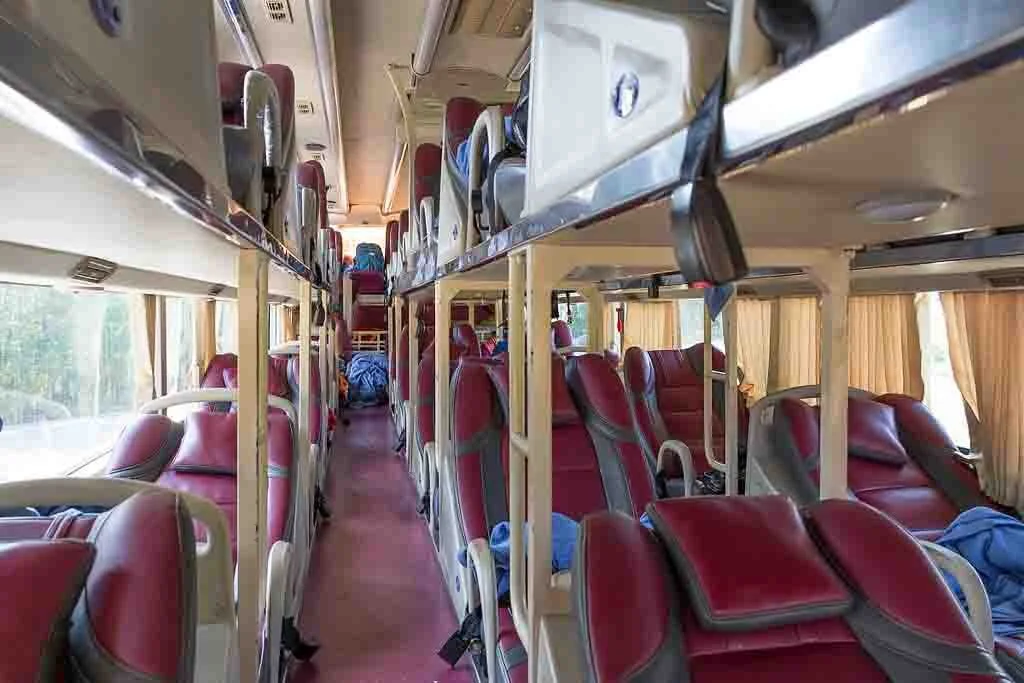

The VIP or cabin bus has really taken off. It costs a bit more, but you get more space, a curtain for privacy, a USB port and sometimes a massage function. On long journeys it’s usually worth it.
Where to book buses

Vexere is a well known Vietnamese platform for booking buses, limousine vans, trains and even ferries within Vietnam, and sometimes to neighbouring countries. Good customer service and usually the best prices. The downside: it can be a bit confusing, although the English version now works quite well.

Baolau is also excellent. Founded in 2013 by two Spaniards in Vietnam, it’s now based in Singapore. It has fewer options than Vexere, but only works with the best companies, and in my experience they answer emails the same day (sometimes within an hour or two).
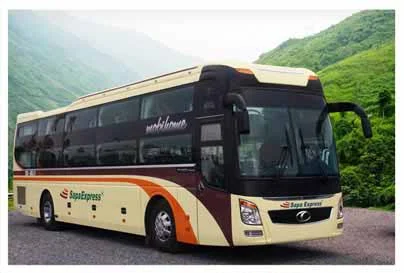
Booking through your accommodation is perhaps easiest, but you don’t choose the company or seat, you may pay a bit more (they usually take a commission) and you can’t leave a review if it goes badly.
Why I stopped recommending 12go
12go is a well known platform that started in Thailand and since 2021 belongs to Travelier, a group based in Israel. I used to recommend it here, but removed it after several bad experiences.
For example:
- Ghost companies: I once booked a bus company that only existed on the 12go website. When I needed to sort something out, there was no real contact number.
- Misleading routes and zero support: a supposedly direct bus to Ha Giang included a transfer at My Dinh station. The minibus was late, I missed the real bus and arrived at midnight instead of ten. Nobody at 12go answered my complaints.
So now I recommend Vexere or Baolau.
PRO TIP: travel around the north without going back through Hanoi
You can move between the main places in the north without returning to Hanoi each time, saving time and money.
For example: Hanoi to Sapa, then Halong or Cat Ba, then Tam Coc (Ninh Binh). From Ninh Binh, carry on by night train to Hue or Da Nang, or go back to Hanoi to fly on.
This saves unnecessary changes and links up the north much more naturally.
Travelling by train in Vietnam: night routes, cabins and the alternative to flying
The train is the most comfortable way to do long overnight journeys: a proper mattress, completely flat, with room to be comfortable. Trains have charm too: wooden walls and floors, an old fashioned feel that makes the journey a cultural experience.
The trains and tracks are quite old, so you feel the rattling. At first you think you won’t sleep a wink, but believe me, you end up sleeping like a log.
Types of cabin on Vietnamese trains
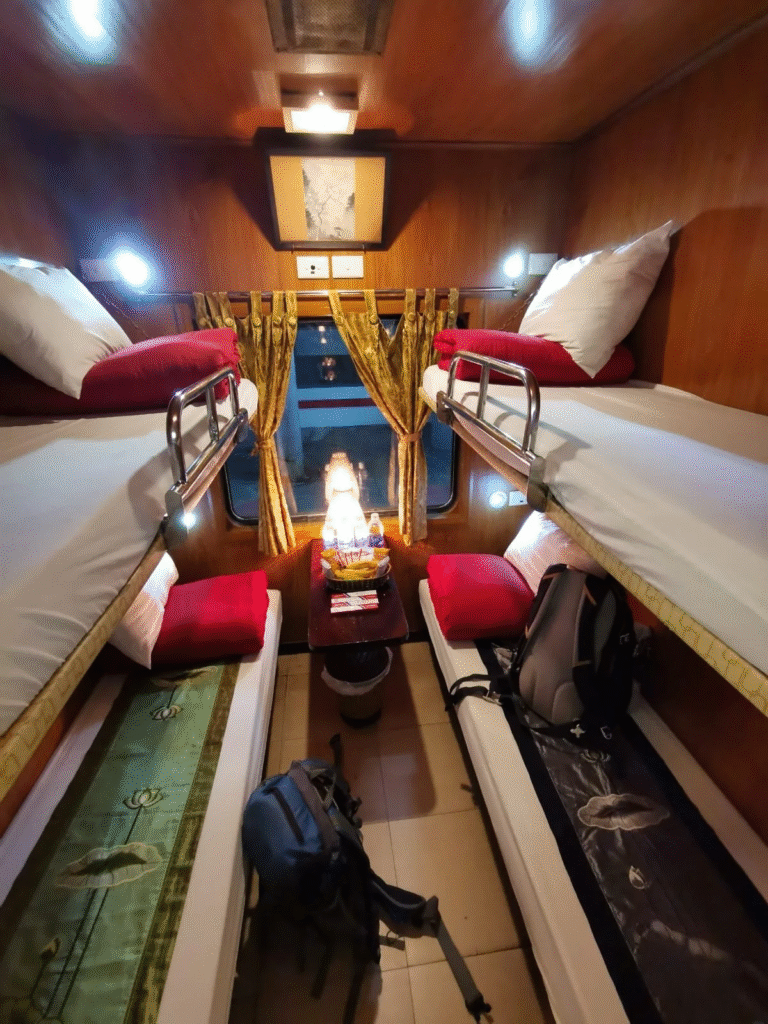
There are three types of seat: normal seats, a bed in a 6 berth cabin (2 sets of 3 bunks) and a bed in a 4 berth cabin (2 sets of 2 bunks).
I recommend the 4 berth cabin, a good balance of comfort and price. I had room to more or less stretch out, and even a couple of beers sold on the train before going to sleep.
On some tourist routes (especially Hanoi to Lao Cai, for Sapa) there are also private companies with VIP cabins like Chapa, Laman or Sapaly: nicer decor and a bit more comfort, but the same journey and times. You pay for the atmosphere, not to arrive sooner.
Night train or domestic flight: which is better?
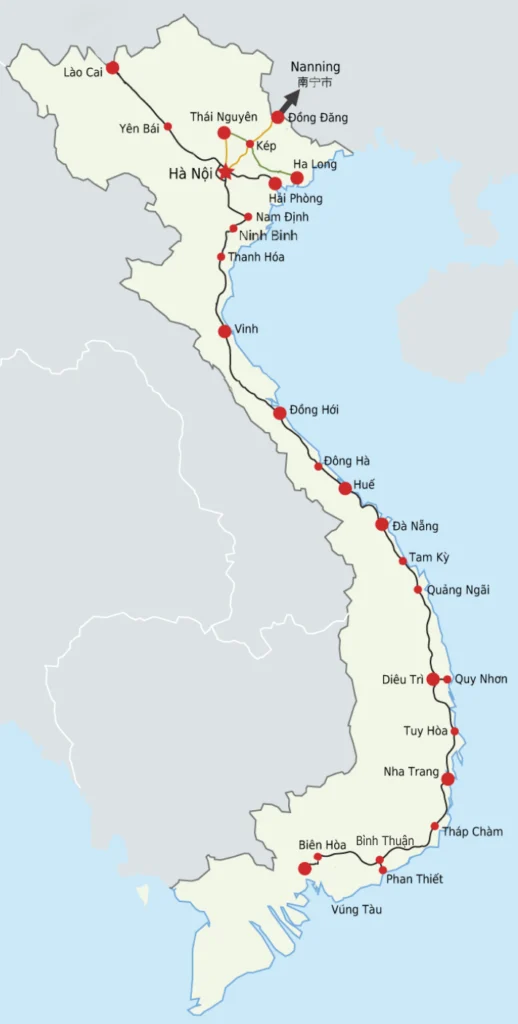
Many assume flying is quickest, but not always. Flying from Hanoi to Hue will probably take a whole morning or afternoon with transfers.
On a night train, you fall asleep in central Hanoi or Ninh Binh and wake up in central Hue, for the same price as flying or less, and you save a night’s accommodation.
How and where to book trains in Vietnam
You can book trains online, ideally a little in advance to choose your seat. I usually use Baolau, which tends to have more options per route (including private cabin trains). You can also compare on Vexere, which often has better prices.
How to get around cities in Vietnam
In cities, the most practical option is almost always ride hailing apps. Like Uber: you order a car or motorbike, the price is fixed in advance and you pay in cash or by card in the app. Cheap, quick and no haggling.
I use Green SM, Grab and Be. All three are worth having, because they differ slightly and each suits different situations.
Green SM, Grab and Be: which one to use?

On Green SM all vehicles are electric: VinFast cars and motorbikes, Vietnam’s electric vehicle brand. Modern, clean vehicles, uniformed and professional drivers. And being electric, it copes better with rising fuel prices, when it can beat Grab.
Grab is the best known, with the most cars available. Quality varies a lot: a new, comfortable car or a smaller, older one that smells a bit funny. A lottery.

Be has fewer drivers and the same problem as Grab: every car is different. Its advantage: it sometimes has the best prices, especially to and from the airport. In Hanoi I almost always book airport trips on Be.
| App | Strength | Keep in mind |
|---|---|---|
| Green SM | The most comfortable, new electric cars | Less coverage outside big cities |
| Grab | The most cars available | Variable car quality |
| Be | Best price to the airport | Fewer drivers available |
I cover these and other essential apps in my guide to apps for travelling in Vietnam.
City buses in Vietnam: are they worth it?
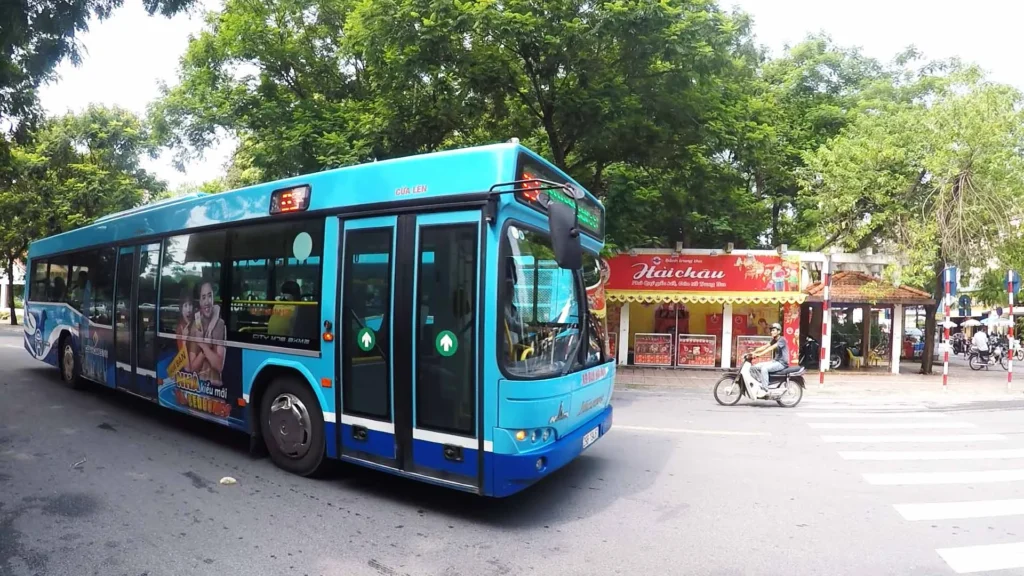
City buses are a valid, very cheap option (a single ticket in Hanoi costs around 7,000 to 10,000 VND, barely 30 to 40 cents), with a cultural side: you see how local people get around.
Honestly, though, most travellers don’t use them: they’re slower and less comfortable, apps are cheap, and with limited days your time matters. Routes and timetables are on Google Maps or the BusMap app.
Renting a motorbike in Vietnam
Motorbikes are the most common transport in Vietnam, and in some places renting one is the best way to get around. But I don’t recommend learning to ride in Vietnam: if you already ride, go for it; if not, I wouldn’t even consider it.
A 110 or 125cc scooter, automatic or semi automatic, usually costs 150,000 to 200,000 VND ($6 to $8) a day. Ideal in places like Ninh Binh, Cat Ba or Hue, where the sights are spread out.

Before renting, check the legal situation with your licence: my guide to driving licences in Vietnam explains which permits are valid.
Renting a bike in Vietnam
Bicycles are a really good option in Hoi An, Ninh Binh or Mai Chau, where the sights are spread out and easy by bike, especially on cooler autumn or spring days. Rental is around 50,000 VND ($2) a day, and many hotels lend them free to guests.

In places like Ninh Binh you can also rent electric bikes: more comfortable for distance or the heat, but quite a bit pricier. You can rent on the spot or book this electric bike rental on GetYourGuide in advance.
How to get from the airport to the city in Vietnam
After hours of flying, the first taxi is tempting, but there are usually better, cheaper and safer options. Here are the four usual ways from the airport to the centre, in the order I’d recommend them to a friend.
Ride hailing apps: Grab, Green SM and Be
You leave the airport without waiting and go straight to your hotel. Unlike taxis, you know the price in advance, which closes the door on scams and misunderstandings, and it’s generally cheaper than taxis or private transfers. It’s what I usually use to get to the airport. Tip: Be’s airport cars are usually cheaper than the competition.
In Hanoi, the airport to the centre usually costs 250,000 to 350,000 VND (about $10 to $13), varying by city and distance. More in my guide to essential apps for travelling in Vietnam.
Airport bus to the city centre
Some cities have an airport bus to the centre, almost always the cheapest option. In Hanoi, bus 86 costs 50,000 VND, about $2. I’ve also taken airport buses in Hue and Ho Chi Minh City: cheap, safe and quite comfortable.
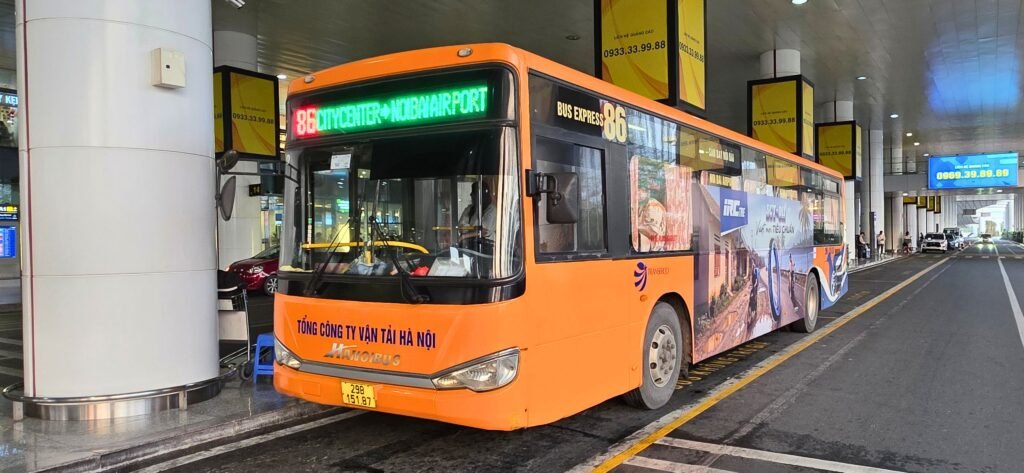
The biggest downside: you often wait a while, it doesn’t drop you at your door (so you may walk with your luggage), and it doesn’t run at night. Then I’d rather use an app. But arriving by day, with light luggage and keen to save from minute one, the bus is great.
A private car booked in advance
If you want a driver waiting with a sign with your name, this is your option. Prices are slightly higher than apps, but everything is sorted before you land.
I recommend it most if you arrive at night, with small children, older people or lots of luggage, or if travel stresses you out: a comfortable, hassle free transfer.
Two ways to book: your accommodation or a trusted agency. For years I’ve recommended Phuong Vu from Holiday Travelling: clear communication, professional drivers and very reasonable prices.
A car with driver also works for travelling between cities or day trips, especially in a group sharing the cost.
👉 I share real prices for the most common routes and how to book in my guide to booking a car with driver in Vietnam in 2026 (with prices).
Taxi from the airport: the option I don’t recommend
The taxi is my last choice, and I rarely take one. Scams are real and fairly common, and I see no advantage over the other options.
It’s usually more expensive: out of curiosity I asked at Hanoi airport and was quoted 600,000 VND (about $23) to the centre, almost double a pre booked car. It’s also where most scams happen: rigged meters or prices that rise on arrival. It’s happened to me a couple of times, and I’ve read reports of drivers getting aggressive when you disagree.
👉 The most common scams in Vietnam and how to avoid them are in my guide to safety in Vietnam.
Frequently asked questions about transport in Vietnam
Can I travel all over Vietnam without riding a motorbike?
Absolutely, there are lots of alternatives: flights, trains and buses for long distances; apps like Green SM or Grab, bicycles or a shared car with driver for short distances or day trips. Without the right licence or experience, don’t let social media pressure you into riding: you risk legal problems, insurance issues and accidents that can ruin your holiday. Motorbikes are everywhere, but you absolutely don’t need one to enjoy your trip.
What’s the cheapest way to get around the country?
For long journeys, the standard sleeper bus is the cheapest. Travelling overnight kills two birds with one stone: the bus is also your accommodation, saving a night’s hotel. That said, VIP cabin buses are only slightly more expensive and give extra space, privacy and comfort, usually totally worth it on long hauls.
Are night buses dangerous? The problem with arriving in the early hours.
Your luggage is safe: the big suitcase goes in the hold; take a small backpack with your passport and valuables to your berth, and don’t leave it on the bus during stops. The driving is chaotic, with swerving and honking, so use earplugs and close the curtain; still, accidents on tourist buses aren’t common. The real drawback: many journeys drop you in the early hours at stops on the outskirts. Check the arrival time and have internet to order a Grab, or arrange a hotel pick up in advance.
I’m travelling with a wheeled suitcase. Is there room on buses and trains?
No problem, unless you carry a ridiculous amount. One big suitcase and a small backpack are fine. On sleeper buses the driver puts your suitcase in the hold and you take a small bag to your berth. On night trains there’s plenty of room under the bottom bunk or on the cabin floor.
Are they strict about cabin luggage on domestic flights?
It depends on the airline. Vietjet is low cost and, in my experience, does check size and weight from time to time; in my WhatsApp groups (mostly in Spanish) I’ve read quite a few reports of travellers paying penalties at the gate. Vietnam Airlines is more flexible and includes hold luggage on all flights. Either way, I wouldn’t try to sneak a big backpack into the cabin.
How far in advance should I book transport? (Watch out for Tet)
In normal season, three or four days ahead is usually enough for buses, trains and even domestic flights. But during Tet (the Lunar New Year, usually January or February) everything changes: the whole country travels home, prices rise and tickets sell out weeks ahead. Book everything as early as possible.
Can I pay for transport by card or do I need cash?
You can pay by card for anything booked online. Baolau or Vexere accept foreign cards, and in Green SM or Grab you can link your card to pay automatically. You’ll need cash in dong for things like a city bus ticket or renting a motorbike or bike at your accommodation.
For how to get dong and pay in Vietnam without fees, see my guide on changing money in Vietnam without fees.
Do I need a Vietnamese phone number to use Grab or Be?
You can sign up with your home number. Ideally set up these apps at home before you fly; if you do it in Vietnam, make sure you can receive texts abroad. That’s usually allowed and free while roaming, but check with your provider.
A Vietnamese line for calls doesn’t help much. Drivers sometimes call to confirm your location, but almost none speak English. Better to use the in app chat on Green SM or Grab, which translates automatically. For Vexere or Baolau tickets, communication is by email, WhatsApp or Zalo. To get your phone ready, see my recommended apps for travelling in Vietnam.
Have you got everything you need for your trip to Vietnam?
Now you have the full picture of getting around Vietnam: which transport to use, what it’s like and where to book it without depending on anyone. Organising it yourself is easier than it looks, and almost always cheaper.
Any questions about getting around the country? An experience to share with other travellers? Leave it in the comments and I’ll reply personally.
I’ve also just started a WhatsApp group in English: it’s small for now, but you’re very welcome to join and ask anything.