
I finally made it to Vietnam’s DMZ! I’d been wanting to visit for a long time, but on my previous trips to central Vietnam I didn’t have time. After the experience, I can say it not only didn’t disappoint, it surprised me in a good way.
What is the Demilitarized Zone in Vietnam?

The Demilitarized Zone is in central Vietnam: the area around the border that separated communist North Vietnam from capitalist South Vietnam, where the US army was deployed during the Vietnam War.
It was the scene of bombing and major battles, and today it’s still a symbolically crucial place for Vietnam: it recalls the trauma of the country’s division, and celebrates its long awaited reunification after decades of foreign occupation and several armed conflicts.
Here’s an interactive map with the main sights and places to stay I mention below.
How to visit the DMZ: tour or on your own?
DMZ tour from Hue

DMZ tours leave from Hue and run in small groups. This is the option if you want to see the DMZ in one day, comfortably and efficiently.
Cost: about $58 (exact price on the booking page).
What’s included? English speaking guide, transport, entrance fees and lunch.
Format: 1 day, small groups, in English.
Motorbike route on your own

You can also visit the DMZ by motorbike. It’s best to take several days, as the visit needs at least 350 km (starting from Dong Hoi, Phong Nha or Hue). Further down I explain how I organised it.
Duration: at least 2 days (minimum 350 km)
Motorbike cost: about 150,000 VND ($6) for a 125cc scooter
Where to rent: at your accommodation. I rented at Minh Quang Hotel.
Where to start? Hue, Dong Hoi or Phong Nha.
Must see places in the Demilitarized Zone
Vinh Moc tunnels (1962 to 1968)

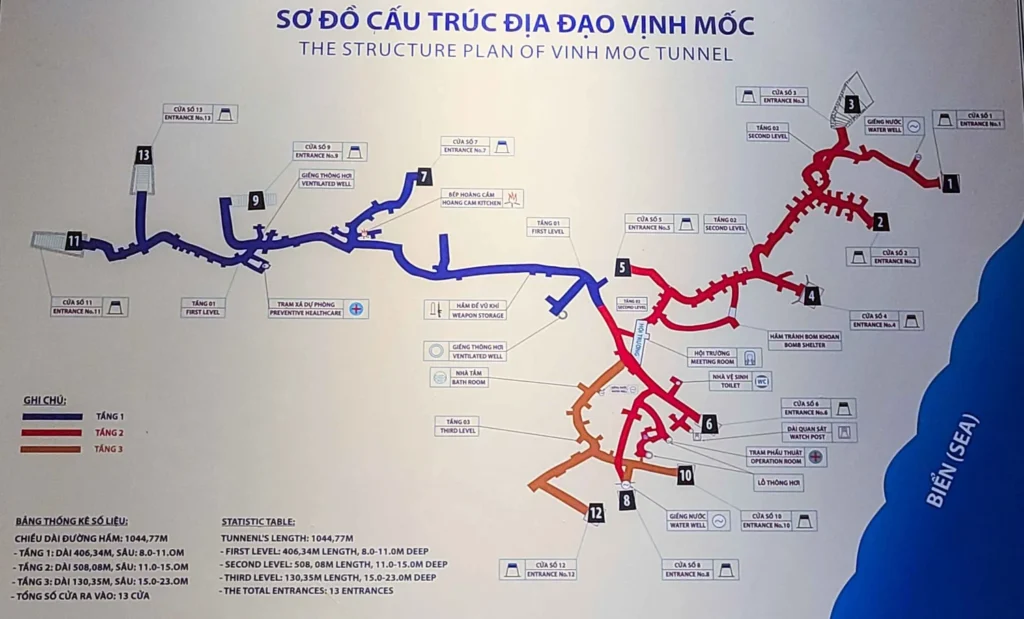
The Vinh Moc tunnels sheltered dozens of families from US bombing during the Vietnam War. They were built by the villagers themselves and are still in their original state (apart from the lights).
The tunnels have three levels, the deepest reaching 23 metres. Inside there were many kinds of facilities, like medical areas, wells, kitchens and weapon stores. Around them, trenches are preserved that let people move more safely. The tunnels are estimated to have sheltered more than 90 families during the conflict, and several babies were born inside under their protection.
The Vinh Moc tunnels are wider than the famous Cu Chi tunnels (near Ho Chi Minh City). That’s because the Cu Chi tunnels were narrow to slow down US soldiers and for ambushes, while Vinh Moc offered more comfortable space for local people seeking protection. If you’re heading to southern Vietnam, don’t miss my guide to Ho Chi Minh City.
Khe Sanh base (US)
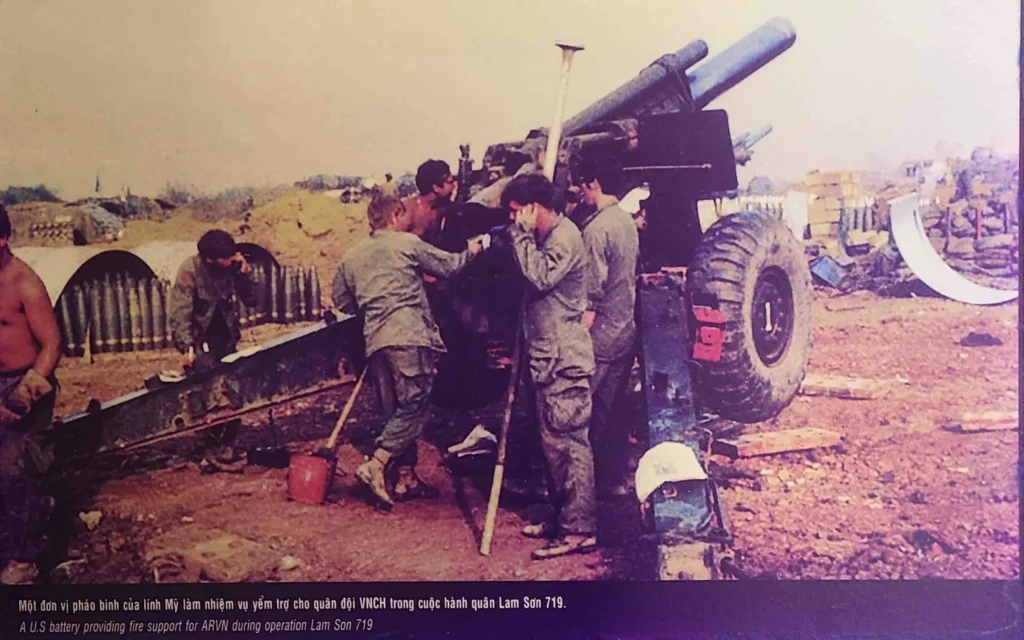
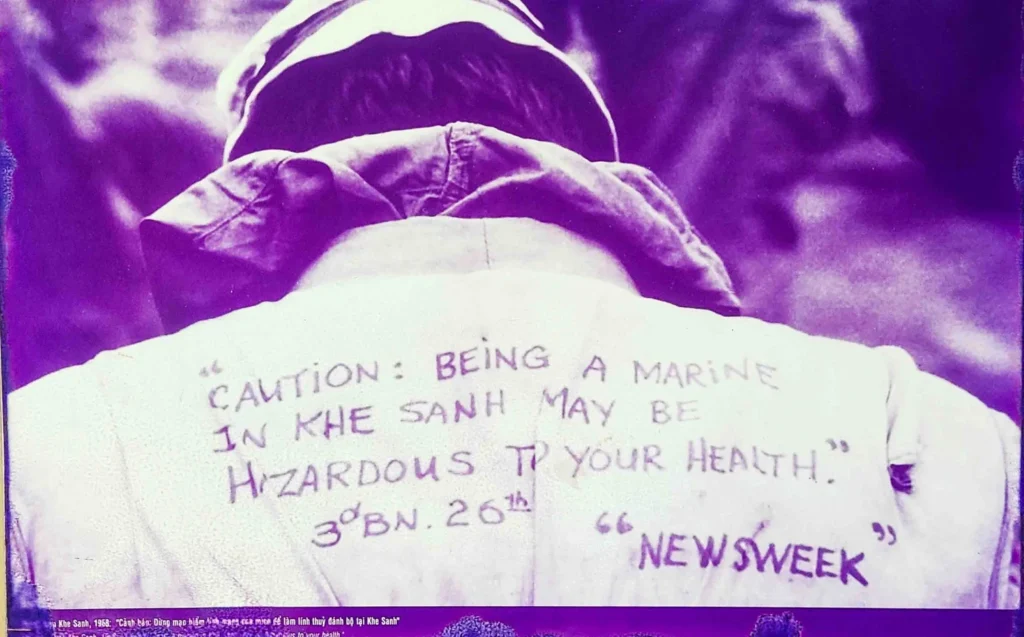
Khe Sanh military base became a crucial point during the Vietnam War, with an impressive US military infrastructure. At its peak in 1968, the base had an airfield, more than 40,000 soldiers and large numbers of aircraft and artillery. It was used to reduce Viet Cong influence in the area and to hamper the movement of supplies and soldiers along the Ho Chi Minh trail, which linked North and South Vietnam through Laos and Cambodia.
✔️ The 1968 siege of Khe Sanh stands out as one of the most important battles of the war.
✔️ The base was never overrun, but it was in imminent danger.
✔️ These attacks came before the great Tet offensive of 1968, when communist forces launched lightning attacks against the US in many places across South Vietnam.
✔️ The siege of Khe Sanh was partly a strategy to draw US attention and troops to this place, leaving other parts of the country exposed.
✔️ The base was abandoned in July 1968, as it was considered vulnerable.
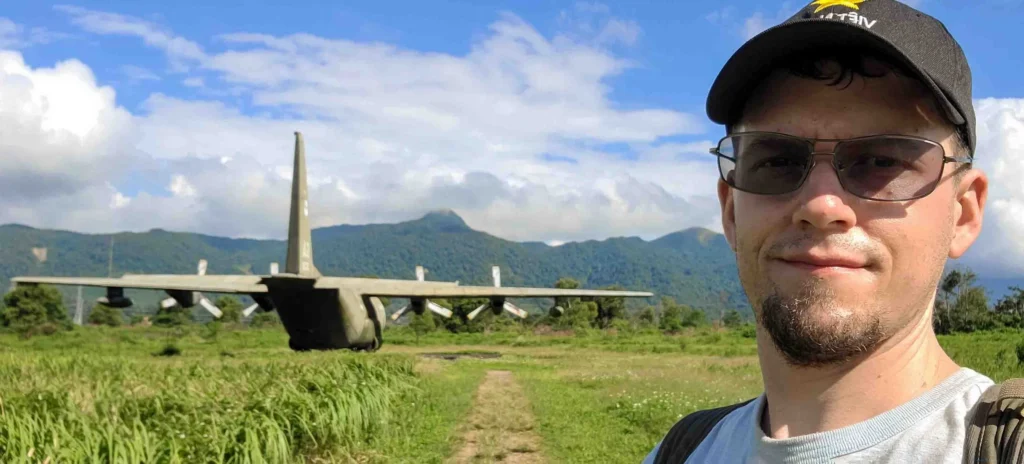
Today Khe Sanh base remains a historic site, with a small museum showing photos, weapons and information boards about the conflict in the area. Outside you can see remains of US vehicles, like helicopters, tanks and a large military plane. You can also see buildings from the time, trenches and rebuilt bunkers.
Price: 50,000 VND ($2)
Hien Luong bridge (the bridge of reunion)

Hien Luong bridge connects the banks of the Ben Hai river. For 21 years, this river was not only a political border but also a symbolic one, separating families and communities who had once shared the same land.

On the south side stands the «Aspiration for Reunification» monument, showing a woman and her child looking towards the north bank, evoking waiting, separation and longing for national reunification. Behind them, palm leaves and other plant like shapes recall missiles and weapons.
On the north side stands a tower with a huge Vietnamese flag. During the war, every time the pole and flag were damaged, the Vietnamese built a new one and raised a new flag. From 1956 to 1967, border police soldiers raised 267 flags of different sizes. It’s a symbol of the resistance and determination of the northern communist soldiers.
Price: 50,000 VND ($2)
Truong Son cemetery
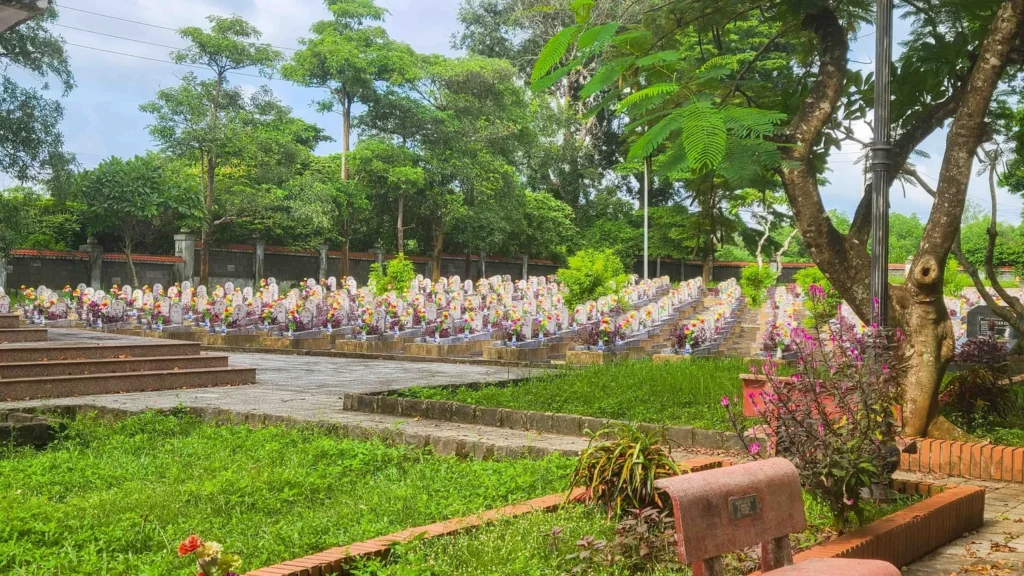
Truong Son cemetery holds more than 10,000 graves of North Vietnamese and Viet Cong soldiers, grouped in sections by the soldiers’ home provinces (for example Hanoi, Lao Cai, Ninh Binh, Hai Phong, etc.). It’s the largest cemetery of its kind in Vietnam. There are dozens of nameless graves of unidentified soldiers, and some are empty to remember the thousands missing in action. Today many Vietnamese visit to burn incense as an offering to the soldiers who gave their lives for the country.
House museum with war objects
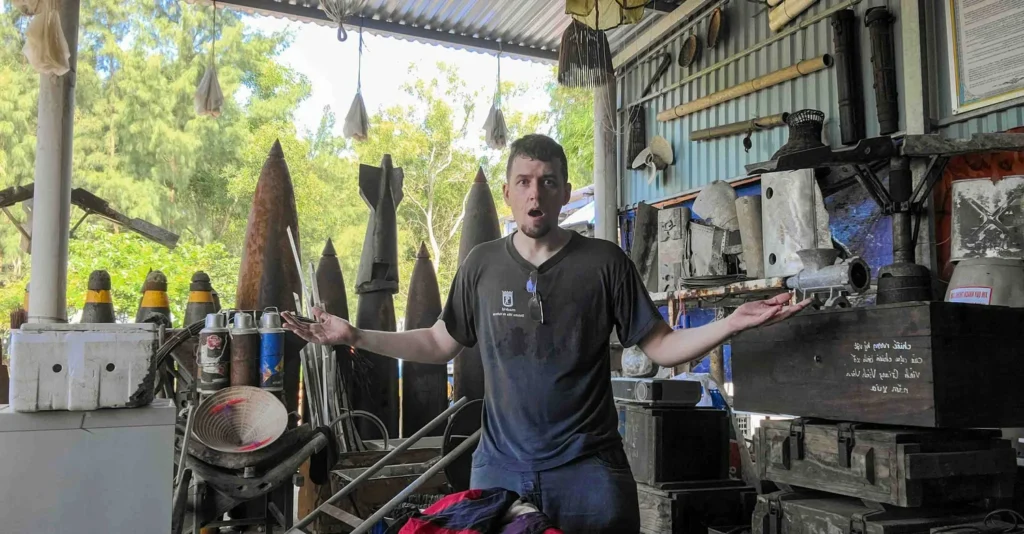
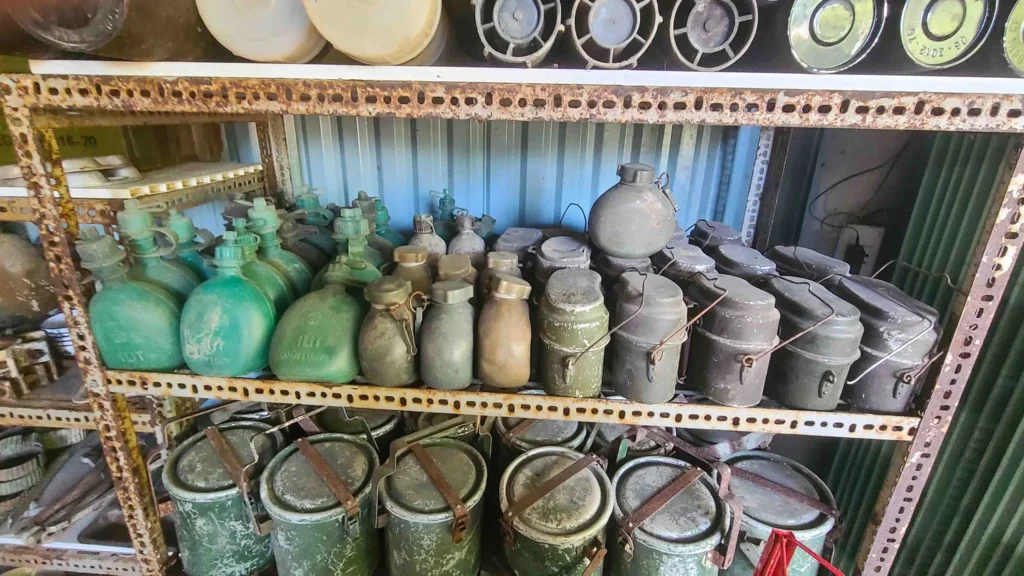
This is a house full of Vietnam War artefacts, mainly bombs, military gear and vehicle parts, but also everyday objects from the time, like radios, phones, beer bottles, cutlery, etc. The owner buys and collects these war relics and welcomes visitors passing by. When I went, I wasn’t sure at first whether to go in. When he saw me, he welcomed me and gave me a bottle of cold water.
Price: 50,000 VND ($2)
My motorbike route step by step
► Day 1: my trip started in Dong Hoi, where I flew from Hanoi. In Dong Hoi I stayed at Minh Quang Hotel, where I rented a scooter for 150,000 VND a day ($6).
► Day 2: I headed to Sepon Boutique Resort, Cua Viet Beach to enjoy the beach and pool. Getting there added some kilometres beyond the Vinh Moc tunnels area. After my first night, I visited the house museum, the Vinh Moc tunnels and Hien Luong bridge. The next day I left for Khe Sanh. This hotel added quite a few kilometres. With more time, I’d have stayed near the Vinh Moc tunnels.
► Day 3: I left early for Khe Sanh. There I stayed at Hai Dang Hotel, simple but well equipped, with a soft, comfortable mattress, air conditioning, a fan and a private bathroom. If I went back to Khe Sanh I’d consider the new Khe Sanh Luxury Hotel, which looks more modern and has good reviews. The next morning I visited Khe Sanh base, then returned to Dong Hoi and flew back to Hanoi after this great adventure.
A book on the Vietnam War
If I could recommend only one book on Vietnam’s history, it would be Vietnam: An Epic Tragedy, 1945 to 1975, by Max Hastings. It focuses mainly on the period from 1945 to 1975, when both the war against the French and the war against the United States took place, events that left their mark on Vietnam and on the world as a whole.
Final tips for visiting the DMZ
Bring hiking shoes, a sweatshirt, an umbrella, a swimsuit and sunscreen!
You can download this file with recommended places to stay in Vietnam (in Spanish), based on the opinions of travellers in my Facebook group (in Spanish) and my WhatsApp group.