


Page updated: March 2026
Getting into Vietnam is fairly simple visa wise. In most cases, travellers enter in one of two ways: with the visa exemption (visa free) or with a tourist e-visa applied for before the trip.
Some nationalities can enter visa free for 45 or 90 days, while everyone else can apply for an e-visa of up to 90 days, single or multiple entry.
Here I explain whether you need a visa for Vietnam, how much the e-visa costs and how to apply step by step.
Broadly, these are the entry options by nationality:
| Nationality | Visa option |
|---|---|
| UK, Spain and other mostly European countries | 45 days visa free |
| Chile or Panama | 90 days visa free |
| Other nationalities | e-visa up to 90 days |
Now let’s look at how each option works.
45 or 90 days visa free for some nationalities
Vietnam currently allows 45 days visa free to several nationalities:
European countries with 45 days visa free
Belgium, Bulgaria, Croatia, Czech Republic, Denmark, Finland, France, Germany, Hungary, Italy, Luxembourg, Netherlands, Norway, Poland, Romania, Slovakia, Slovenia, Spain, Sweden, Switzerland and the United Kingdom.
Other countries with 45 days visa free: Japan, South Korea, Russia and Belarus.
Chile and Panama also get 90 days visa free.
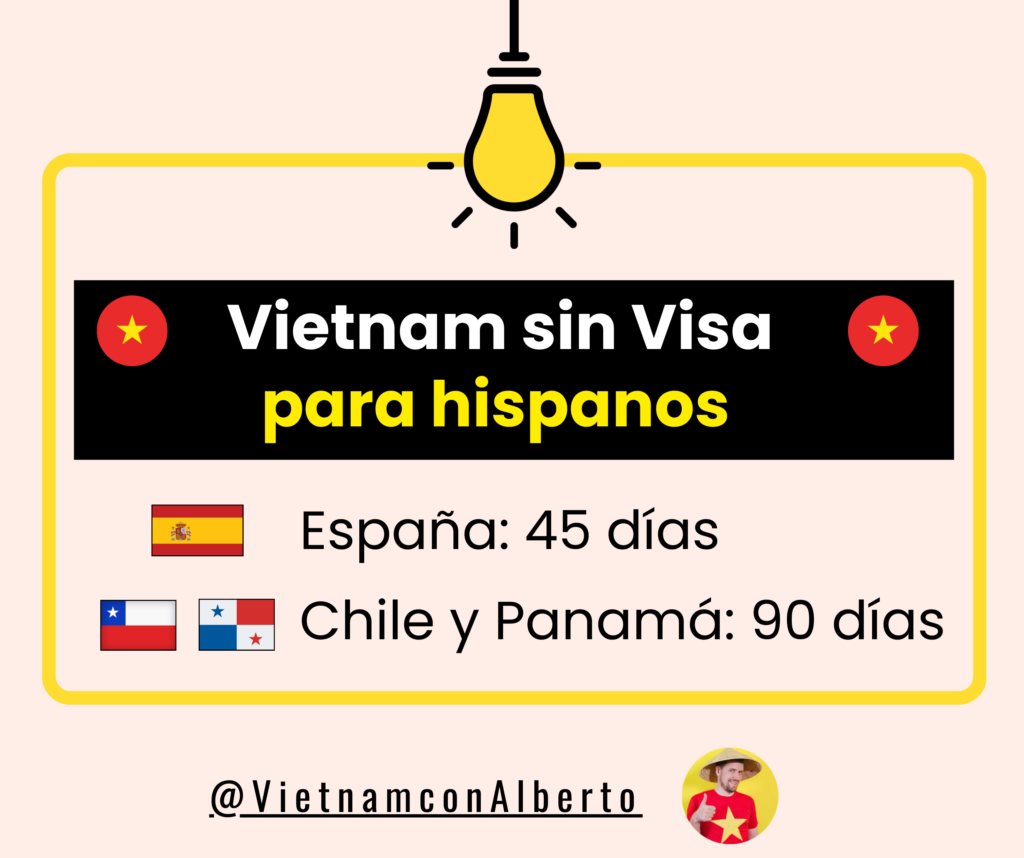
Travellers from these countries go straight to the immigration desk on arrival and get a 45 or 90 day entry stamp, depending on nationality.
If your country isn’t on this list, you can apply for a tourist e-visa of up to 90 days.
Do British and European travellers need a visa for Vietnam?
Citizens of the UK and the European countries listed above can enter Vietnam visa free for 45 days.
To stay longer than 45 days, apply for an e-visa of up to 90 days, single or multiple entry.
Requirements to enter Vietnam visa free
- Passport valid for at least 6 months from your entry date, with at least two blank pages. If it expires in less than 6 months, renew it before you travel.
- Onward ticket. Sometimes the airline asks for proof that you’ll leave Vietnam before your permitted stay ends. You can buy a bus ticket to Cambodia on Baolau or book a temporary onward ticket in your name, valid for 48 hours, for about $16.
- Pre arrival declaration. Since 2026, Vietnam asks you to fill in a digital form before immigration, which generates a QR code. It’s free and separate from the visa. How it works is in my guide to the Vietnam pre arrival declaration.
Alberto’s tip: travel insurance isn’t legally required, but travelling to Vietnam without it is an unnecessary risk. Good private healthcare for foreigners in cities like Hanoi or Ho Chi Minh City is expensive.
You can use the exemption as many times as you need
There’s currently no limit on how many times you can use the exemption. Each time you enter, the period starts again. More details in my article on the visa exemption (in Spanish).
If you’d rather have the visa explained step by step, this video (in Spanish) covers how the Vietnam visa works and the options for each case.
90 day e-visa, single or multiple entry
Nationals of every country can apply for the e-visa on the official Vietnam e-visa website, for up to 90 days, single or multiple entry.
Watch out for scam websites! Search on Google and you’ll see ads from agencies imitating the official look to charge you $70 to $120 for a process that costs only $25 (single entry) or $50 (multiple). For your safety, use this link: https://evisa.gov.vn/
E-visa price and types
These are the main differences between the two e-visa types:
| E-visa cost | |
|---|---|
| Single entry visa | 25$ |
| Multiple entry visa | 50$ |
- Single entry: stay in Vietnam up to 90 days, but the visa is cancelled as soon as you leave the country. Price: $25.
- Multiple entry: enter and leave as often as you like during the e-visa’s 90 days. Price: $50.
How long does the e-visa take?
It usually takes 3 to 5 working days after you complete the application and pay. Often approval comes in 2 days, but not always.
During high demand periods (for example Vietnamese New Year or public holidays), it can take a bit longer.
To be safe, apply at least 2 weeks before your trip, ideally a month ahead, to leave margin in case something goes wrong.
Need a visa urgently?
If you didn’t apply in time and your flight leaves in a few days, some visa agencies in Vietnam can process emergency visas in a few hours. It usually costs extra, so use it only if you really have no other option.
For help with an urgent visa, contact Phuong Vu from Holiday Travelling, a local agency many travellers in my community have used for this with good results.
When you message her, include your nationality, your flight date, and whether you’ve already applied for the e-visa and when you paid.
Requirements to apply for the Vietnam e-visa
To apply you’ll need:
- A passport valid for at least 6 months from your entry date, with at least 2 free pages.
- A recent passport style photo (you’ll upload it to the platform).
- An image of your passport data page (the page with your photo).
- A valid email address, where you’ll receive the e-visa approval.
- An international payment card to pay the visa fee.
Important tips for your e-visa application
💡 Onward ticket
Immigration officers rarely ask for it, but an onward ticket is an official entry requirement, and many airlines may ask for proof before boarding. Without a return flight, you can buy a cheap bus ticket to a neighbouring country or book a temporary onward ticket to show you’ll leave.
💡 The photo doesn’t always match perfectly
The system compares your uploaded photo with your passport’s. Sometimes it says the match isn’t complete, but that’s normally not a problem. Above roughly 60 to 70%, a green check usually appears and you can carry on.
💡 Card payment problems in some countries
Quite a few travellers report the payment on the official site failing with cards issued in some countries, such as Argentina. Often the fix is calling your bank to authorise the international transaction; the bank may then allow it for a limited time.
How to apply for your Vietnam e-visa
Applying is fairly simple and usually takes 10 to 15 minutes if you have your documents ready.
These are the steps:
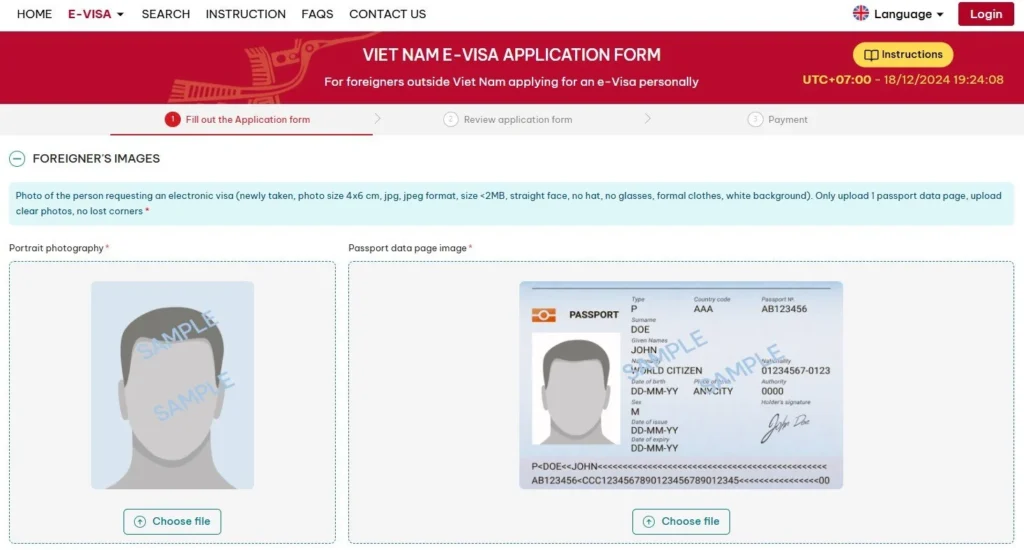
- Go to the official Vietnam e-visa website.
- Upload the required images
A recent passport style photo and a JPG of your passport data page. - Enter your email address
A valid address to receive messages about your application. - Fill in the required information
Personal details, passport information and trip details. - Pay the e-visa fee
Using one of the payment methods accepted on the website. - Save the registration code
After payment you’ll get a registration code, needed to check your e-visa status. - Check your application status
After a few days, check on the same website whether your e-visa has been approved. - Download the approved e-visa
Once approved, download it and bring a printed copy to show on arrival in Vietnam.
Vietnam visa FAQ
Do I have to enter on the exact date on my e-visa?
No. Your e-visa’s validity starts on that date and lasts up to 90 days, so you can enter any day from then until the end of the validity period.
Can I extend my visa inside Vietnam?
Currently it’s not possible to extend your visa without leaving the country. You’ll need to leave and apply for a new e-visa.
I didn’t apply for the e-visa in time. What can I do?
Some visa agencies in Vietnam can process emergency visas in a few hours. It usually has an extra cost, so use it only if you really have no other option. For help with an urgent visa, contact Phuong Vu from Holiday Travelling, a local agency many travellers in my community have used with good results.
When you message her, include:
- Your nationality
- Your flight date
- Whether you’ve already applied for the e-visa and when you paid
More questions about the visa?
To go deeper or solve specific questions, see also:
👉 Vietnam visa exemption (visa free) (in Spanish)
👉 Vietnam pre arrival declaration: how to fill in the form
Any questions?
If you still have a question about the Vietnam visa after reading this guide:
- leave a comment on this article
- or ask in my new WhatsApp group in English, small for now but very welcome
I always try to reply, and other travellers often share their experience too.