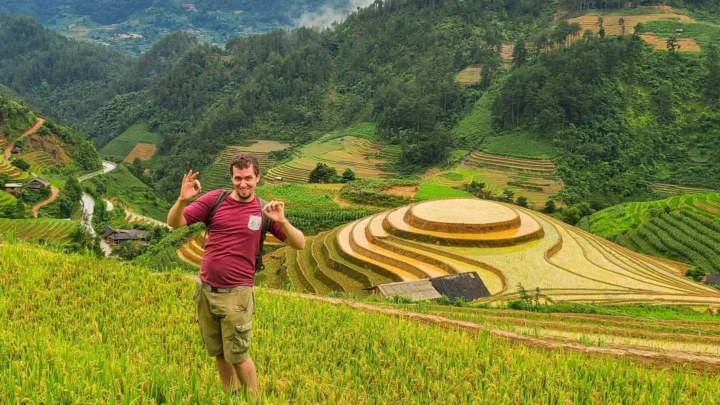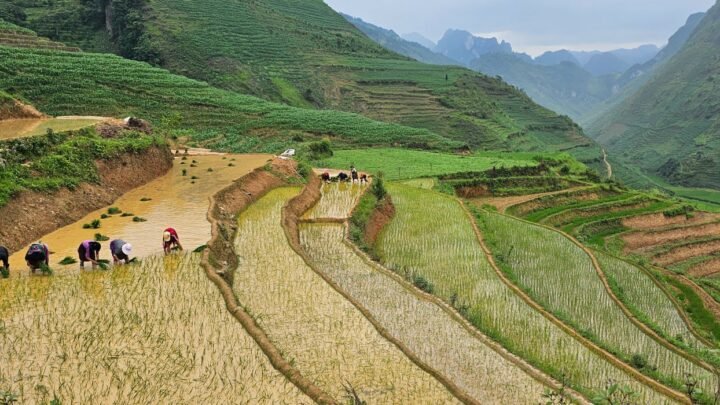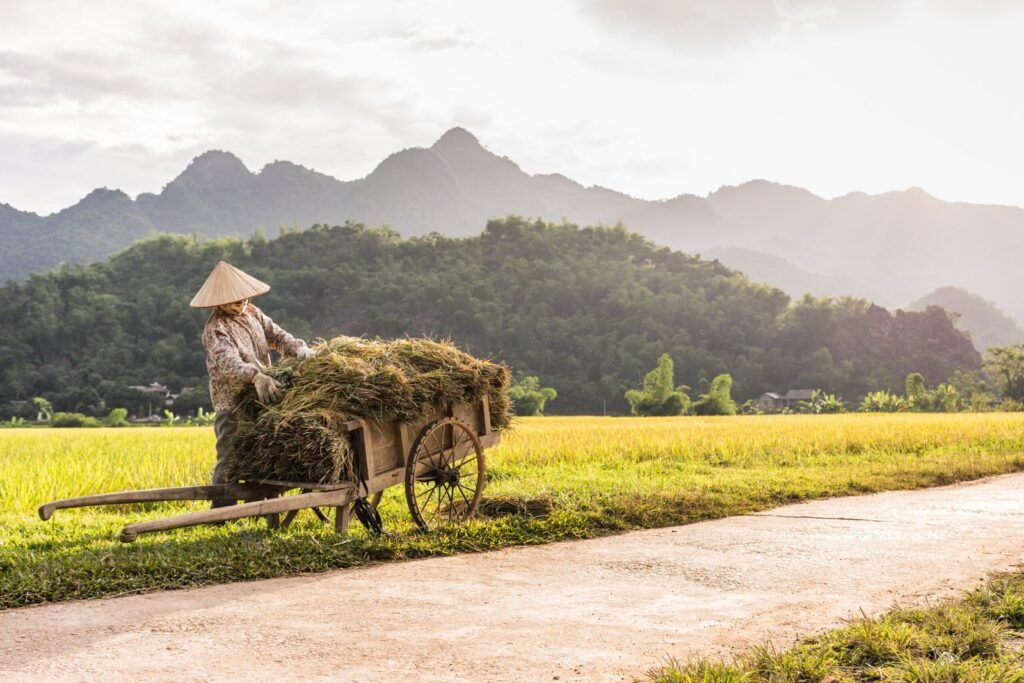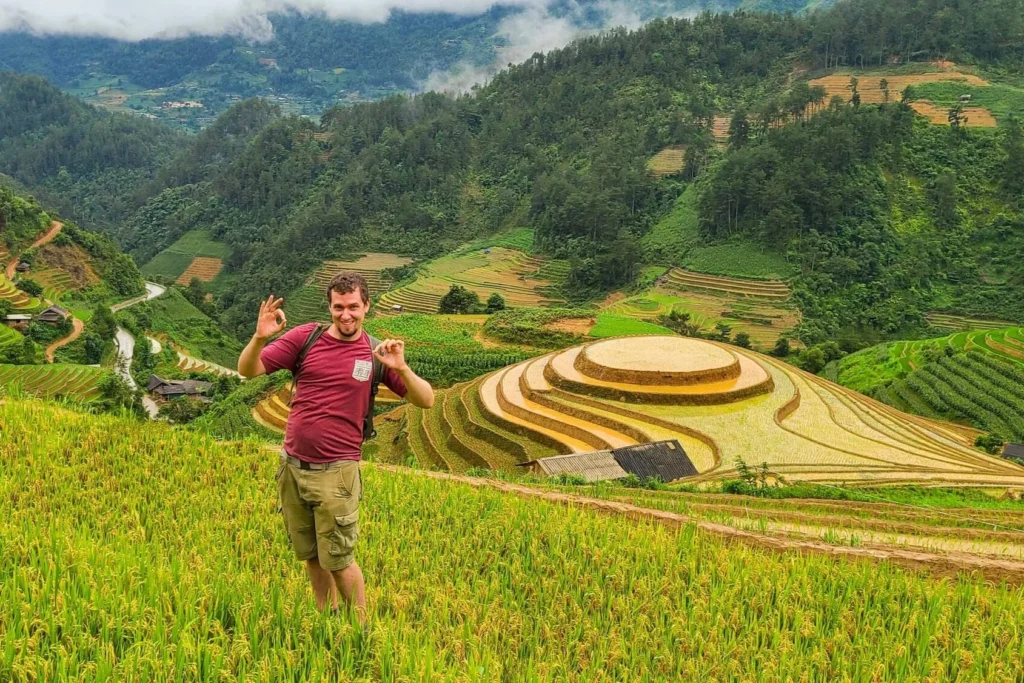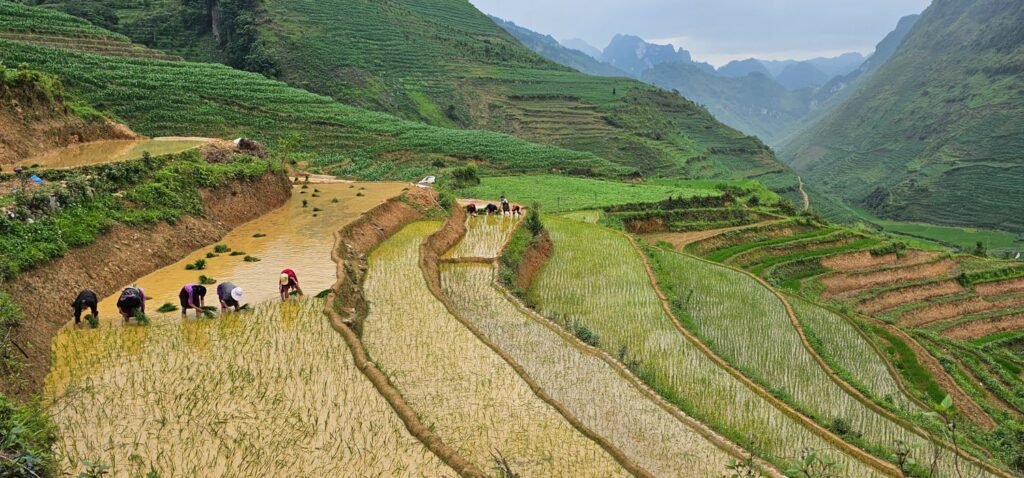


The Ha Giang Loop is, for many travellers, the most spectacular motorbike route in Vietnam. A loop of about 350 km through karst mountains, deep valleys and ethnic minority villages, where the scenery changes at every bend.
Doing the loop on your own is totally possible, and every year thousands of travellers ride it without a tour. Before you rent a motorbike and hit the road, two things must be clear: you need to ride confidently and have a licence valid in Vietnam (A1/A2 under the 1968 convention). In recent years police have stepped up checks in the area, and riding without the right licence can mean fines and serious problems if you have an accident.
If you don’t have a valid licence, aren’t comfortable riding in the mountains, or simply prefer a more cultural, accompanied experience, I explain an alternative to the classic loop that avoids the crowds and lets you see local life up close. You can see it here: Ha Giang tour without the crowds

What licence do you need to ride in Ha Giang?
Unfortunately, not every international driving permit is valid in Ha Giang. Vietnam only accepts the international permit issued under the 1968 Vienna Convention, as set out in Vietnamese regulations (in Vietnamese).
Countries like the United States, Canada, Australia or Spain belong to the 1949 convention, so their international permit isn’t valid in Vietnam. If you’re from the UK, make sure you get the 1968 version of the permit. I’ve checked this with official sources, including the Spanish embassy in Vietnam.
👉 If you want to understand the legal and insurance side in more detail, I explain it in this article: Is an international driving permit valid in Vietnam?
If you don’t have a valid licence or aren’t comfortable riding in the mountains, further down I suggest a very interesting cultural alternative.
What motorbike category do you need?
Even if your international permit is valid under the 1968 Vienna Convention, you also need the right licence category for the vehicle you ride.
In Vietnam:
- Up to 175cc → A1 licence
- Over 175cc → A2 licence
Most motorbikes used on the Ha Giang Loop are under 175cc, but you should still check your licence includes the right category.
What happens if you ride without a valid licence?
In practice, some people risk doing the Ha Giang loop without the right permit. It’s a personal decision, but you should be clear about the possible consequences:
- Police checks are frequent in Ha Giang, and fines can range from about $55 to over $550, according to recent cases reported by travellers.
- If you have an accident, your insurance may not cover you, and you’d take on all the legal responsibility.
In recent years there have been serious accidents in the area, which has led to more checks.
Personally, I don’t recommend doing the loop without the right licence. The possible consequences aren’t worth the risk. It’s the same thing I tell friends or family when they ask me if it’s worth risking it with an invalid permit.
If you don’t have the right permit but want to do the loop, a good option is to do it with a driver (easyrider) on a more cultural tour without the crowds. Here I explain how it works and how it differs from the classic loop: Ha Giang Loop without the crowds
How to get to Ha Giang from Hanoi or Sapa
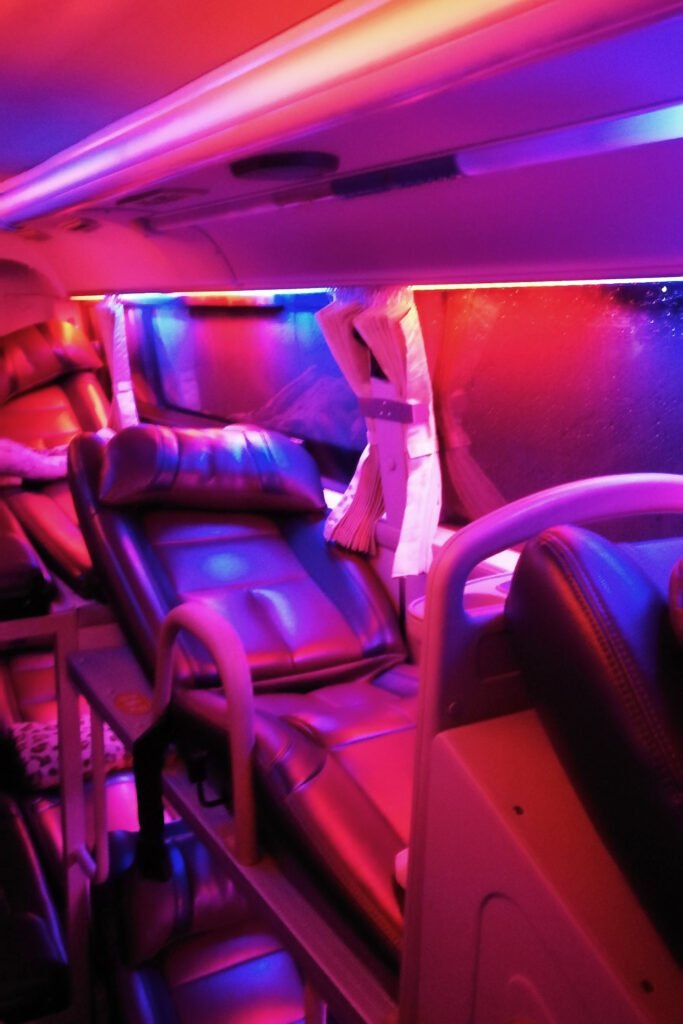
The most common way to reach Ha Giang is by sleeper bus. There are daily connections from several places in the north, including Hanoi and Sapa. Many travellers travel overnight to save a night’s accommodation and arrive early in the morning.
You can buy tickets at local agencies, at your accommodation, or book ahead on platforms like Baolau.
Practical tip: some buses or minibuses drop you right at the accommodation or motorbike rental place you give when booking. If not, they usually drop you at Ha Giang bus station. From there you can use the Xanh SM app to get to your accommodation, as Grab doesn’t operate in the area.
If you arrive in the early hours and rent the motorbike at the same hostel, they’ll often let you rest for a few hours before starting the route for a small fee.
Renting a motorbike in Ha Giang: how it works and what to check
Where to rent a motorbike in Ha Giang
Once in Ha Giang, head to a motorbike rental place. In practice, many are hostels or agencies that also run tours. The more serious companies usually won’t rent motorbikes to people without the right licence.
In Ha Giang itself there are plenty of shops and hostels that rent motorbikes, especially around the centre. Compare a couple of them, check the bike before you pay and ask what the rental includes.
Which motorbike to choose and prices
For the Ha Giang Loop, the most recommended and common choice is a 110cc semi automatic (like a Honda Blade or Honda Wave), for about 200,000 VND a day. They’re the most balanced for this kind of mountain route, and give more control on descents and better response on climbs than automatics. You can also rent bigger bikes, like a 150cc Honda XR150, for about 600,000 VND a day if you’re experienced and want more power.
It’s well worth adding damage insurance (about 150,000 VND a day), which covers you if you return the bike with any damage or scratches. On top of the rental, you’ll pay the compulsory Ha Giang permit (260,000 VND), usually handled at the rental place.
Approximate prices:
- 110cc semi automatic: from 200,000 VND a day
- XR150 150cc dirt bike: about 600,000 VND a day
- Recommended damage insurance: about 150,000 VND a day
- Ha Giang permit (mandatory for foreigners): 260,000 VND
As a quick guide, for 3 days the budget is usually between 750,000 and 2,250,000 VND, and for 4 days between 1,000,000 and 3,000,000 VND. The total depends on the bike and whether you add the insurance. On top of that, add the Ha Giang permit.
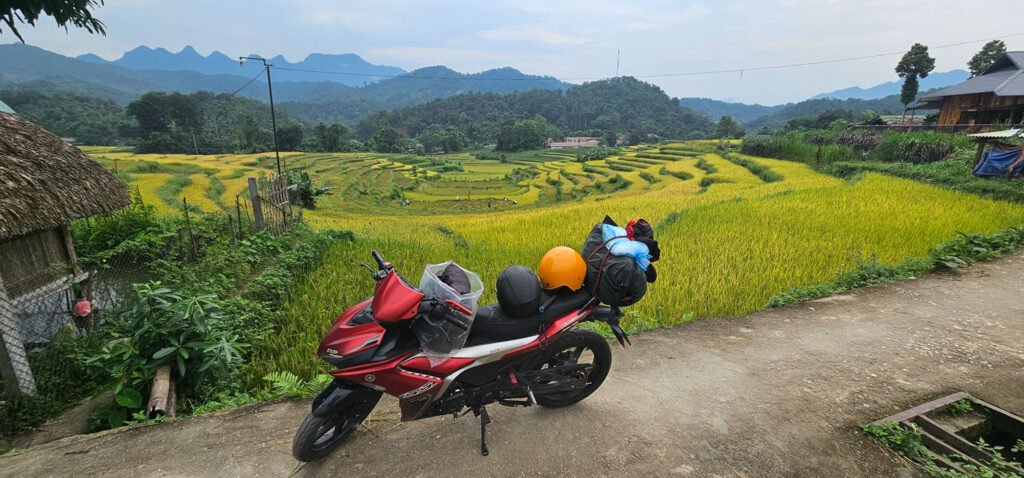
What the rental usually includes
The rental usually includes:
- Helmet
- Waterproof plastic bag to protect your backpack if it rains
- Ropes or bungee cords to strap your luggage
- Advice on which route to take for the days you have (with a paper map or Google Maps)
- WhatsApp support if there are problems
- Storage for your big bag while you do the loop.
What to check before setting off
Before setting off, take some time to check the bike. For me, the most important things to check are:
- Brakes (front and rear)
- Tyres with good tread
- Lights and indicators
- Horn.
As a last step, film a full video of the bike showing any existing scratches or dents. It can save you trouble when you return it.
4 day itinerary for the Ha Giang Loop on your own
There are several ways to split the days on the Ha Giang Loop. Each traveller adapts the route to their time, riding pace and the stops they care about. Below I explain how I organised a four day itinerary. This split reduces riding hours, lets you stop longer in each place, and gets you to your overnight stops earlier.
Bear in mind the 4 day route I followed is quite similar to many commercial tours, so at some points you’ll overlap with organised groups. If you reach a place and it’s packed, you usually have two options: ride on, or accept you’ll be sharing the experience.
A practical tip: leave early. If you start before most groups, you’ll enjoy many stretches of road on your own, and the first stops probably won’t be too busy.
Further down you’ll find shorter options if you have less time.
Day 1: Ha Giang → Yen Minh (100 to 110 km)

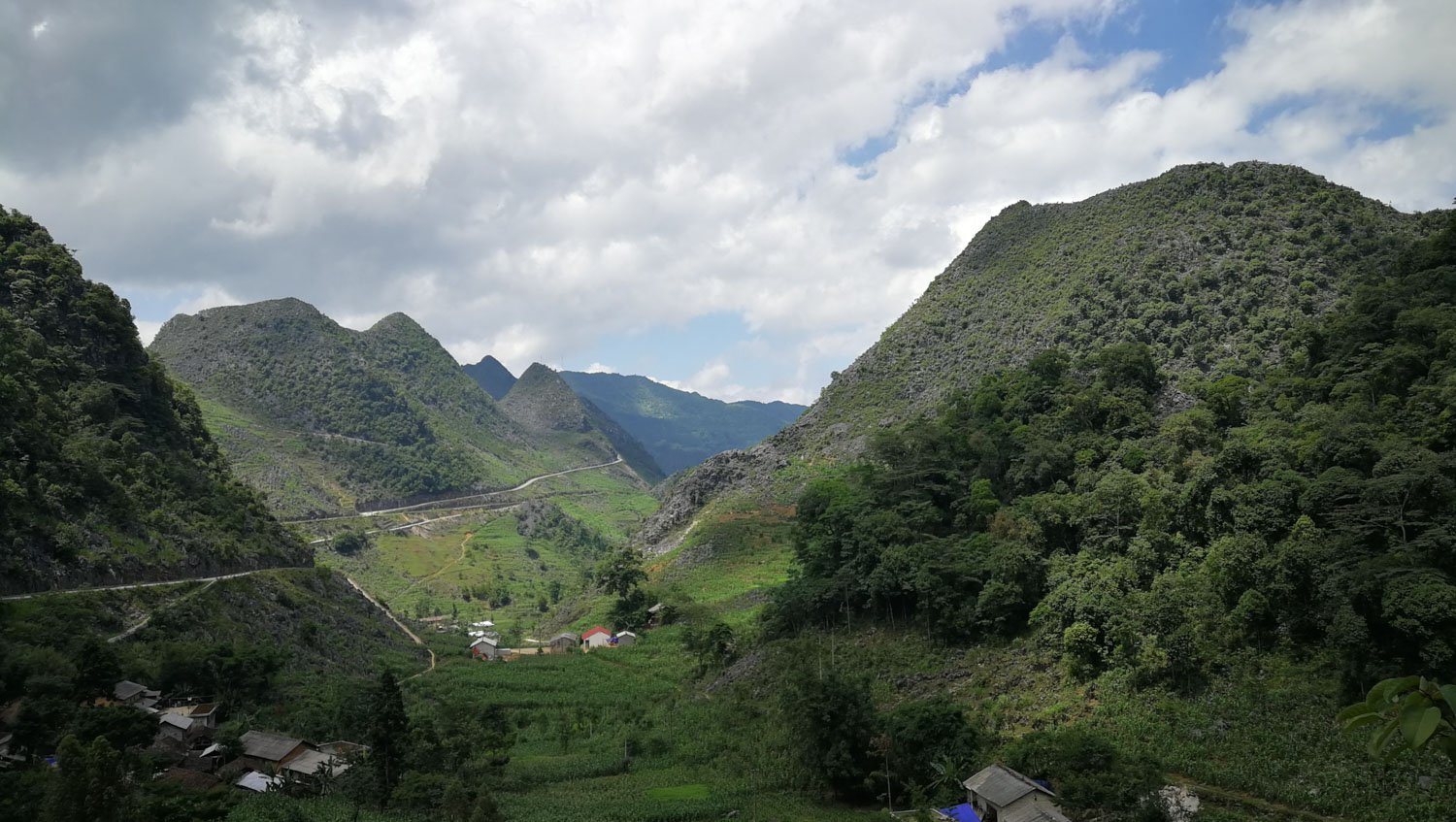
The scenery gets interesting after leaving the city, especially through Quan Ba and the so called Heaven’s Gate.
Sleeping in Yen Minh is a good idea to split the distances well and not arrive tired the next day. There are several simple homestays in the centre of the village, enough to rest before the most spectacular part of the loop. After checking options, one of the best rated is Bong Bang homestay 2, with a cheap, typical and generous dinner. The place I stayed was too basic and I wouldn’t recommend it today, so I’d rather suggest a better option.
Day 2: Yen Minh → Lung Cu → Dong Van (about 135 to 150 km depending on detours)
- Yen Minh → Pho Bang (67 km)
- Pho Bang → Hmong King’s Palace (14 km)
- Palace → Lung Cu (30 km)
- Lung Cu → Dong Van (25 km)


One of the fullest days of the loop. From Yen Minh you can detour to Pho Bang, a small, fairly authentic village, before visiting the Hmong King’s Palace. This adds 12 km to your route, there and back.
If you have time, continue to Lung Cu, the northernmost point of Vietnam, home to the famous tower with the national flag. The climb is short, but worth it for the panoramic views. Please, if you go, show respect for the flag, for example in how you take your photos.

End the day in Dong Van, one of the best places to stay overnight thanks to its wider choice of accommodation and restaurants. My last time in Dong Van I stayed somewhere that is no longer open. If I went back today, I’d stay at Le Petit Home or Dong Van Cliffside House. Both have lots of charm. The second is pricier, but also more comfortable and with better views.
Day 3: Dong Van → Ma Pi Leng Pass → Meo Vac → Du Gia (about 80 to 90 km)
Probably the most impressive stretch of the whole loop. Right after leaving Dong Van you enter the Ma Pi Leng Pass, a mountain road with spectacular views over the Nho Que river. One of the most striking landscapes not only in Vietnam, but in all of Southeast Asia.
On this stretch is the famous Sky Walk, a narrow path along the mountainside with panoramic views of the valley. If the weather is good, it’s well worth spending at least an hour walking there.

Options for this day:
- Boat ride on the Nho Que river. A short activity, often with quite a few organised groups, so you may have to queue. If you do it, try to go early.
- Stops at the Ma Pi Leng viewpoints to enjoy the scenery calmly.
After Meo Vac, the route continues to Du Gia, a more rural, quieter area. A good place to end the day and slow down after the most intense stretch of the route.
In Du Gia I stayed in a bungalow at Muong Tra Garden homestay, which, although basic, was cheap, comfortable and quiet. If you want something more charming, Chien’s Lodge Du Gia looks great: beautiful ethnic architecture and decor, and rooms with nature views right from the bed. I haven’t stayed there, but it’s on my list for next time.
If you arrive with time and the weather is good, you can head to the Du Gia waterfalls for a swim, although they’re quite crowded these days. At the Du Gia falls, don’t leave valuables on the bike, as there have been occasional thefts. Parking is free, but it may be a good idea to buy something at one of the nearby stalls and leave the bike right next to it.
Day 4: Du Gia → Ha Giang (70 to 95 km depending on route)
For this section you have two options:
Option 1, longer route. This return route means more kilometres (95 km) and more ordinary scenery, but the road is in very good condition and the riding is easier.
Option 2, shorter route (about 70 km). The second option means fewer kilometres (70 km) and more interesting scenery. However, some stretches are under construction and may be in bad condition. This used to be the worst road of the whole loop because of the works, but it has improved a lot. I wouldn’t risk it and would take option 1.
Shorter itineraries (3 and 2 days)
If you don’t have four full days, you can adapt the loop. The fewer the days, the more riding hours each day.
3 day itinerary
The most common option when time is limited. The days are a bit longer, but it’s perfectly doable if you leave early.
- Day 1: Ha Giang → Yen Minh (100 to 110 km)
- Day 2: Yen Minh → Dong Van → Meo Vac (130 to 150 km depending on detours)
- Day 3: Meo Vac → Du Gia → Ha Giang (120 to 150 km depending on route)
In this format you’ll have less time to stop at viewpoints or do activities like the boat ride.
Can you do it in 2 days?
You can, but I don’t recommend it. It means many hours in a row on the bike and less time to stop and enjoy the scenery.
The recommended itinerary in this case would be:
- Day 1: Ha Giang → Dong Van (about 140 km)
- Day 2: Dong Van → Meo Vac → Ha Giang (about 180 km)
These are long days, especially the second, and you should have experience riding in the mountains if you do it this way.
Safety and tips for riding in Ha Giang
If you’re an experienced rider and take some precautions, the Ha Giang loop isn’t especially dangerous. But if you’re a beginner, trust me: this isn’t the place to learn to ride.
There have been serious accidents, including some with foreigners killed (most of these stories don’t make the news). That’s why I say: if you can’t ride confidently, don’t even consider it.
What are the roads like?
Ha Giang’s roads have improved a lot in recent years. The main road is well paved and has been widened in several places. Even so, it’s not unusual to find stretches under construction, and in the rainy season landslides can partly cover the road. Along the route you’ll also find some tight bends and steep gradients.
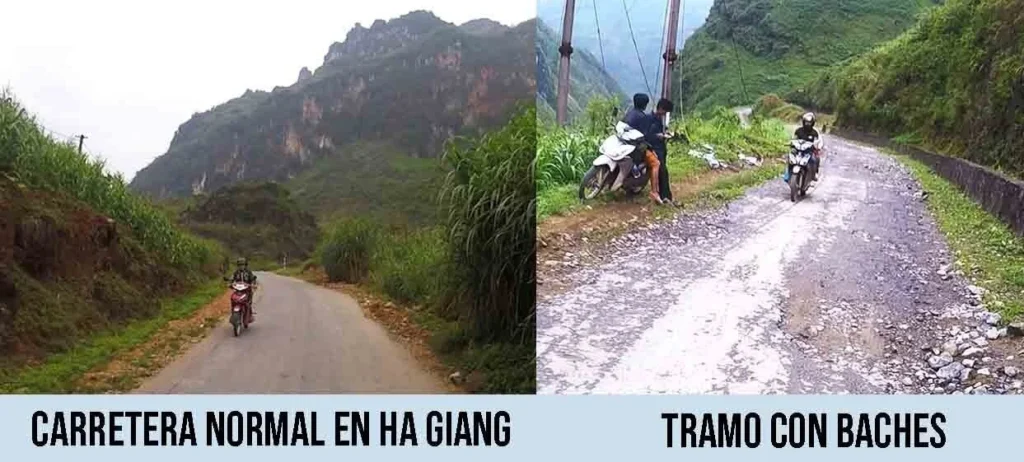
So always keep a moderate speed and don’t get overconfident. An unexpected pothole, a muddy patch or a badly taken bend can make you lose control in seconds.
In short, although the infrastructure has improved a lot, Ha Giang is still a mountain route, so ride carefully.
Keys to reducing risk when riding in Ha Giang
- Honking is a way to warn others you’re there when overtaking or going into a blind bend. In general, it isn’t seen as aggressive.
- Risky overtaking is common. Always keep room to react and don’t assume others will ride responsibly. Sometimes I get angry myself when I see vehicles overtaking and forcing oncoming traffic to move aside or brake.
- If it rains hard or there’s thick fog, slow down or stop until visibility improves.
- Avoid the big mass tours. These groups sometimes move fast all together, taking risks to stay together, for example overtaking as a group without much care.
As a general rule: better to lose five minutes than take an unnecessary risk.
What to bring for the Ha Giang loop
To do the Ha Giang Loop on your own you don’t need to carry much. You can usually leave your big backpack at the rental place, so ideally bring a small or medium backpack with just enough for 3 or 4 days.
Essentials:
- Passport
- Valid 1968 A1/A2 international permit (if you’re riding)
- Some cash
Clothing and protection:
- Long sleeves or clothes that cover your skin (sun and possible falls)
- Something warm, even outside winter
- Light rain jacket
- Good closed shoes
- Sunscreen and mosquito repellent
Optional but recommended:
- Swimsuit and travel towel (for rivers or waterfalls)
- Waterproof backpack cover
- Motorbike gloves
- Sunglasses
Anything else you forget, you can easily buy in Vietnam.
Tip: if you’re preparing your trip to Vietnam in general, here’s a more complete guide on what to bring: What to pack for Vietnam

Best time to do the Ha Giang Loop
You can do the loop all year round, but the experience changes a lot with the season.
Spring and autumn (best balance)
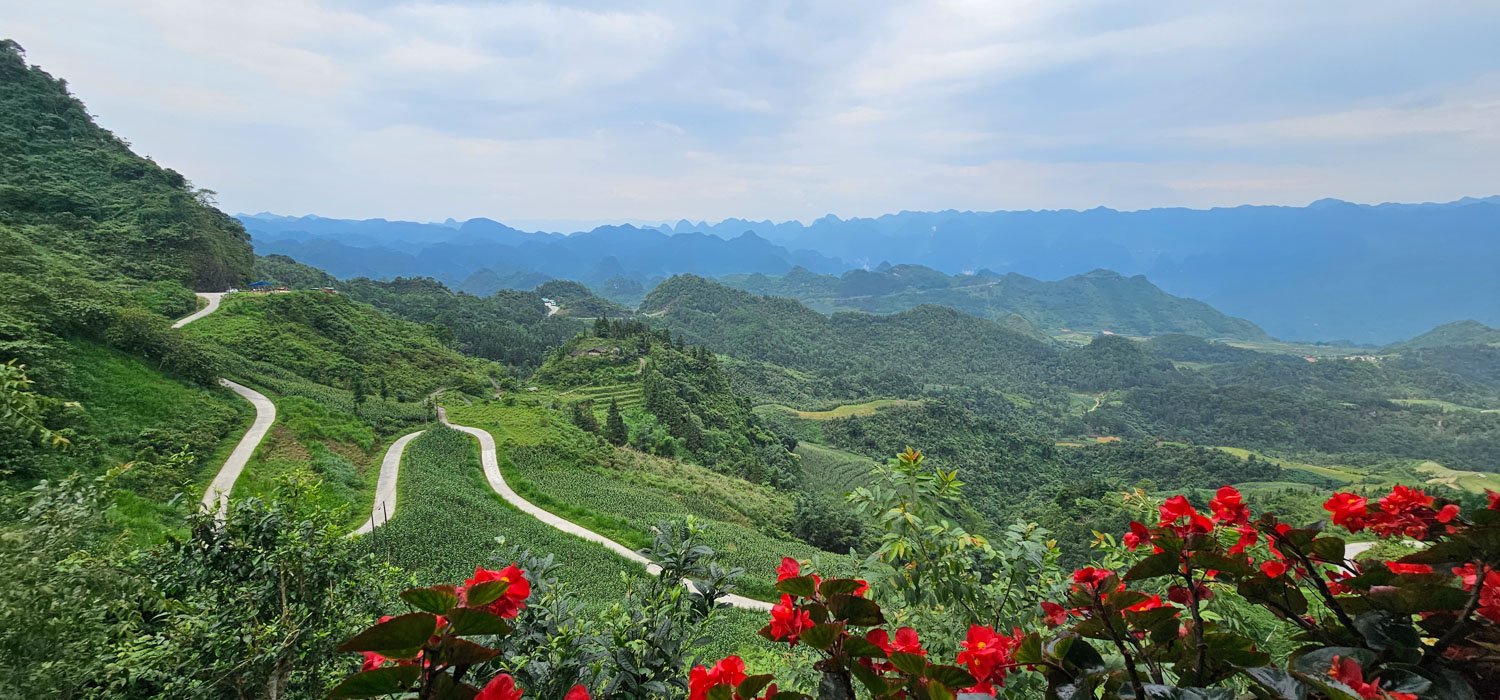
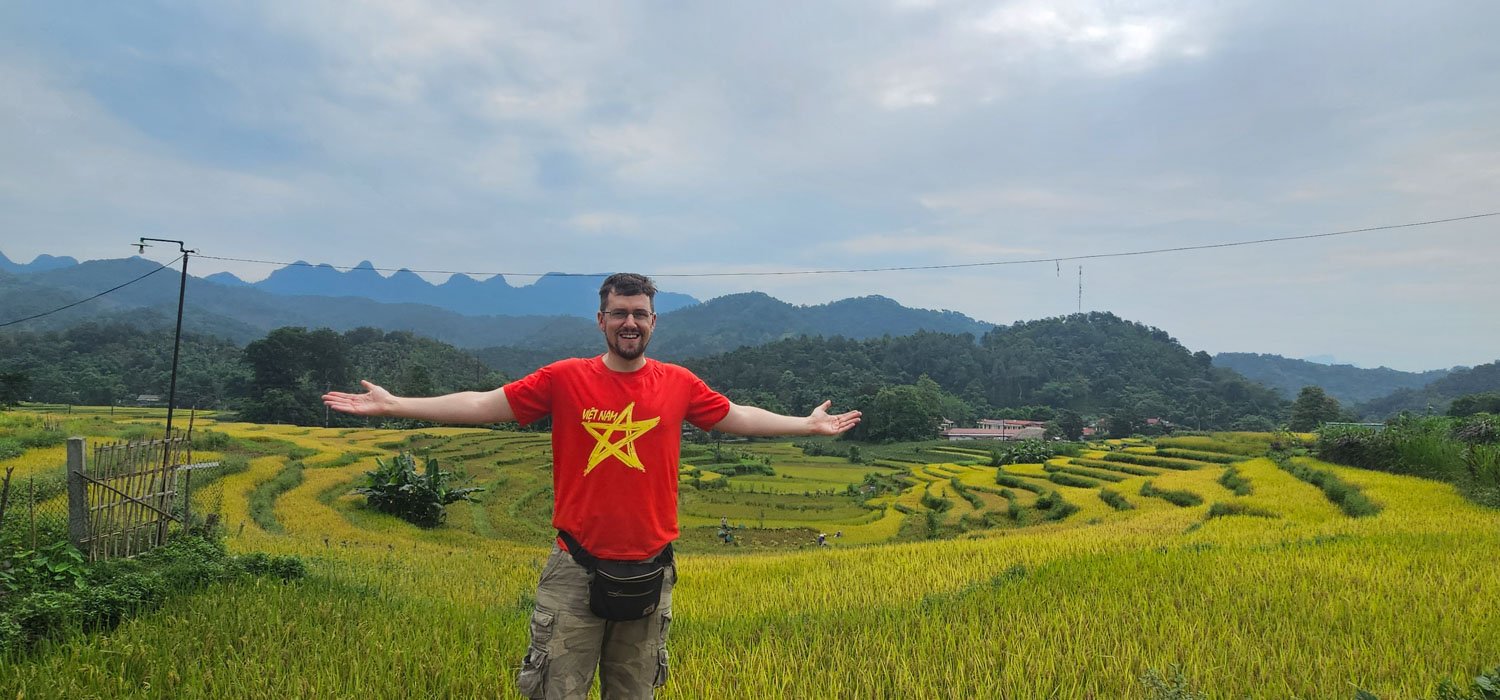
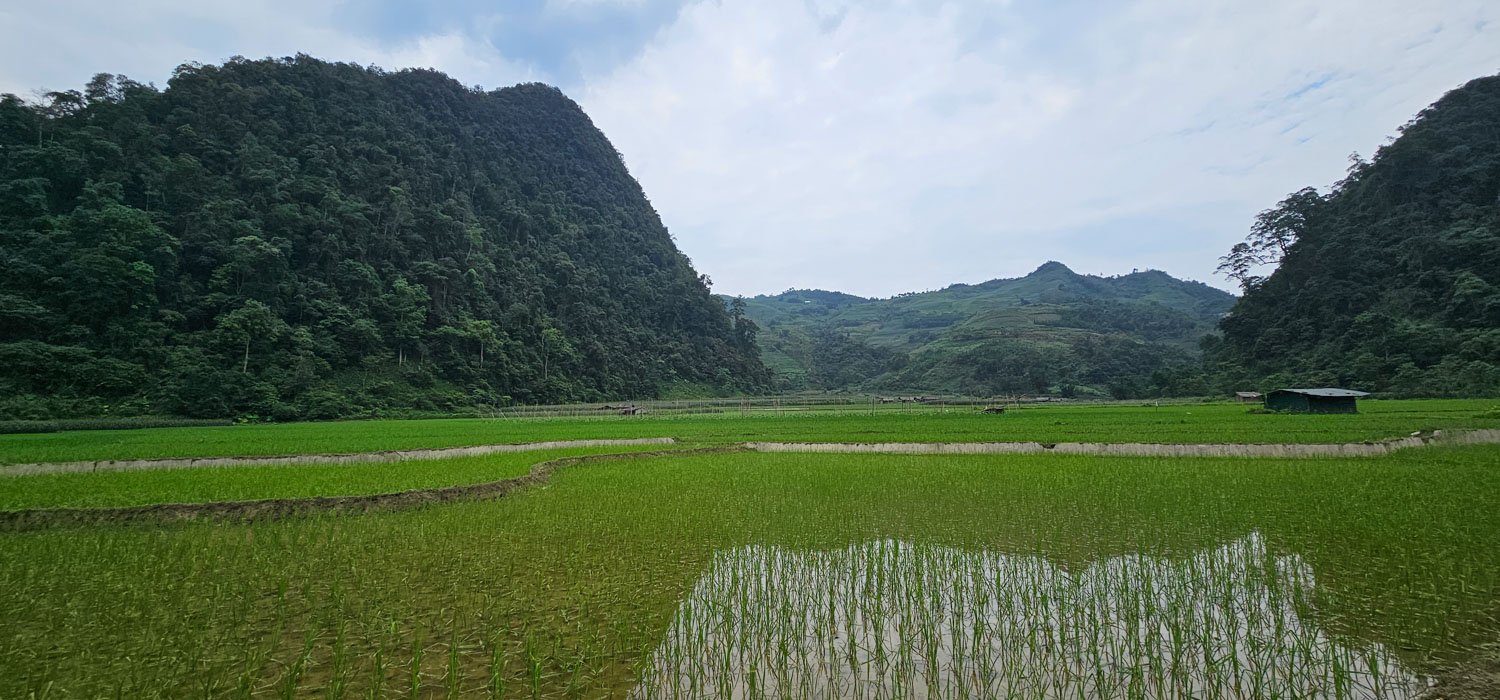
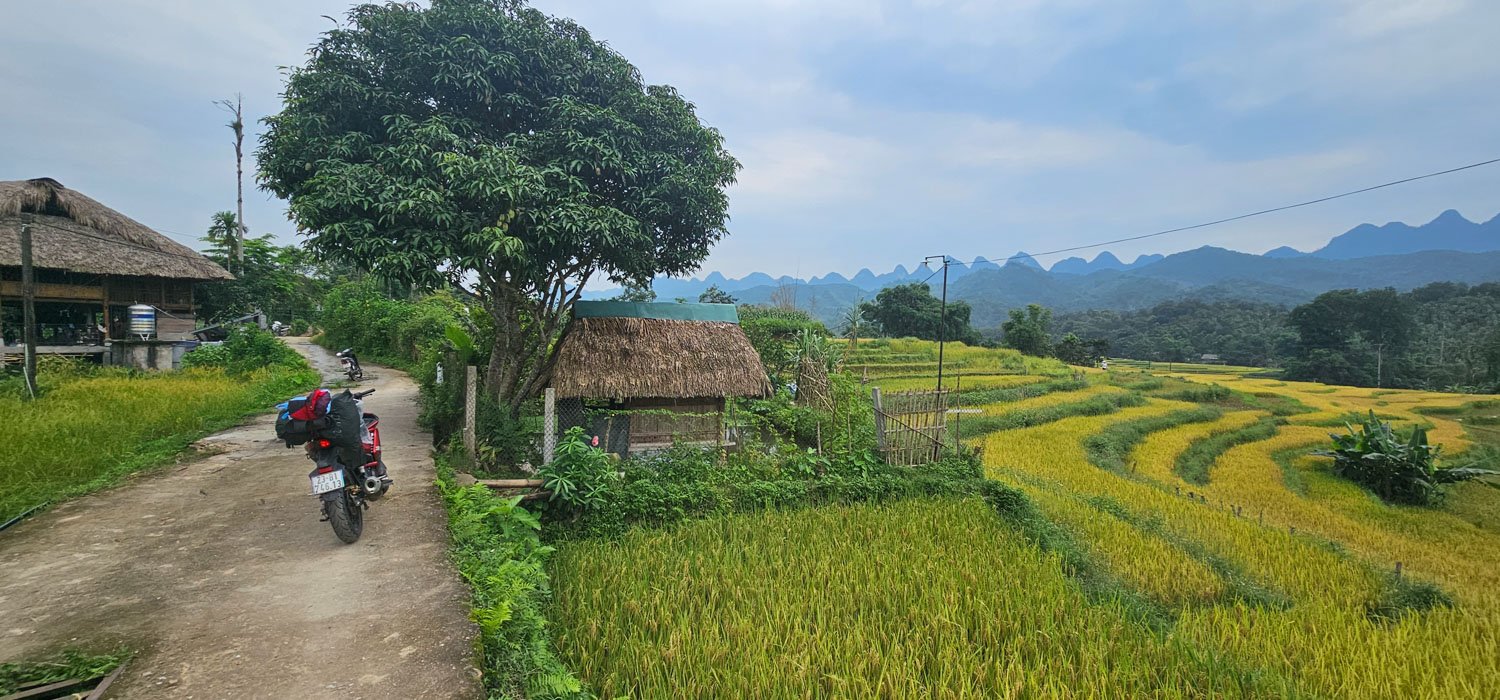
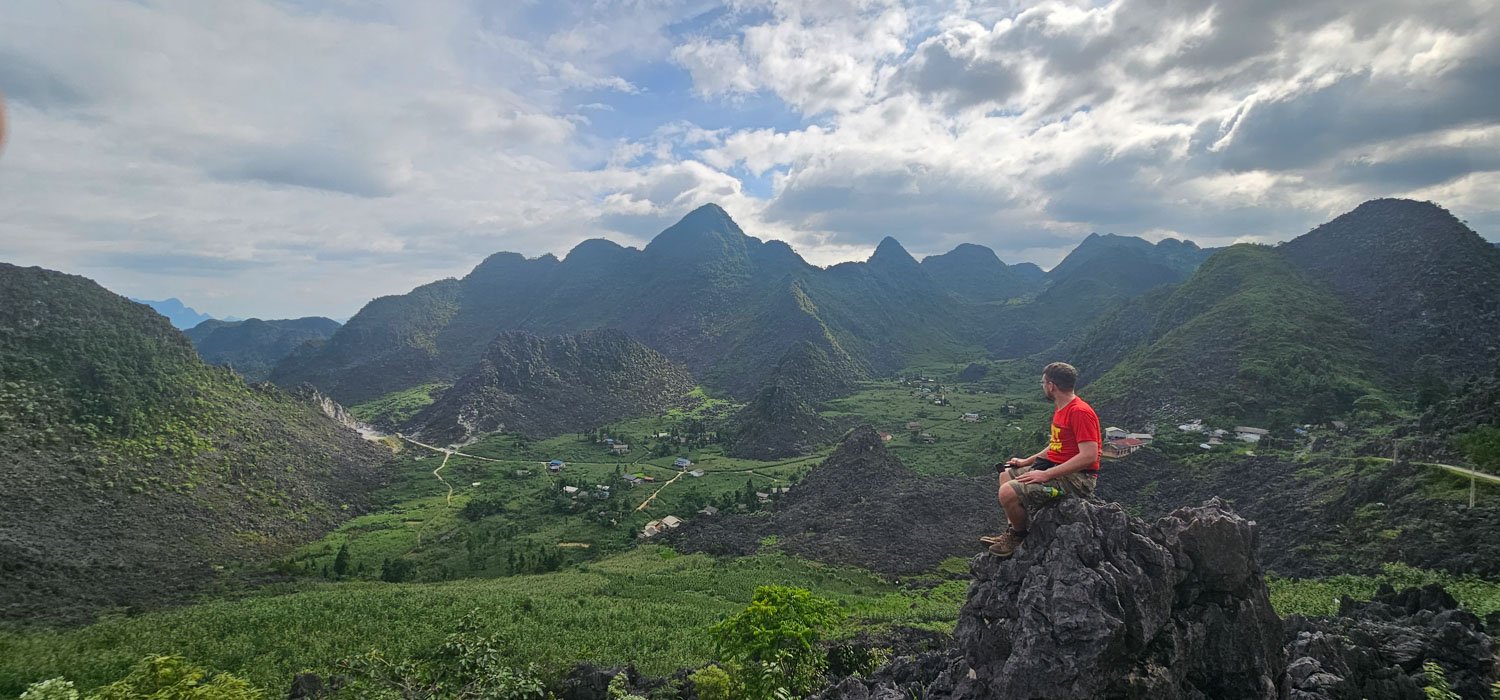
For me, spring and autumn are the best times to visit Ha Giang. Milder temperatures, less extreme heat and less chance of heavy storms. There may be some humidity or occasional fog, but in general conditions are quite good for riding.
Summer (heat and storms)
Summer in Ha Giang is very hot, with a risk of occasional short storms. The advantage is that days are long and you have plenty of daylight to make the most of Ha Giang.
If you go in summer, getting up early is even more important to avoid the strong heat and possible rain.
Winter (cold and fog)
In my opinion, winter is the worst time for the Ha Giang route: you risk occasional or constant rain, fog and low temperatures. On top of the cold and possible bad weather, in December, January and February it gets dark quite early, so you won’t have as many daylight hours as in summer, for example.
It’s not impossible to do it in winter, but dress warmly and accept there may be days with poor visibility.

Still have questions?
If after reading this guide you still have questions about the Ha Giang Loop, leave a comment below and I’ll reply as soon as I can.
And if you want up to date information, I’ve also just started a WhatsApp group in English: it’s small for now, but you’re very welcome to join and ask anything.