
Is it easy to eat in Vietnam as a coeliac? I’ve been asked this many times. Travelling around Asia with dietary restrictions can feel daunting, but good news: Vietnam is one of the best countries to travel gluten free.
This guide covers warnings, tips and recommendations for restaurants, supermarkets and tours, so you can eat gluten free safely around the country.
Is it hard to eat gluten free in Vietnam?
Traditional Vietnamese food is based on rice and fish sauce, both naturally gluten free: the country’s biggest advantage over other Southeast Asian countries. Mostly due to French influence, some dishes contain gluten, like the famous bánh mì sandwich or certain noodles, but they’re easy exceptions to avoid, not the rule.
The basic ingredients are on your side, but there’s a big cultural challenge: little awareness of coeliac disease and gluten free diets. So stay alert, and one of your best allies will be a card that explains everything to the restaurant for you (further down).
The 4 big challenges for coeliacs in Vietnam
Vietnam isn’t especially difficult for coeliacs, but a few challenges are worth understanding. In the next section I explain how to deal with them.
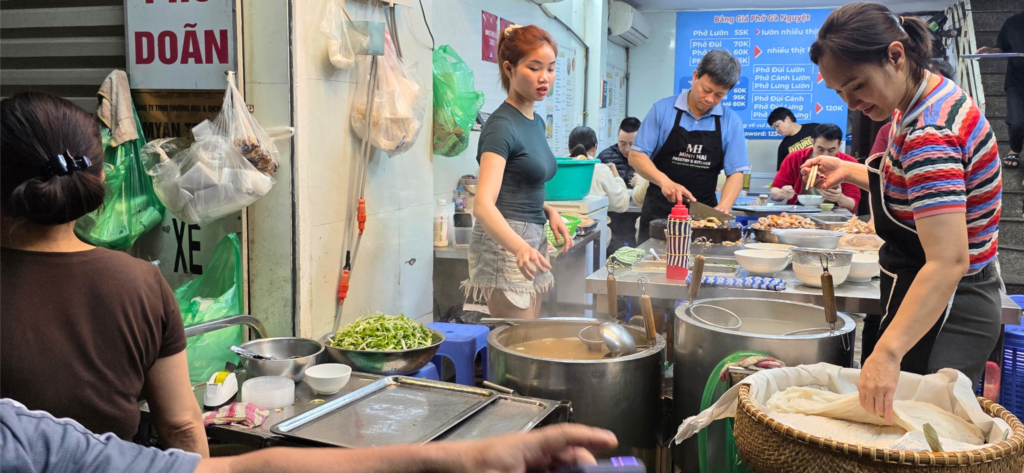
1. Cross contamination. At street food stalls, utensils, pans and oil are often shared between dishes. So even if what you order has no gluten, it may have been cooked with something that did, and that can affect a sensitive coeliac. Vietnamese food is fresh and made on the spot (grilled, boiled or fried), so most travellers eat on the street without stomach problems. Gluten is different: here the risk is real.
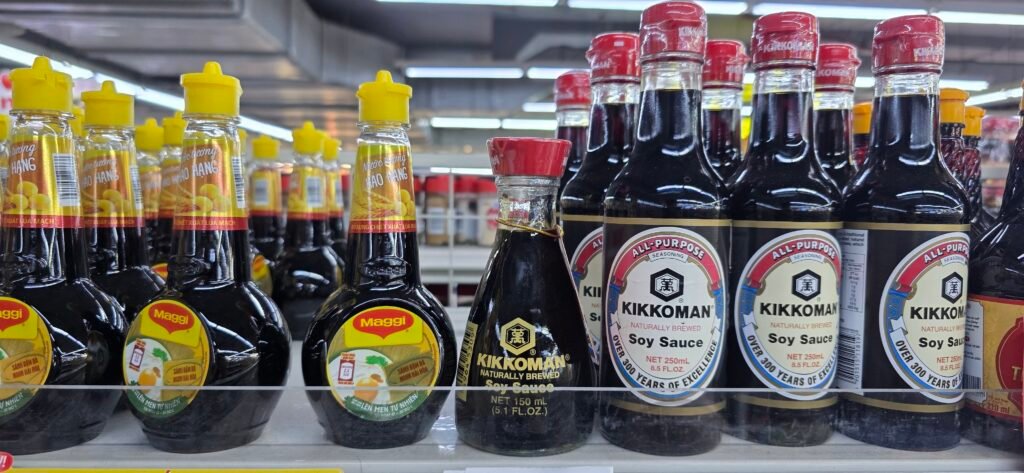
2. Soy sauce. There are versions with and without gluten, and you can’t tell them apart by looking, so the sensible thing is to treat it as suspect unless they confirm otherwise. Watch out for grilled meats too, because they’re often marinated in it before cooking.
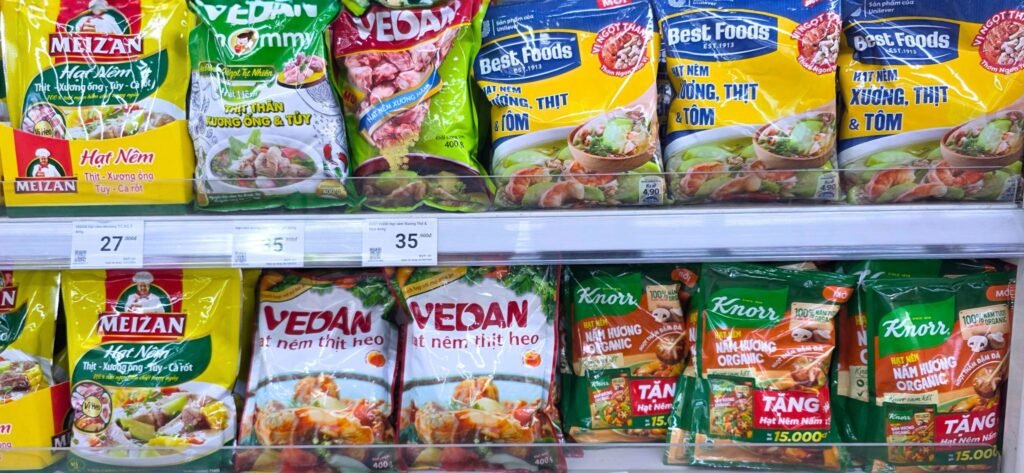
3. Stock powders for broths and soups (the classic Knorr type). Many stalls use them for flavour, several contain wheat, and the dish looks clean, so it goes unnoticed. That’s what can hide in an otherwise safe phở. At a phở restaurant, ask whether the broth contains any stock powder.
4. Little awareness of coeliac disease, the language barrier and the polite «yes». Coeliac disease is so little known in Vietnam that there isn’t even a proper word for «gluten» or «coeliac». In practice, people sometimes say yes to everything purely out of kindness, even if they haven’t understood what you need. Trusting a quick «yes», or explaining in broken English, is playing Russian roulette with your stomach. Luckily this is easier to solve than it seems: in the next section I give you the tool that sorts it out.
Alberto’s tip: if you’re coeliac, good travel insurance is especially recommended. A reaction to gluten far from home can ruin several days and, in the worst case, need medical care. I travel with Heymondo, which for example lets you chat with a doctor in the app. You’ll find more details and a discount in my Vietnam travel insurance guide (in Spanish).
Survival tips for eating gluten free
All of this can be avoided with a little preparation. These tools will save your life (and your stomach) in Vietnam.
Your best lifesaver: a coeliac card in Vietnamese
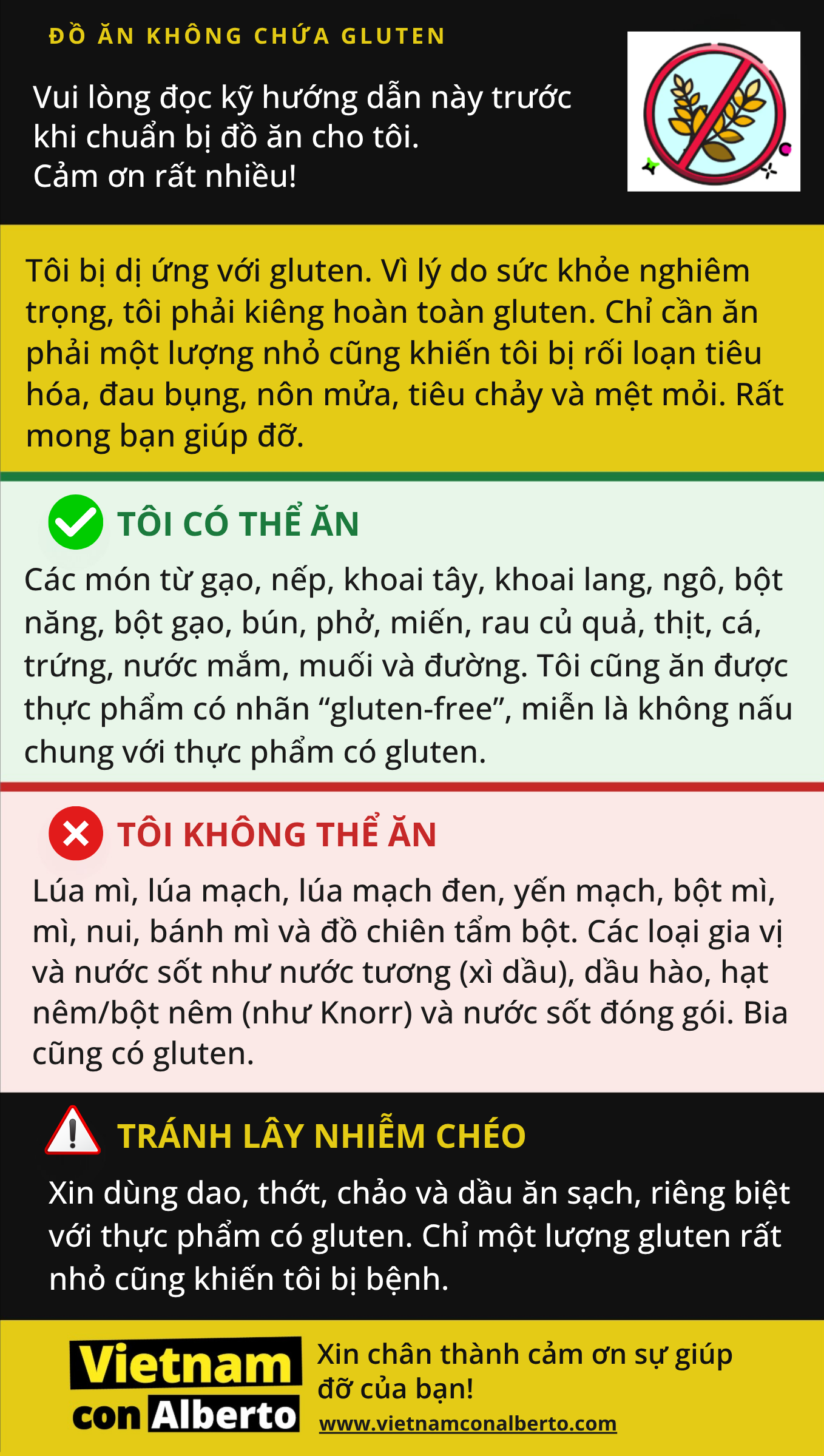
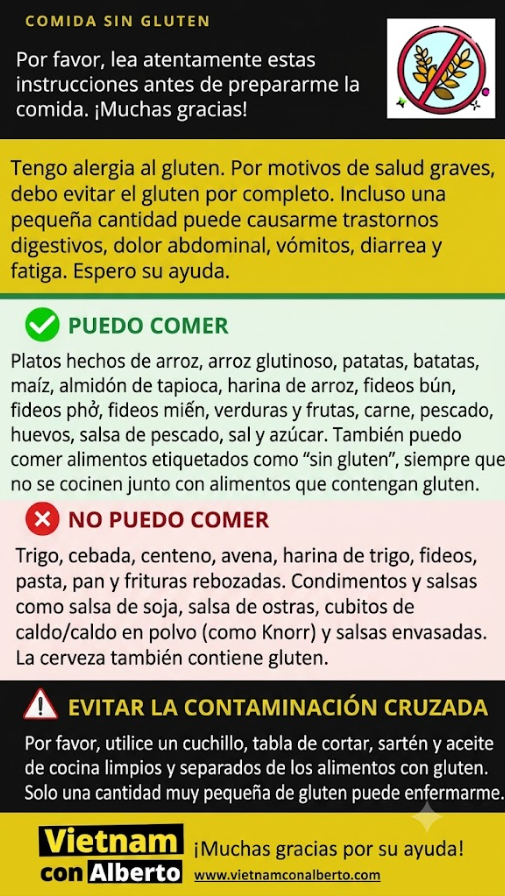
A coeliac card in Vietnamese is your best tool: it explains to the cook what you can and can’t eat far better than words. Below is one I made and had checked by a Vietnamese speaker, ready to download, print and laminate. Save it in your phone’s favourites and, in case your battery dies, carry a couple of printed copies in your wallet.
It’s free
The card is free, with no sign up and no emails. It took quite a bit of work to make it and check it with a Vietnamese speaker, so if you feel like it, you can buy me a coffee. And if not, no worries: that’s what it’s there for.
☕ Buy me a coffee
Essential apps: Find Me Gluten Free and Google Maps
- Find Me Gluten Free collects reviews from the coeliac community all over the world about restaurants and shops, with warnings about cross contamination and how easy or hard it was to identify gluten free food. It’s great for seeing what other coeliacs say about a place before you go.
- Google Maps: a simple trick is to search «gluten free» in the area where you want to eat. The app searches not just restaurant descriptions but also other travellers’ reviews, so you can see how other coeliacs got on at a place and avoid nasty surprises. I checked many of the places below this way.
Google Translate and chatbots for reading labels in Vietnam
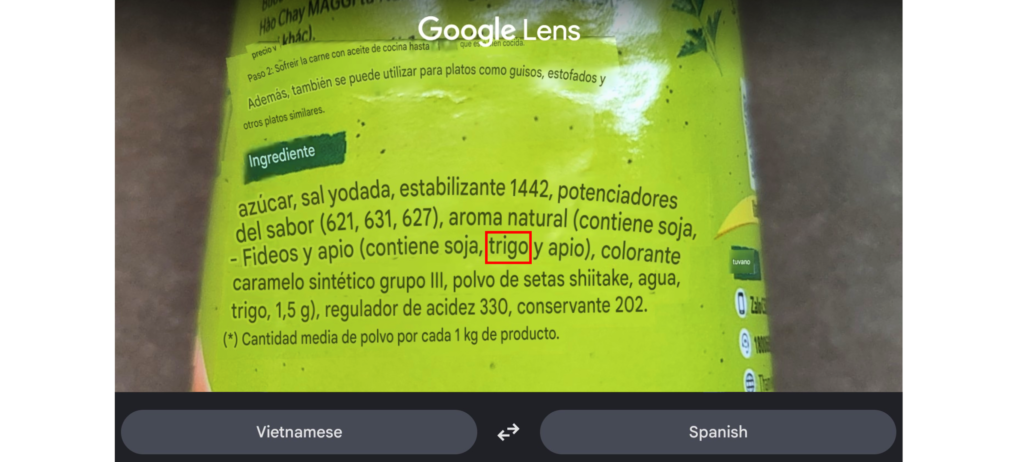
- Google Translate (camera mode): your lifesaver in the supermarket. Point the camera at the ingredients list of any product and get the translation in seconds.
- AI and chatbots: tools like ChatGPT, Gemini or Claude can read a Vietnamese label and translate it, or tell you directly whether a coeliac can eat it. But AI makes mistakes, so take it only as a guide.
Choose carefully where to eat (and who to travel with)
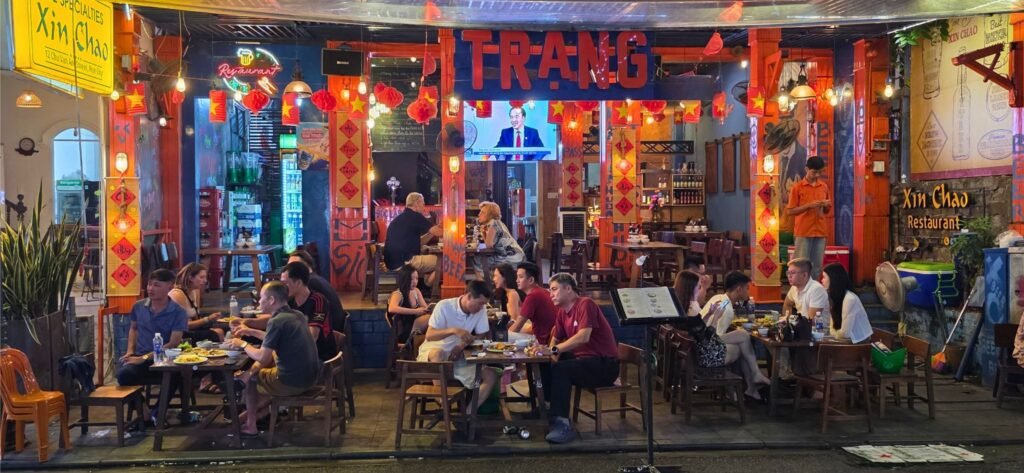
Where possible, choose places used to foreign customers. It’s not about price or how fancy it is, but habit: a restaurant used to tourists will understand your needs much better. A local restaurant that has never dealt with coeliac disease will find it harder, and may simply decide not to serve you. Not out of rudeness: at street food stalls time is money, so they’ll rarely stop to understand your needs or guarantee no cross contamination.
Then there are tours, where you often can’t choose where to eat. My advice: book with companies you trust, people who’ll go the extra mile to give you a safe, quality service.
To make it easier, further down I’ve put together checked restaurants area by area, the best international supermarkets in Hanoi and Ho Chi Minh City for safe products, and my trusted tour contacts, so you can enjoy places like Ha Long Bay or the Ha Giang loop without gambling with your food.
Plan B: emergency supplies and gluten free sauces
There will be times, like a long sleeper bus ride or rural areas, when finding something 100% safe is hard. Then your own snacks (bars, nuts, biscuits) can get you out of trouble.
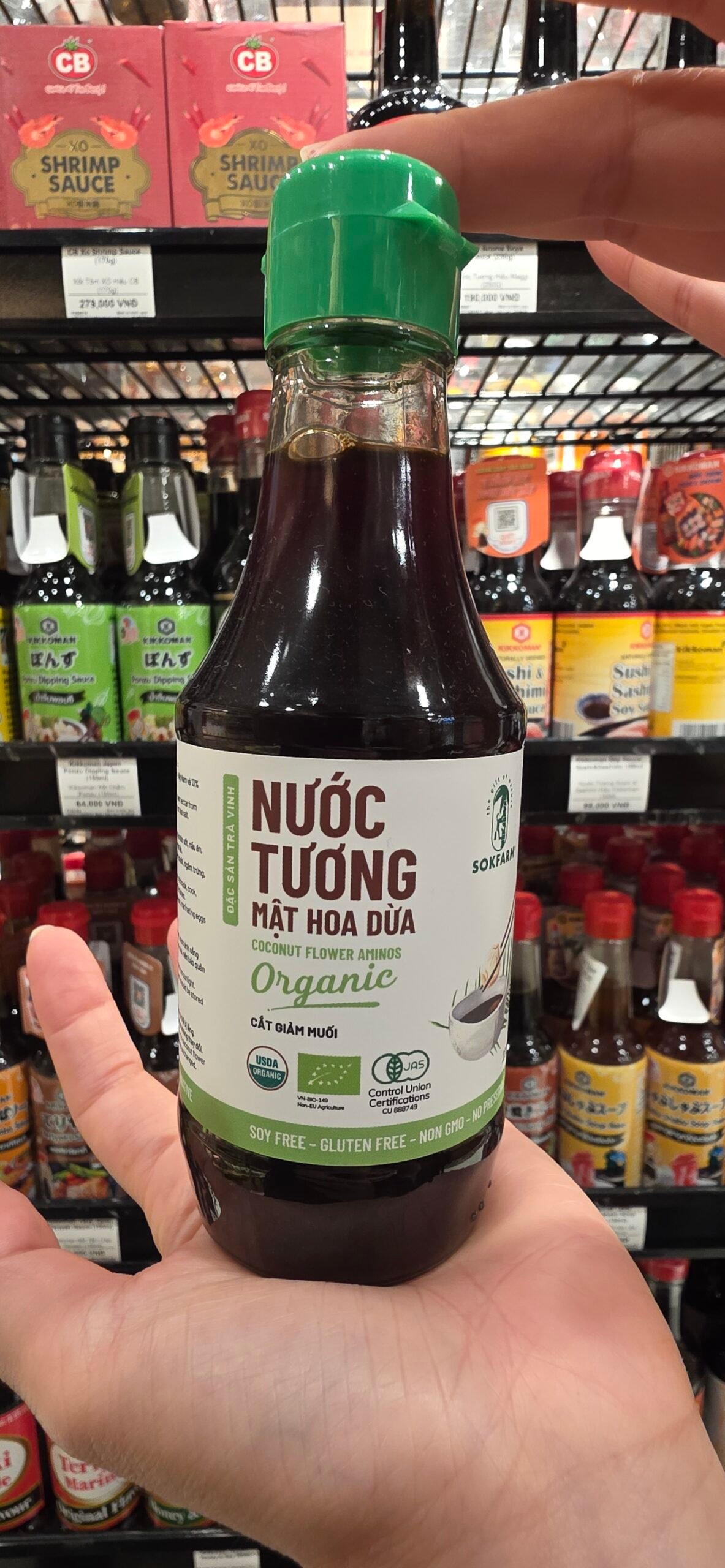
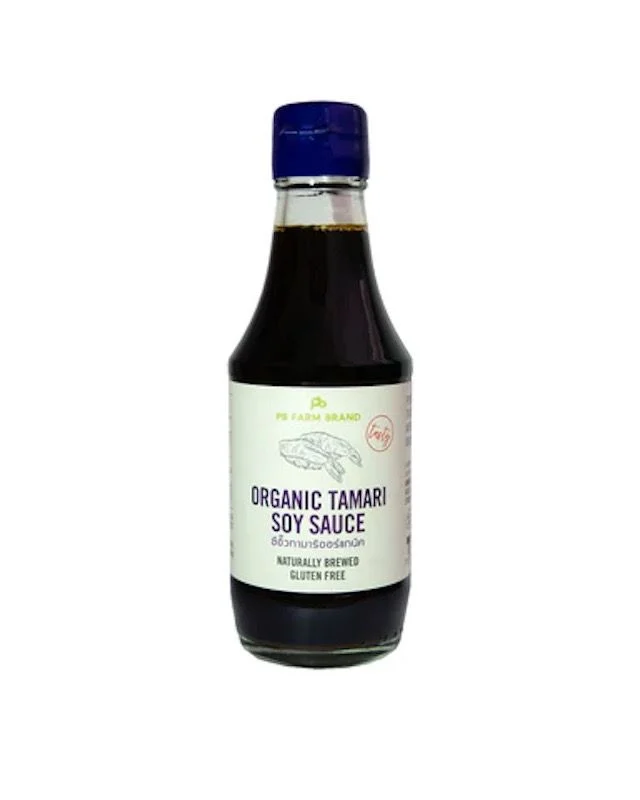
A pro tip: carry your own small bottle of gluten free soy sauce (like tamari). If you end up in a local restaurant where cross contamination doesn’t fill you with confidence, order something basic and naturally safe, like plain rice with egg or steamed vegetables, and add flavour yourself. That way you avoid the table soy sauce, which almost always contains wheat. You can buy it at international supermarkets like L’s Place. Another great alternative is coconut soy sauce: a similar taste, but no soy and no gluten. You’ll find it at Annam Gourmet.
What you can eat in Vietnam without problems
Vietnam’s big advantage is that its food revolves around rice. If you’re careful with broths and sauces, these are your best friends:
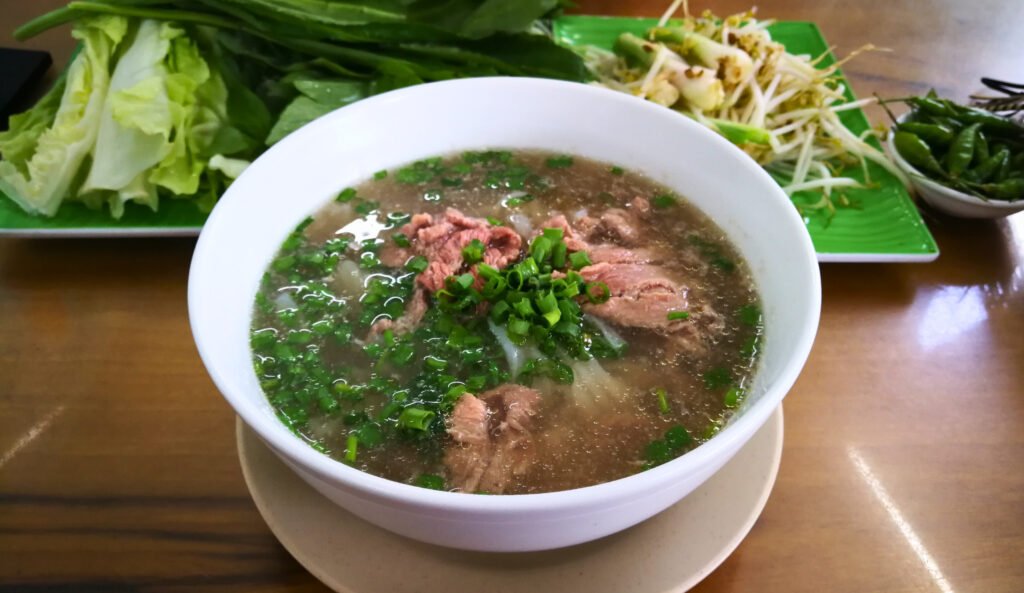
- Soups and rice noodles (phở, bún, miến): Phở and the huge variety of bún (rice noodle) or miến (mung bean or tapioca noodle) soups are the basis of the local diet. Careful: they’re safe as long as the broth is traditional (simmered for hours with bones) and no Knorr powder was used to speed things up.
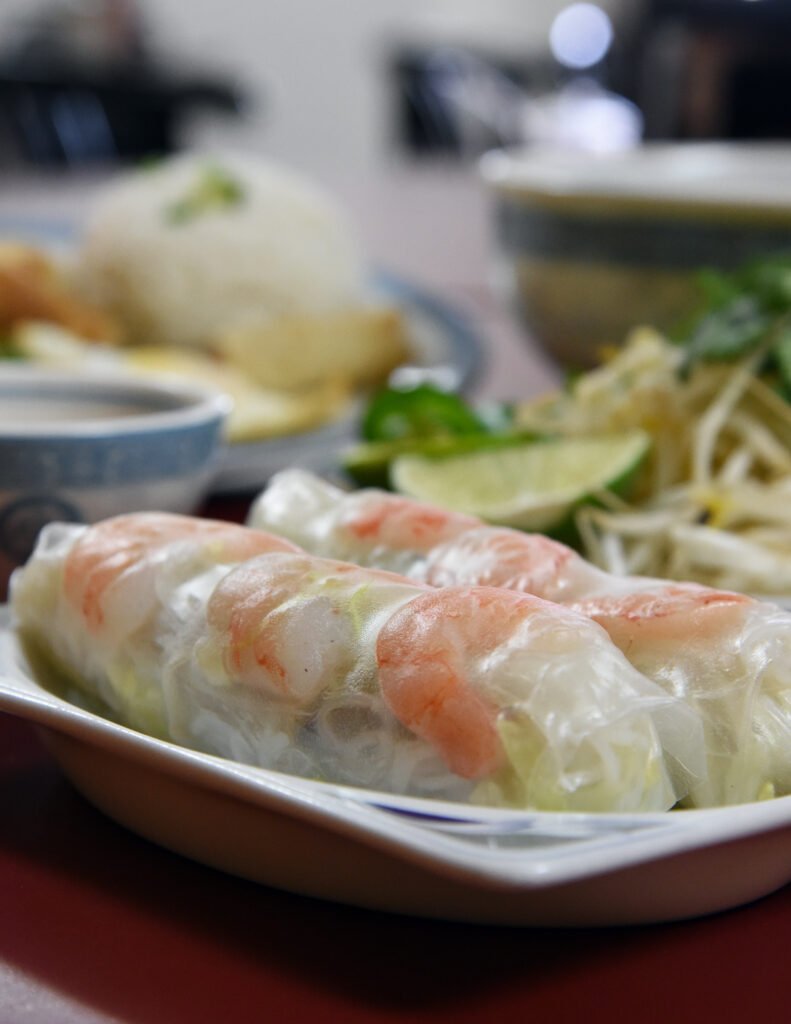
- Fresh rolls (gỏi cuốn): Also known as summer rolls: rice paper filled with vegetables, rice noodles and prawns or pork. Light and perfect when you’re stuck. Dip them in nước mắm (clear fish sauce), never in the thick brown sauce (hoisin or peanut), which usually contains wheat.
- Rice dishes (cơm): Plain white rice (cơm) or broken rice (cơm tấm) are safe. The only thing to watch is the protein that comes with it: always ask whether the meat or seafood was marinated in soy sauce before cooking.
- Bánh xèo and bánh khọt: These delicious crispy Vietnamese pancakes and mini pancakes are traditionally made with rice flour and turmeric. But always ask, because some modern stalls use ready made flour mixes that do contain wheat.
Dishes to avoid
To save yourself trouble, avoid these:
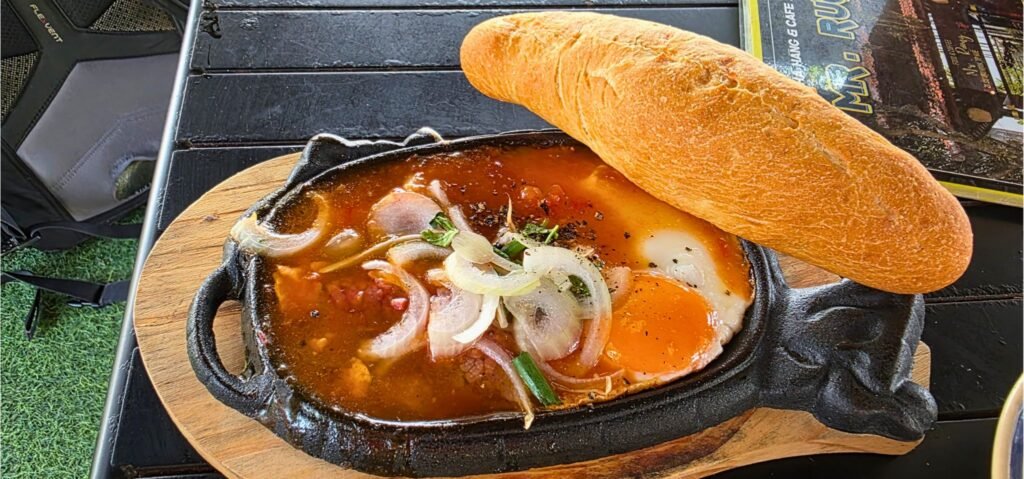
- The forbidden words on the menu: Mì and Bánh mì. Mì (or Mỳ) means wheat and refers to yellow egg or wheat noodles (for example mì xào bò or mì Ý). And Bánh mì is the famous sandwich brought by the French.
- Fried and battered food. Avoid any fried fish or meat, as it may be dusted in flour first.
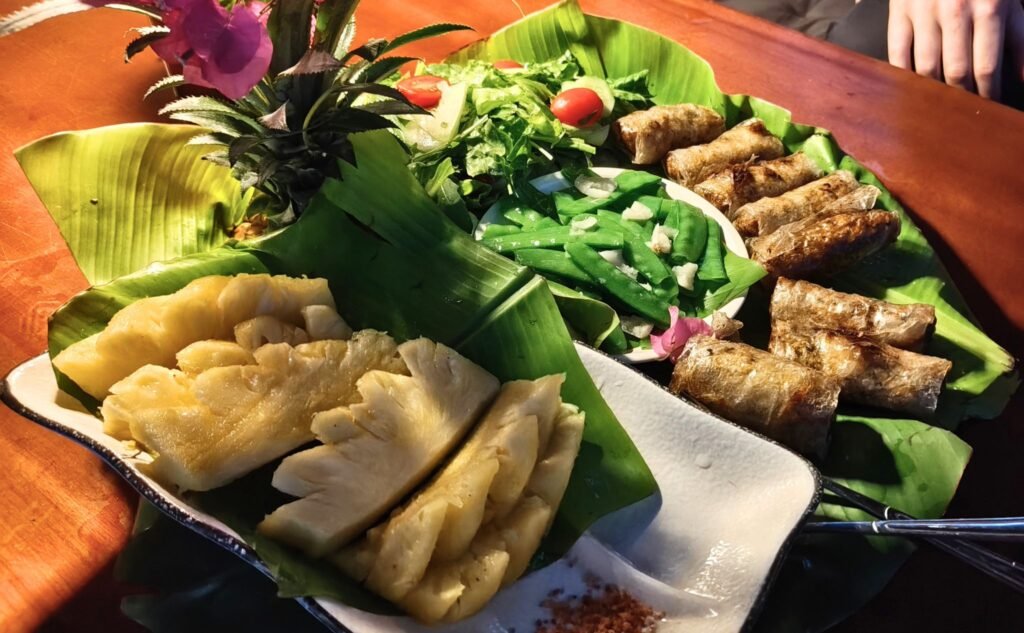
- Fried spring rolls (Nem / Chả giò). The meat filling is often marinated in soy sauce, and some places even use wheat wrappers instead of rice paper for frying. Unless the place confirms they’re 100% gluten free (like Bun Cha Ta), it’s best not to risk it.
- Dark sauces. Regular soy sauce, oyster sauce and hoisin sauce aren’t gluten free. Be very careful with grilled meats that look dark or caramelised, as they probably have these marinades.
- Quẩy. Fried wheat dough sticks, often served with phở or cháo (rice porridge) for dipping. They come on a separate plate, so they’re easy to leave alone, but know what they are, because they look very tempting.
Where to eat gluten free in Vietnam, area by area
Here are the places I’ve checked, in the order of the usual route through Vietnam. Unless I say otherwise, none is 100% gluten free, so always show the card and ask, even at places with a good reputation. Better to be a bit of a pain than ill the next day.
Hanoi and the north
Bun Cha Ta Hanoi (Hanoi Old Quarter) is the place coeliac travellers recommend most to me in Hanoi. At their Old Quarter branch they don’t use Knorr powder or wheat based sauces in their broths, and their spring rolls use rice paper. Almost the whole menu is suitable. Two honest notes: hygiene is what you’d expect from a simple place, so it’s a matter of taste. And if you head south, their Hoi An branch is just as good.
Gluten Free Gourmet (Tây Hồ, Hanoi) is the gem if you miss bread. It’s a 100% gluten free café and bakery, so you can eat without thinking about cross contamination, and what they do best is exactly what’s hardest to find gluten free in Vietnam: bread and croissants. The Hanoi branch is smaller than the one in Ho Chi Minh City, but the bakes are the same and you can order to your hotel on Grab.
If you go up to Sapa for trekking, two places really understand coeliacs. Neither is 100% gluten free, but Good Morning View has staff who instantly know what you can eat, plenty of options (curry, hotpots, rolls, soups and more) and even their own gluten free soy sauce. Tim’s Sa Pa Kitchen marks gluten free dishes on the menu and has a separate kitchen area and fryer, a big plus for cross contamination. Both are delicious and perfect for refuelling around a trek.
And if your plans in the north include the Ha Giang loop or a Ha Long Bay cruise, I explain how to handle it further down, because food works differently there.
Hoi An and Da Nang
Dingo Deli (Hoi An, just outside the old town) is one of the most serious places in the country when it comes to gluten free. They’ve been serving Western food since 2010 and have a wide gluten free menu: pizzas (gluten free base at no extra cost), pasta, sandwiches and baking. Everything is prepared in a dedicated area, and for gluten free bread and sweets they go further, with separate ovens and equipment used only for that. They also have a mini market with imported products that are hard to find.
Emo’s (Da Nang, near My Khe beach) serves home style Vietnamese food in a family run place where almost the whole menu is safe. In fact, they mark the few dishes that AREN’T gluten free, rather than the other way round.
Ho Chi Minh City
Gluten Free Gourmet (Thảo Điền) is the original, older than the Hanoi one, and a 100% gluten free café where you can treat yourself to pizzas, toasts, bagels and sweets knowing everything is safe. Lots of choice, and many people consider it the best gluten free restaurant in Ho Chi Minh City.
In’Joy Gluten Free Café & Bake (District 3) is another 100% gluten free place. They make gluten free bánh mì, and many reviews say the bread is excellent. As well as the usual bakery items, they have dishes like burgers, pizzas, toasts and pasta.
Tours and trips: how to eat safely in Ha Giang and Ha Long Bay
On a multi day tour or a cruise, food works differently: you don’t choose the restaurant and sometimes there’s nothing suitable nearby, so tell them in advance. Say you’re coeliac when you book and remind them one or two days before. With that notice, organisers will adapt whatever’s needed.
Keep in mind there’s still little awareness of special diets in Vietnam, so choose companies with a good reputation. Below are my trusted contacts for Ha Long Bay and Ha Giang tours.

For Ha Long Bay, my recommendation is to book your cruise with Phuong Vu, from Holiday Travelling, my trusted local agency for years. She advises you on WhatsApp in English or Spanish and takes care of everything, so just tell her you’re coeliac when you book and the boat will adapt the menus to your needs, or to any other dietary requirement. If you want all the details on cruises, bays and types of boat, they’re in my complete Ha Long Bay guide.
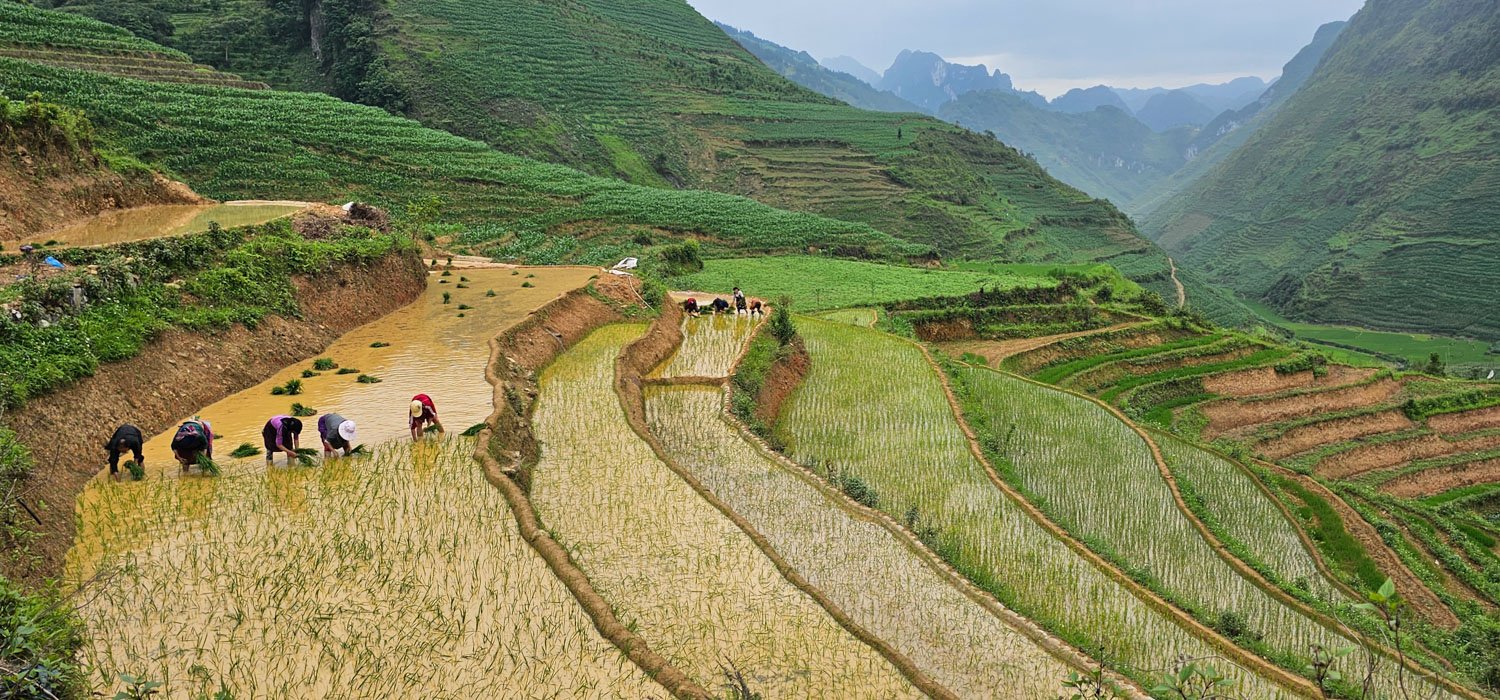
On the Ha Giang loop, which for me is one of the best things you can do in Vietnam, most tours include all the meals on the route. So tell the company you’re coeliac when you book and remind them before you set off, so they have everything ready for the days on the loop. Choose a company with good, recent reviews, and if you’d like a recommendation, ask in my Vietnam WhatsApp group.
Personal recommendation: Holiday Travelling (Phuong Vu)
If you’d like to hand over your trip’s logistics to someone you trust, my recommendation is Holiday Travelling, Phuong Vu‘s agency. As well as Ha Long Bay cruises, she organises complete itineraries all over Vietnam, and for a coeliac that’s a big advantage: she arranges your dietary needs in advance with cruises, hotels, restaurants and guides. She advises you on WhatsApp, in English or Spanish.
“Over the years I’ve had several coeliac clients. Whenever I know in advance, I let the cruise, hotels, restaurants and guides know, and most of them prepare gluten free meals without any problem.”
📲 Phuong Vu’s WhatsApp · 🌐 Holiday Travelling · 🎁 100,000 VND (about $4) off per cabin on tours like Ha Long Bay (ask her about others)

Where to buy gluten free food
Buying your own food makes things easier: snacks for long trips, and a backup when you’re unsure where to eat. These are good places to stock up:
Annam Gourmet has shops in both Hanoi and Ho Chi Minh City and a good range of gluten free products. They have pasta, flours and baking mixes, snacks, biscuits, sauces and even ice cream, from brands like Schär, Bob’s Red Mill or Orgran. You can go to one of their shops or order delivery. Delivery is free over 1,000,000 VND (about $38), with a fee depending on your area for smaller orders. That way you can stock up without leaving your accommodation.
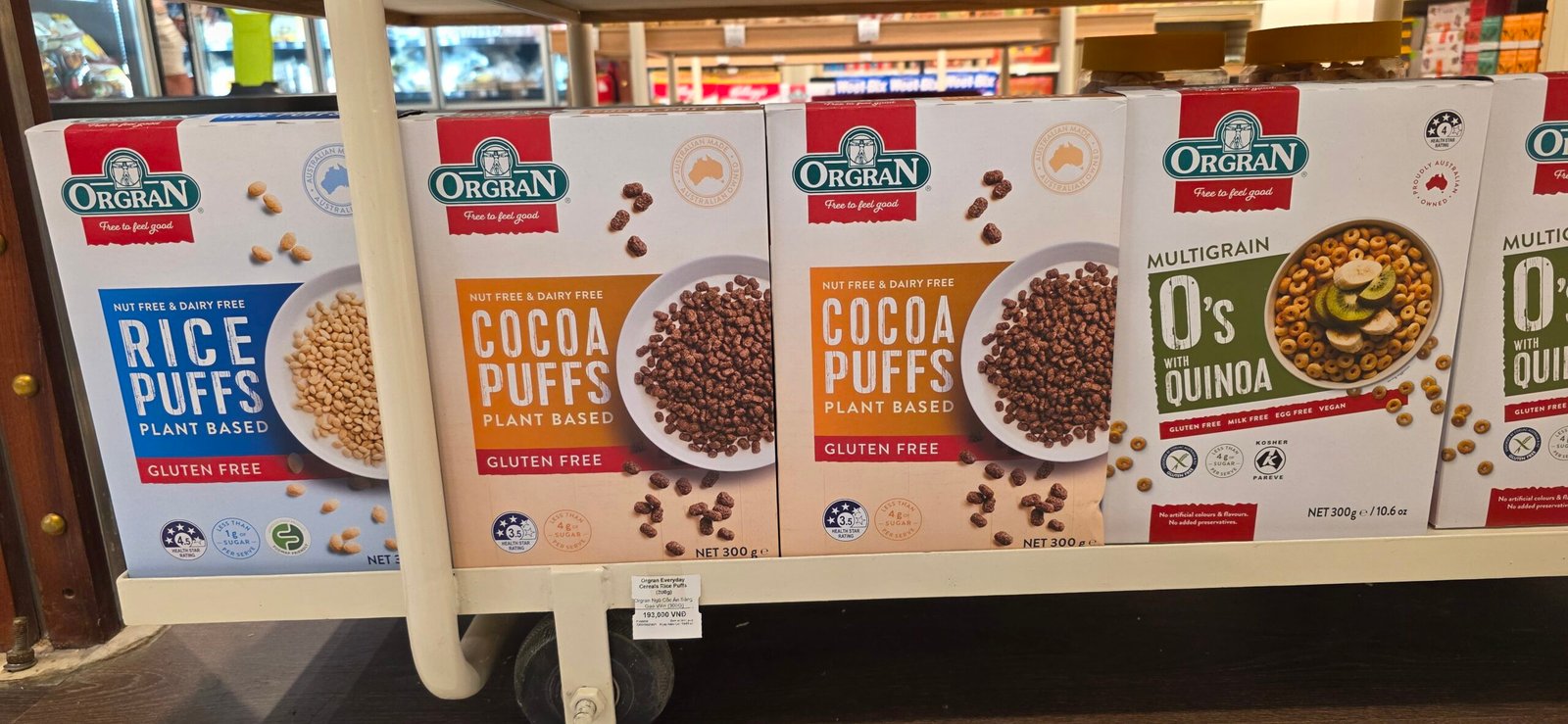
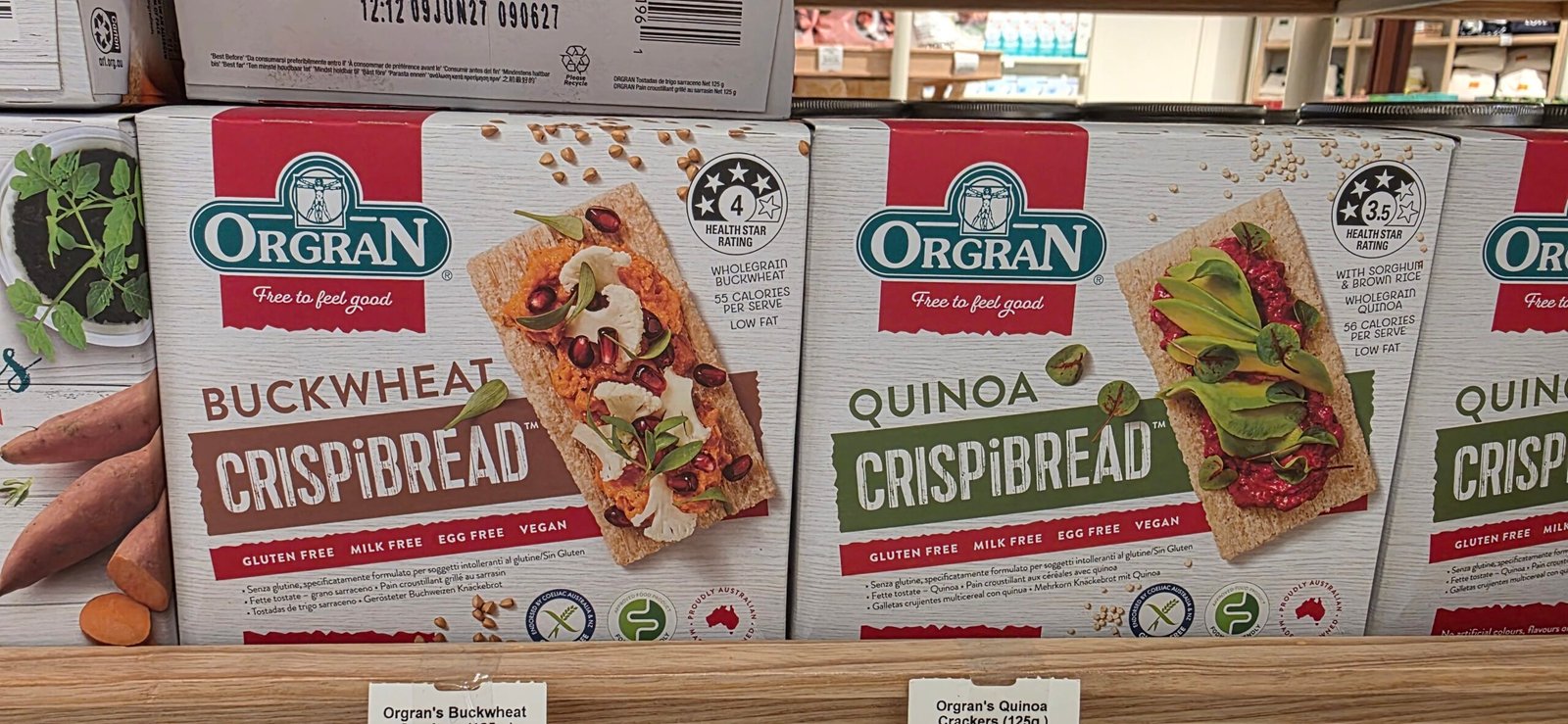
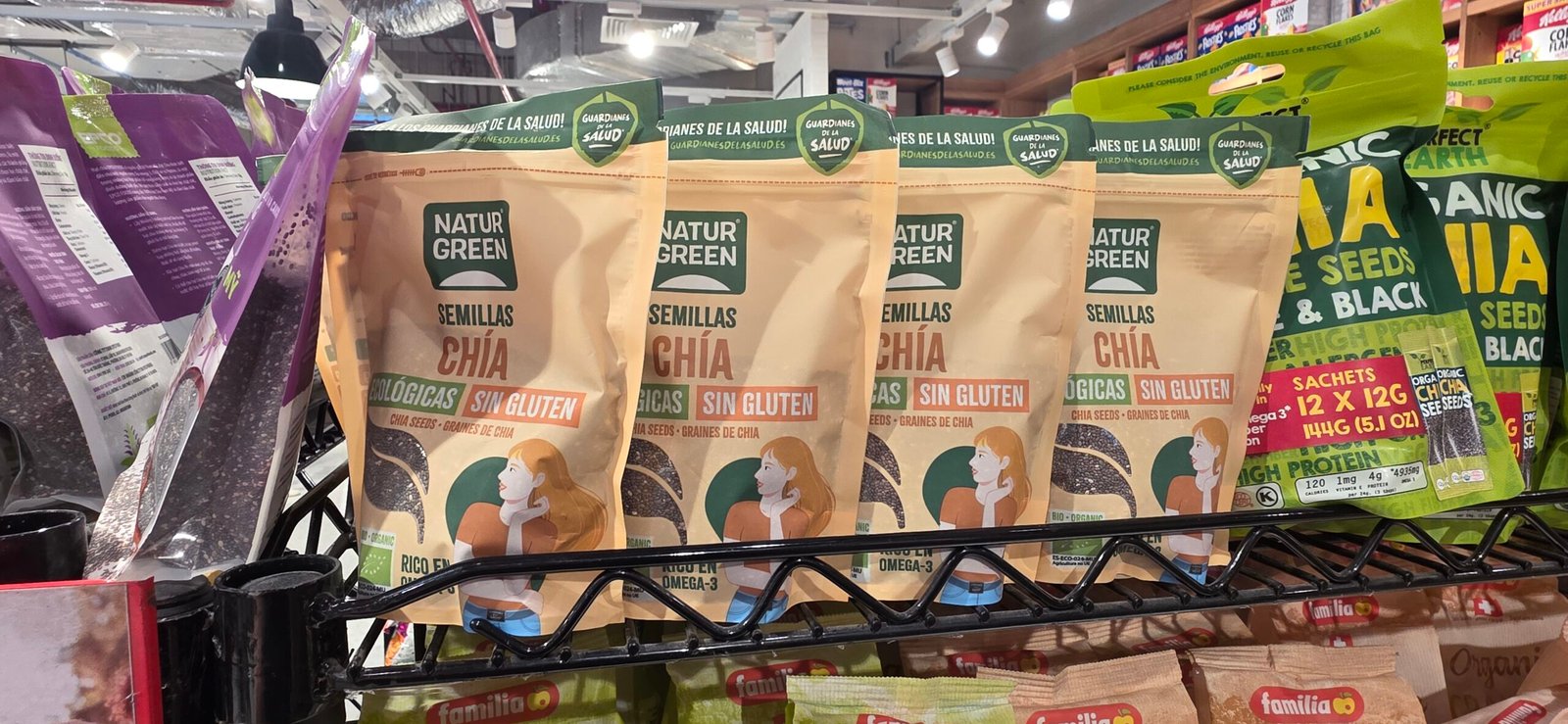
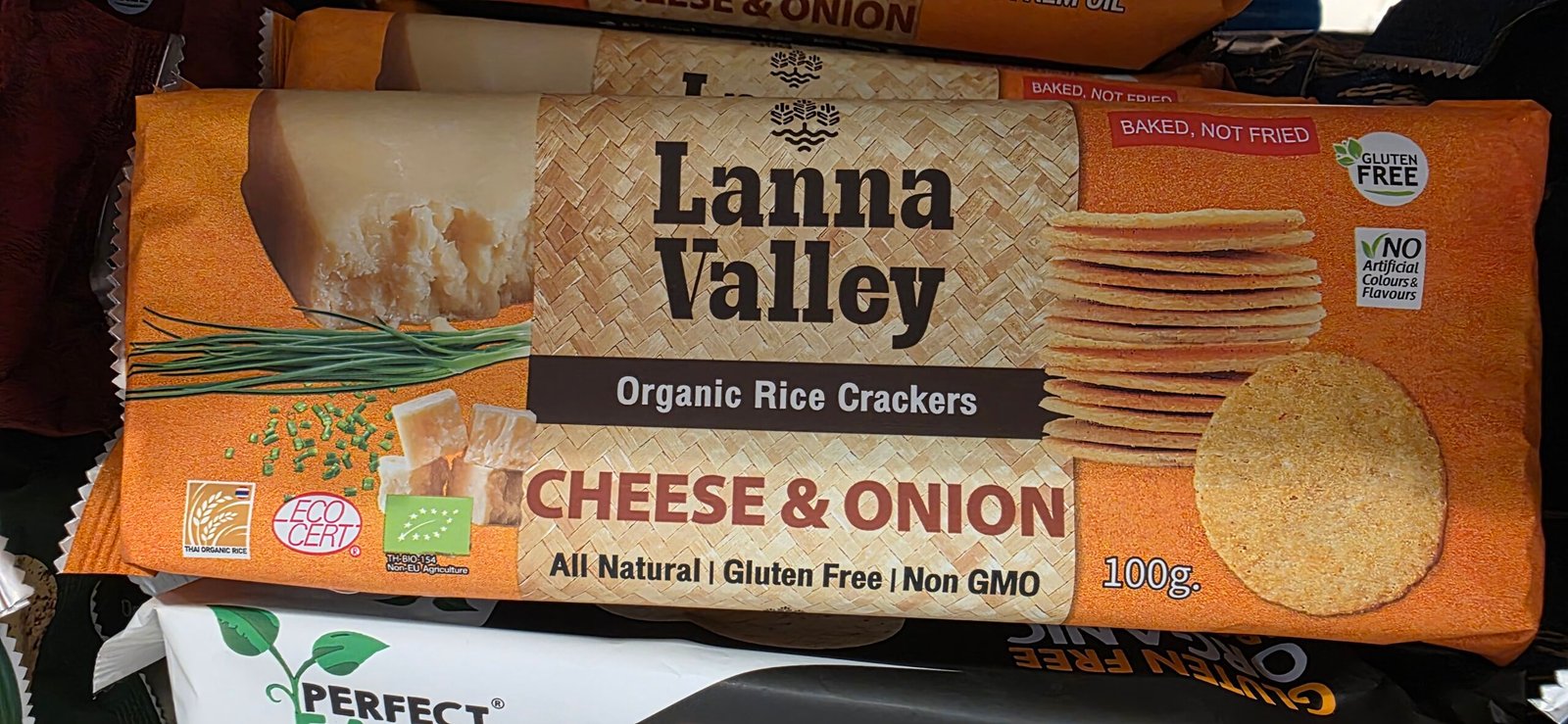
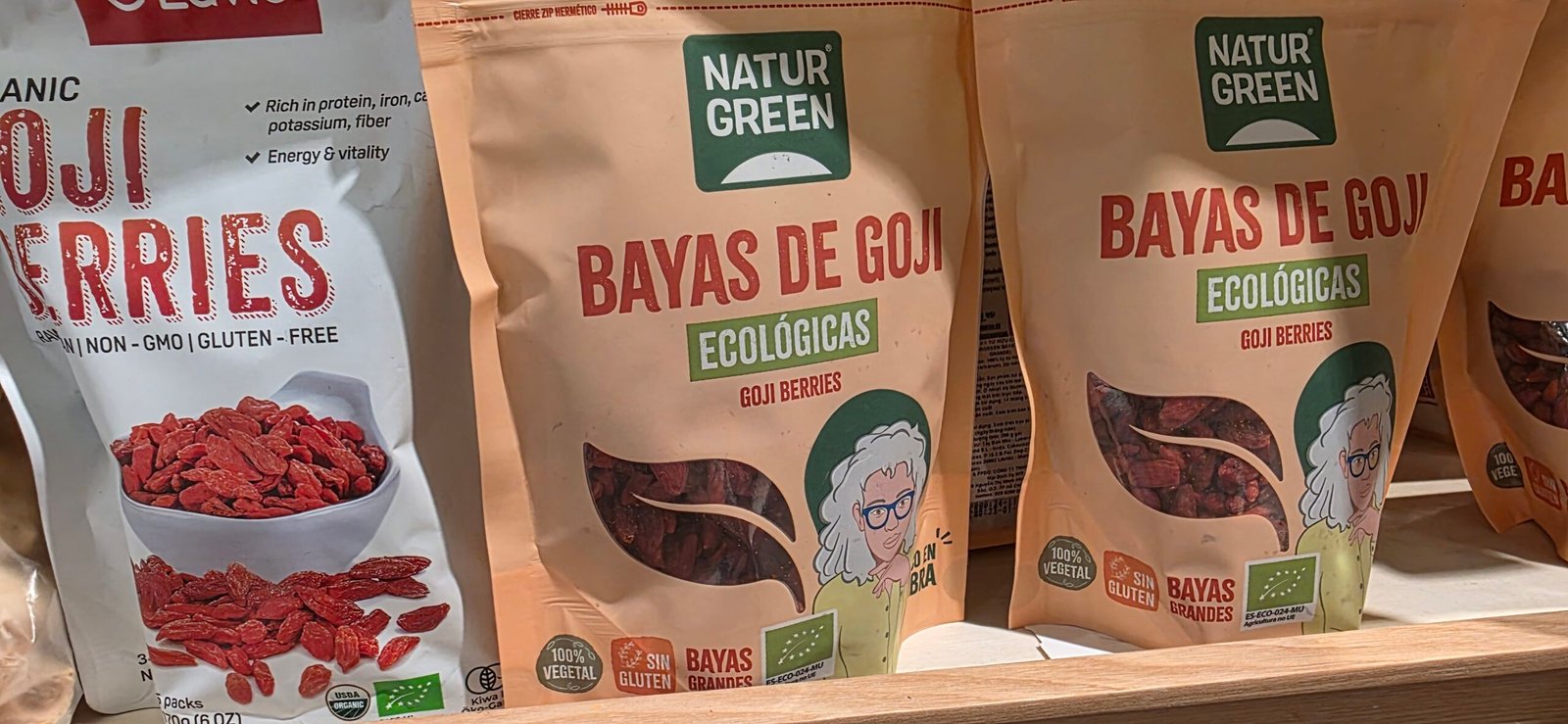
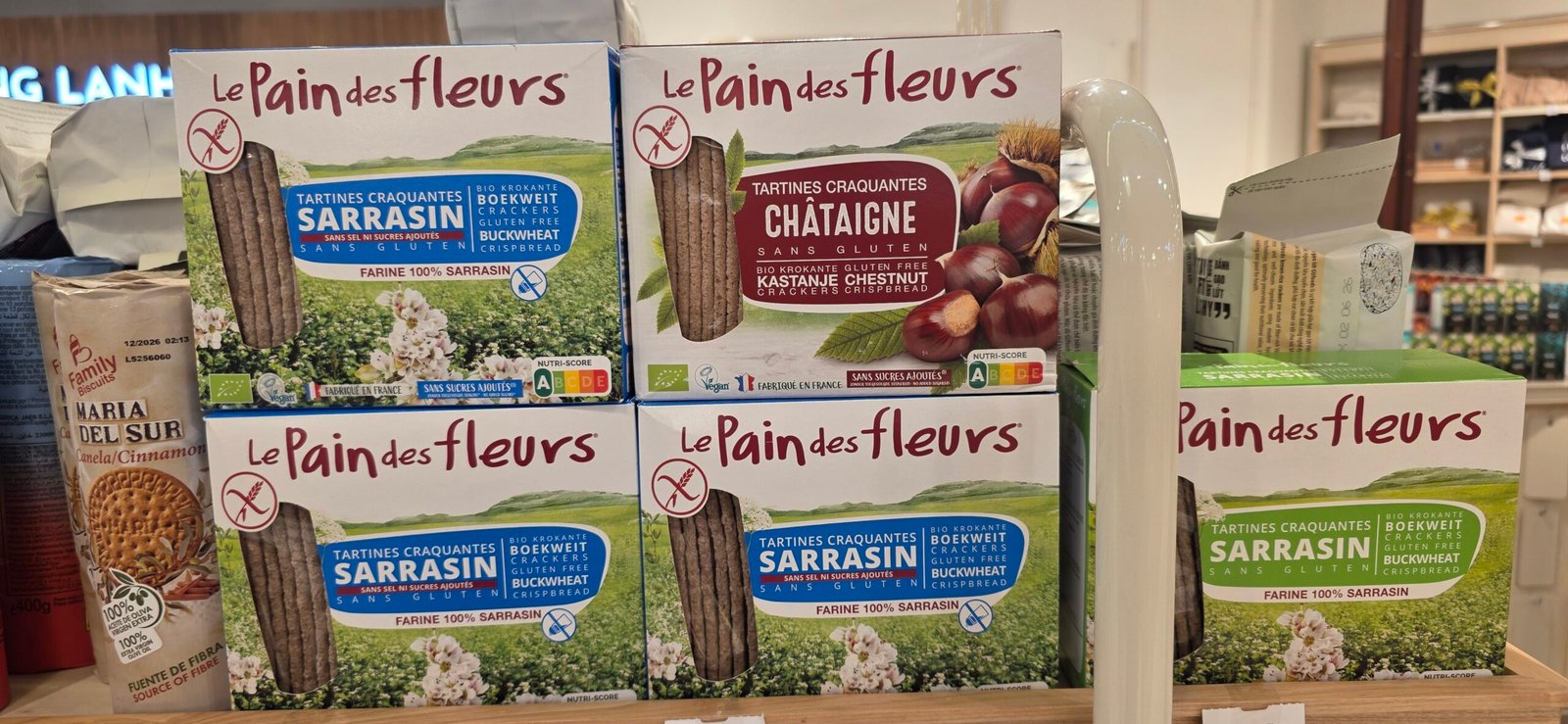
L’s Place is another option, only in Hanoi. This international supermarket is more central than Annam and has some products for coeliacs: gluten free pasta from well known brands, toasted bread and some cake and pancake mixes, plus Western products like cheese, cured meats, fruit and nuts. And interestingly, they sell tamari, a soy sauce made without wheat. It’s not a gluten free specialist, but labels are readable and products familiar, which is what you want when checking ingredients closely. I shop there often.
If you’re in central Vietnam, the Dingo Deli mini market (Hoi An) has hard to find imported products, and it’s worth looking for gluten free options when you pass by.
A warning: while researching this article, I went to a supermarket from a big Vietnamese chain looking for soy sauces and other gluten free products, and they were very hard to identify: I didn’t see a single gluten free label, and ingredients weren’t always clear. To buy with confidence, the international shops above will save you a lot of headaches.
FAQ
Can I bring my own gluten free food to Vietnam?
Yes, and it’s a good idea. Dry, commercially packaged food, like biscuits, bars, snacks or pasta, isn’t usually a problem if it’s for personal use and in its original sealed packaging. What is restricted is fresh fruit and vegetables, seeds and products with unprocessed meat or dairy, for health control reasons.
Is street food safe for coeliacs?
It depends on how sensitive you are. Even if the ingredients in a dish are naturally gluten free, the risk of cross contamination at street stalls is very high. Cooks use the same woks, tongs and oil for dishes with and without gluten. If you’re very sensitive, it’s better to stick to more established restaurants.
Where can I get gluten free soy sauce in Vietnam?
In international supermarkets aimed at expats. I’ve found tamari (a fermented soy sauce without wheat) at L’s Place in Hanoi. And if you want a soy sauce alternative with no soy at all, Annam Gourmet sells a coconut based sauce, with no soy and no gluten. Always read the label to confirm it says “gluten free”, because not every soy sauce, even from international brands, is.
Does fish sauce (nước mắm) contain gluten?
No, traditional Vietnamese fish sauce is made only from fermented fish, salt and water. It’s Vietnam’s main condiment and generally completely safe for coeliacs. Still, it’s always worth checking the ingredients label to make sure nothing unusual has been added to the traditional recipe.
Is there gluten free beer in Vietnam?
Almost all beers in Vietnam contain barley. After searching online and in a couple of supermarkets, I haven’t found a clear gluten free option. For a refreshing alcoholic drink, your best bet is cider, made from fermented apples and naturally gluten free. Still, check the label, as some industrial ciders have additives.